Kawasaki P-1: Japan’s Advanced Maritime Patrol Aircraft
General Overview and Development of the Kawasaki P-1
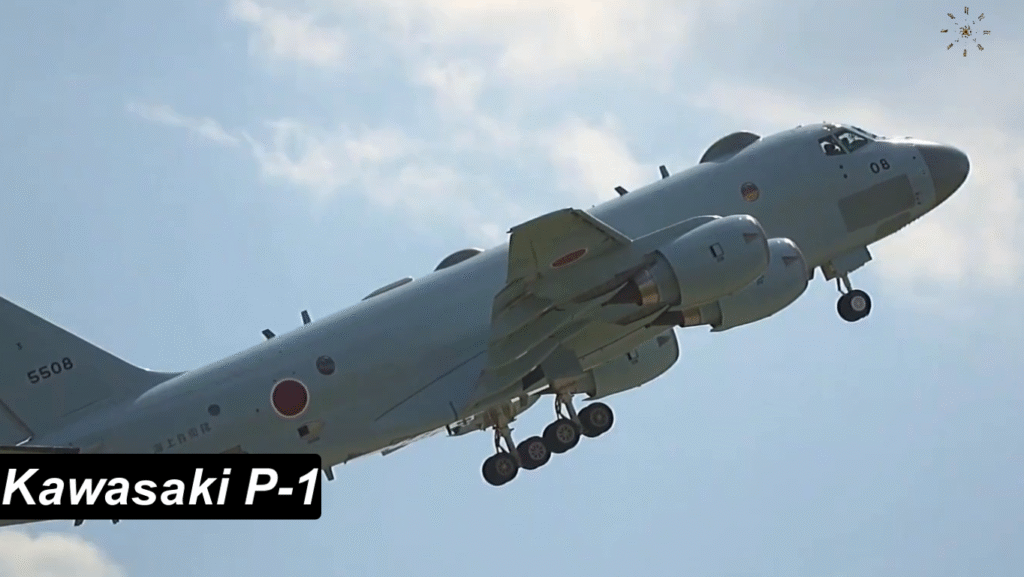
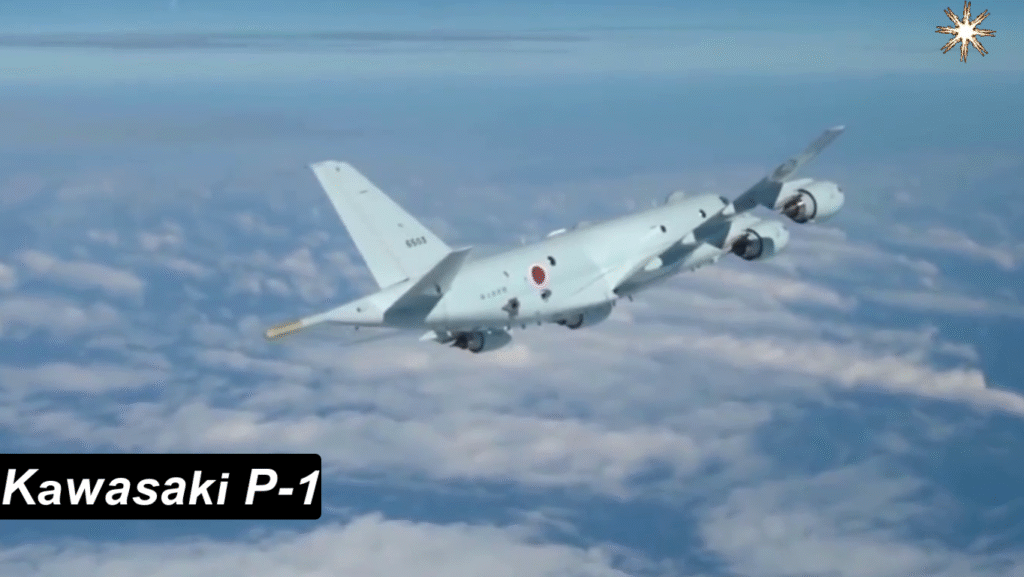
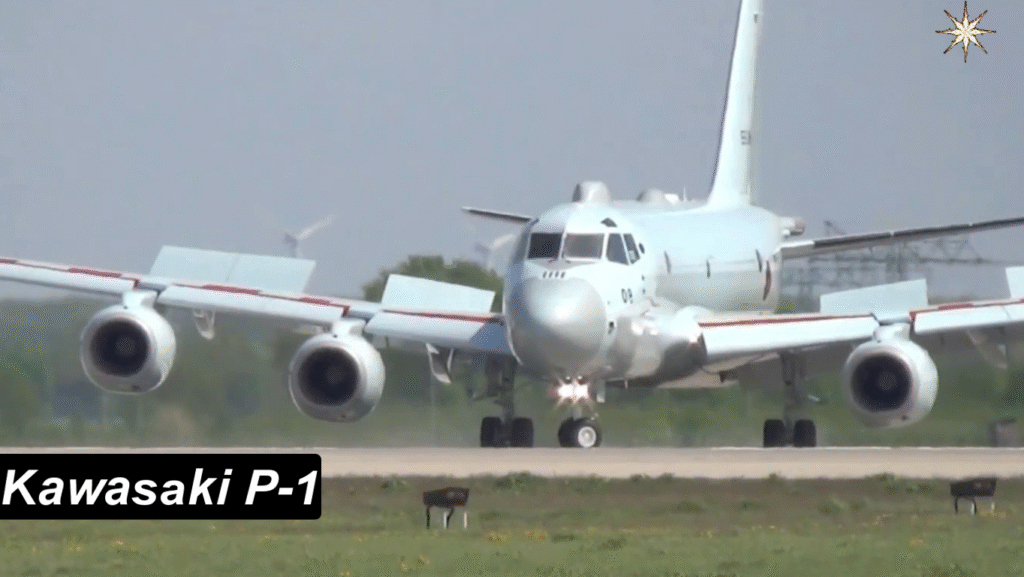
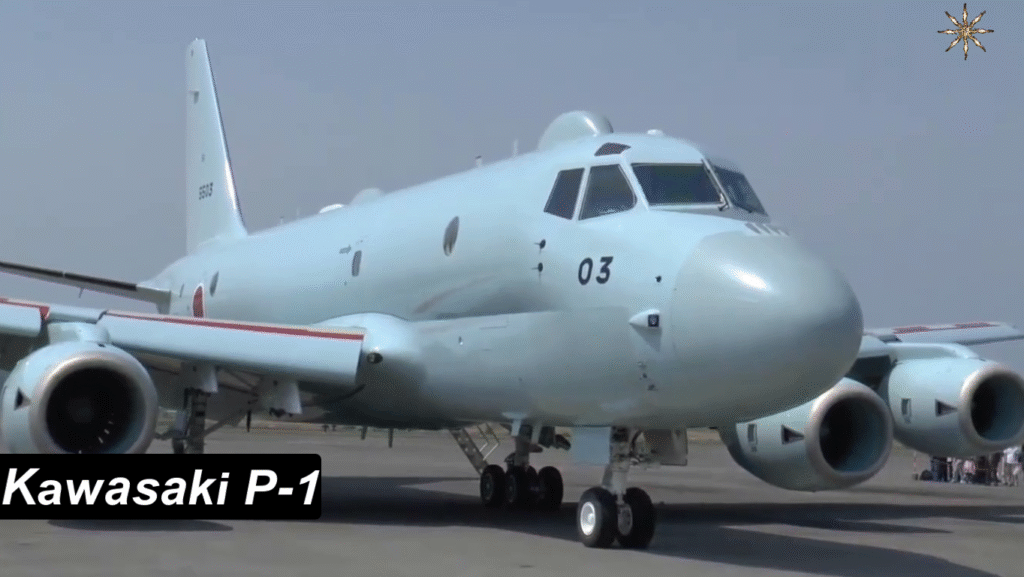
The Kawasaki P-1, originally known as the P-X during its early stages, stands as a symbol of Japan’s resurgence in advanced military aviation. Developed by Kawasaki Heavy Industries Aerospace Division, this aircraft was specifically engineered to serve as a next-generation maritime patrol platform for the Japan Maritime Self-Defense Force (JMSDF).
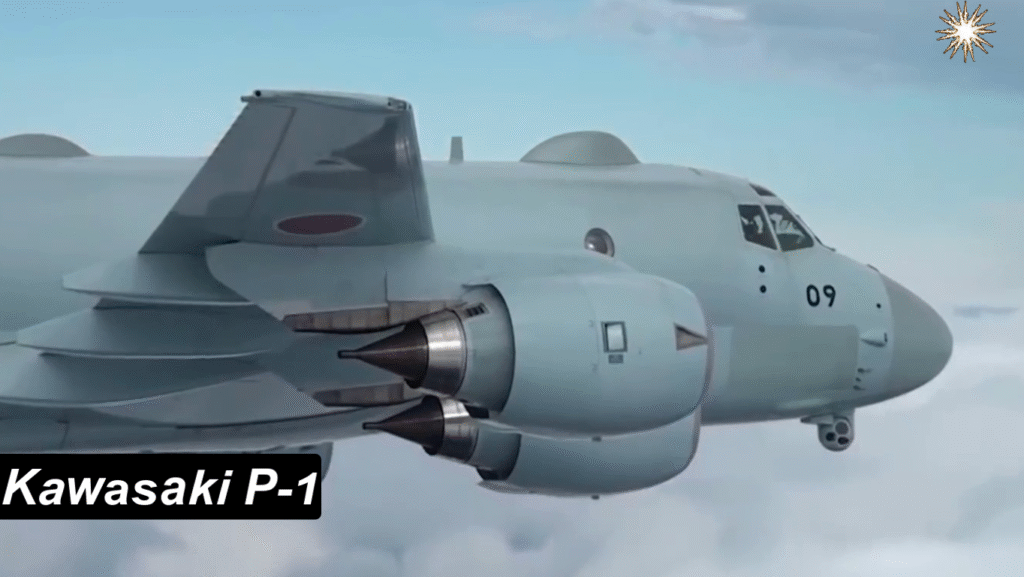
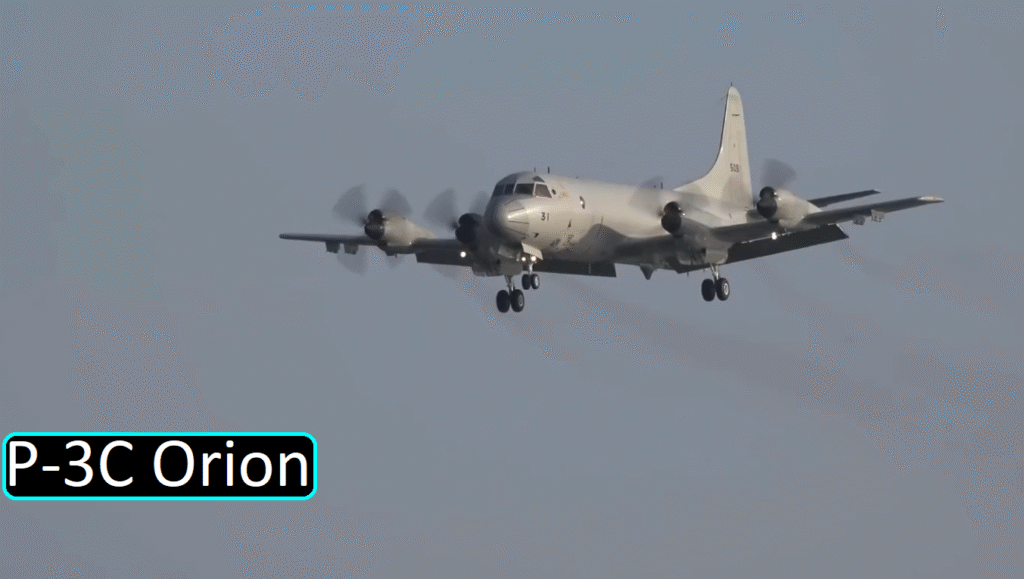
Its development began as a response to the aging Lockheed P-3C Orion fleet, which had served Japan for decades in anti-submarine warfare (ASW) and maritime surveillance roles. Japan’s goal was clear — to design a wholly indigenous aircraft that could exceed the P-3C’s range, speed, and detection capabilities.
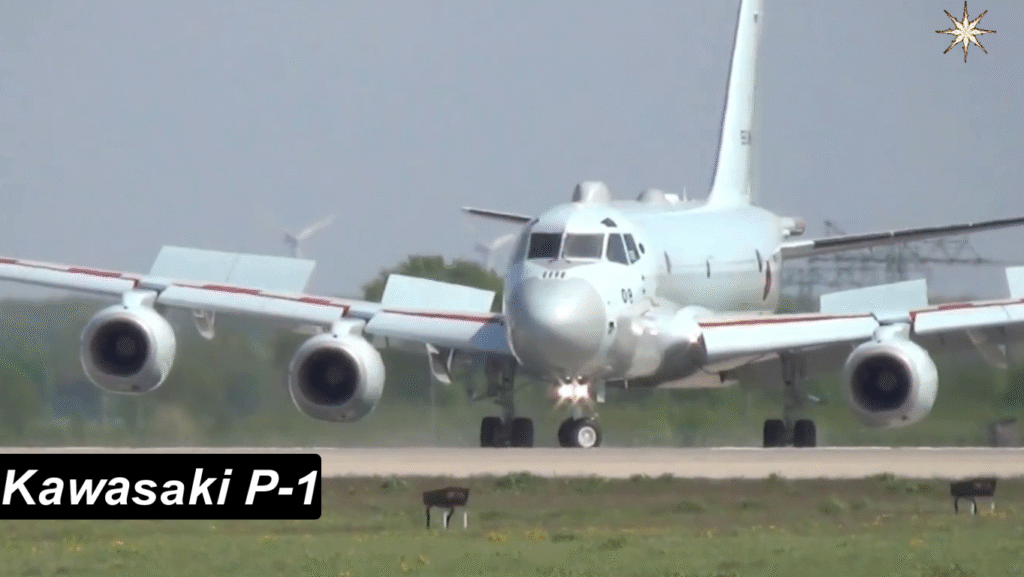
After several years of research and development, the P-1’s first flight took place on September 28, 2007. Following a rigorous flight test program, it entered operational service in 2013. Since then, it has become a cornerstone of Japan’s maritime security, patrolling the vast Pacific regions surrounding the country.
Replacing the P-3C Orion Fleet
The transition from the P-3C Orion to the P-1 marked a major technological leap for the JMSDF. While the Orion was a turboprop aircraft adapted from a civilian airliner, the P-1 was designed from the ground up for military maritime operations. This purpose-built nature gave the P-1 better performance, higher reliability, and more advanced mission systems.
Flight Testing and Initial Operations
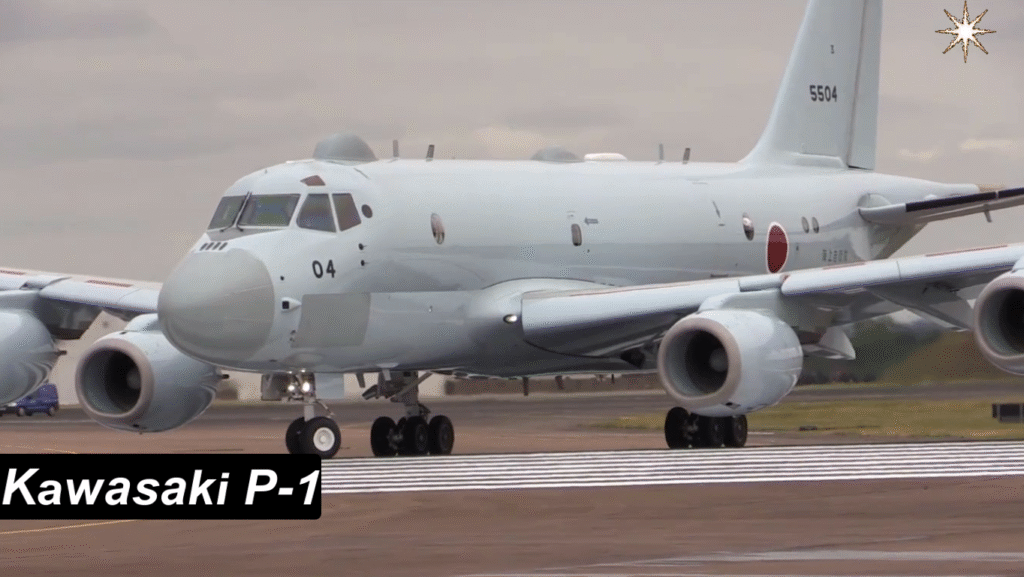
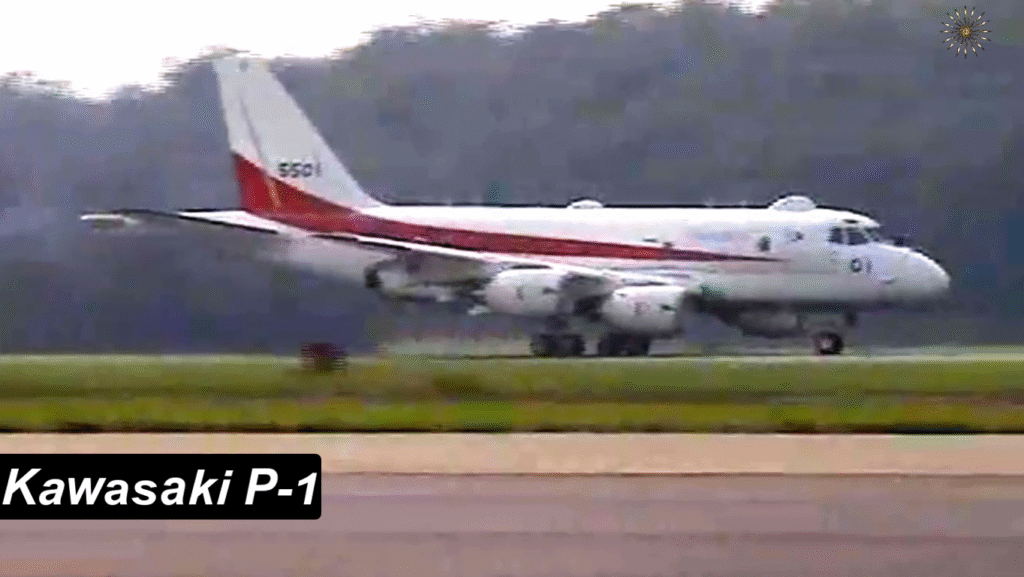
Following successful test campaigns, the P-1 proved its ability to perform long-range patrols, anti-submarine warfare (ASW), and surveillance missions. Since entering service, the aircraft has participated in joint exercises and routine maritime patrols, solidifying its role in safeguarding Japan’s maritime interests.

Design, Technology, and Performance
A Purpose-Built Maritime Patrol Aircraft
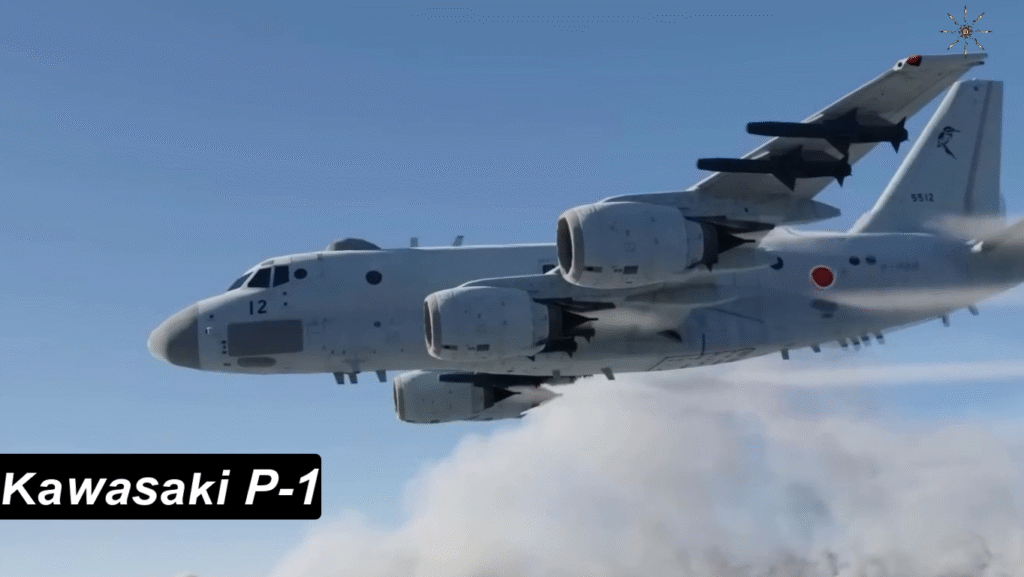
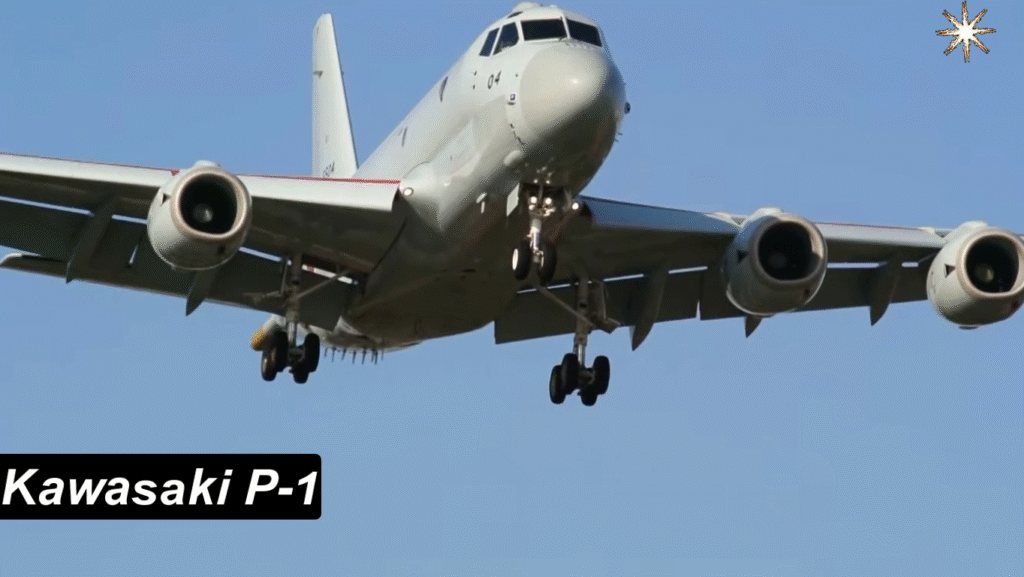
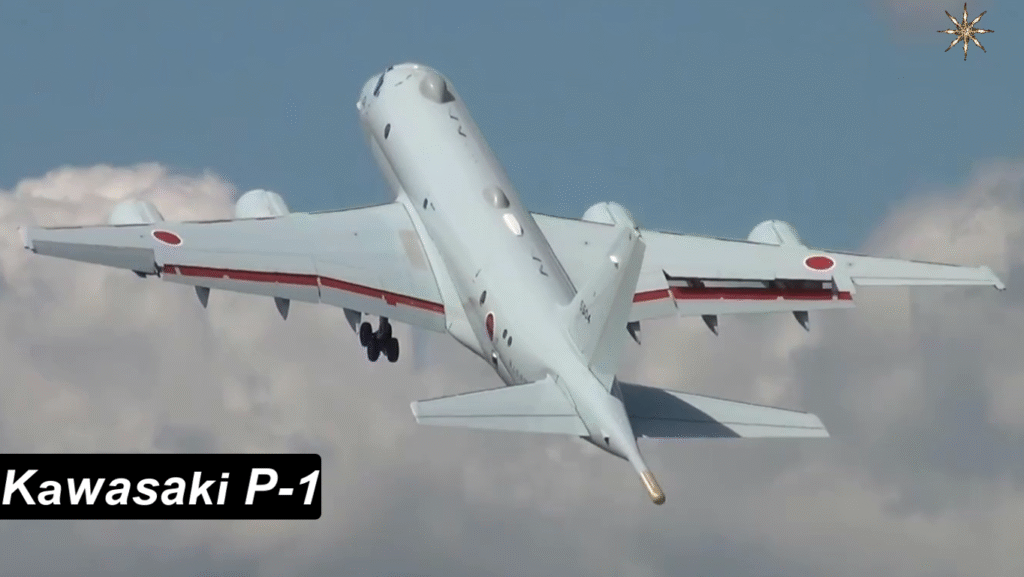
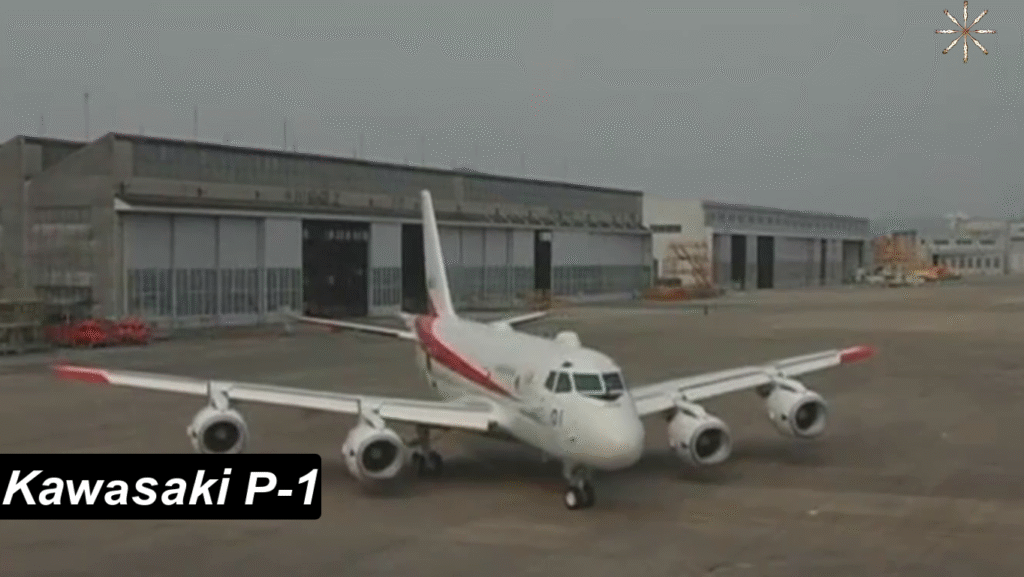
Unlike many maritime aircraft derived from civilian models, the Kawasaki P-1 was engineered specifically for maritime missions. This gave designers the freedom to optimize the airframe for long endurance, heavy payloads, and low-altitude stability.
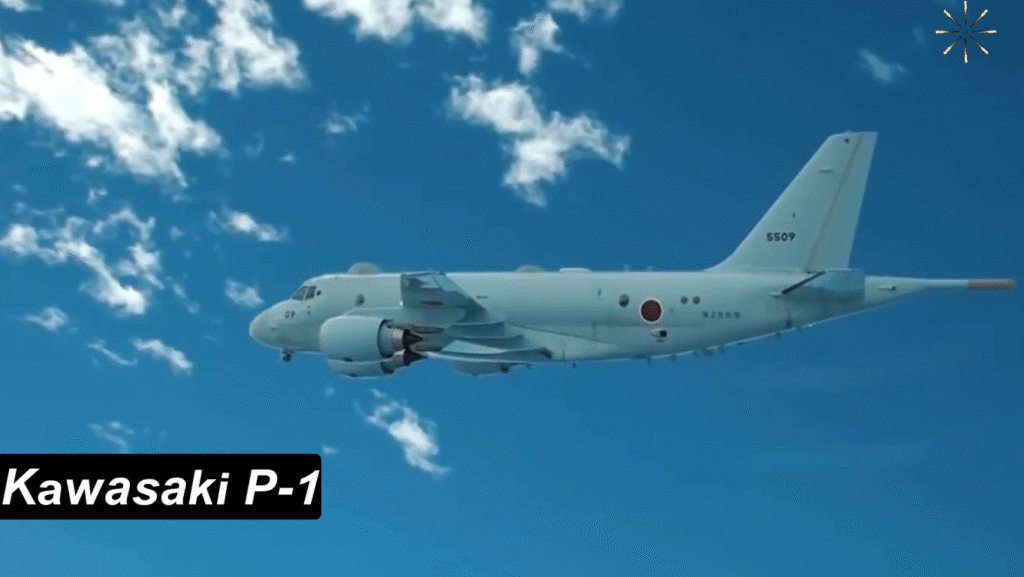
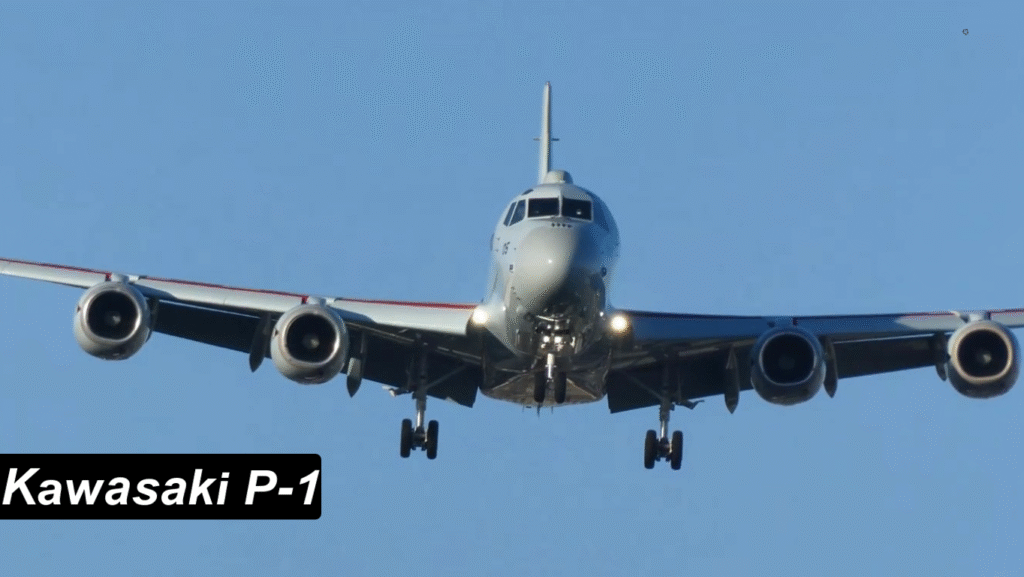
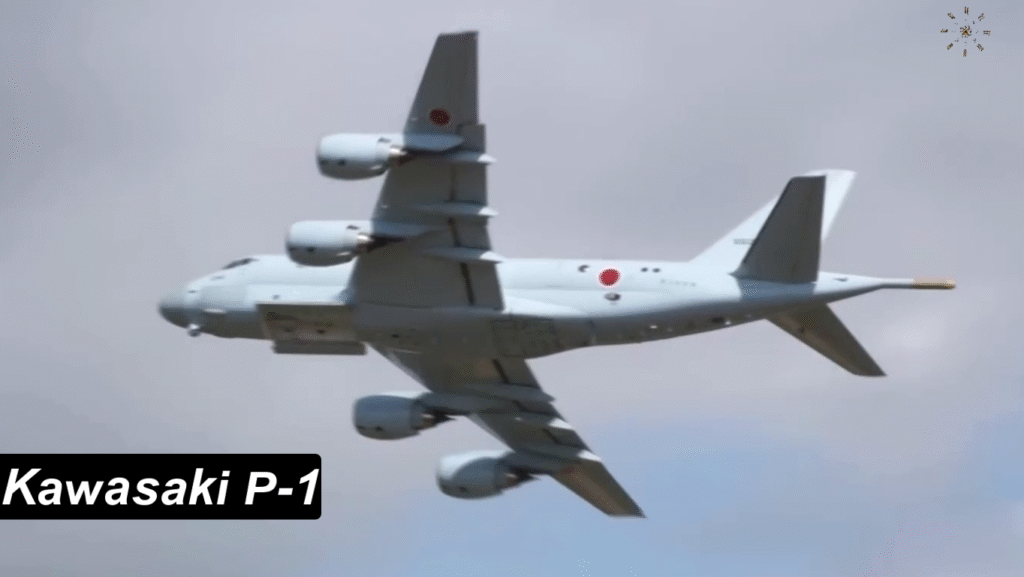
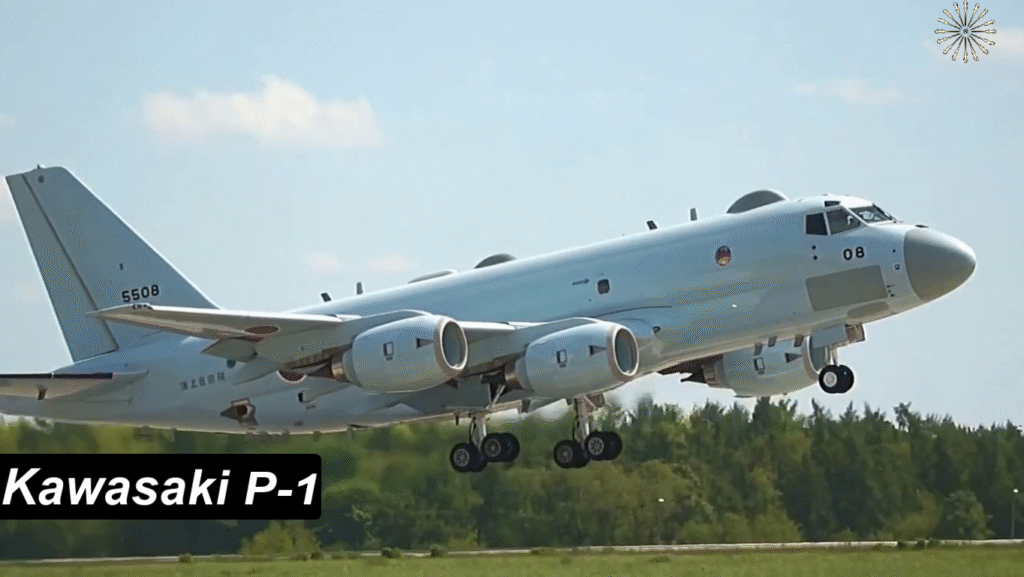
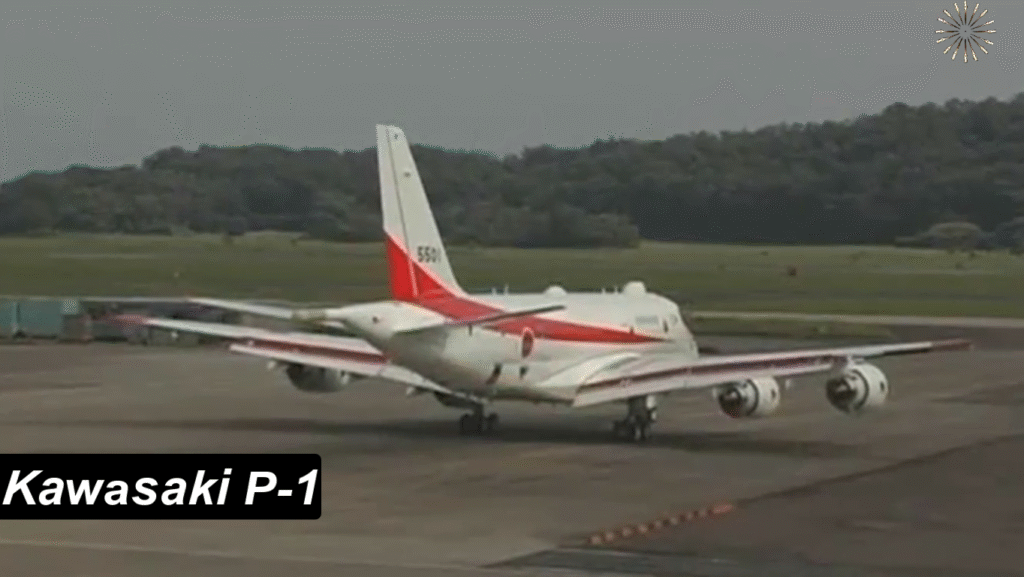
Its airframe, featuring a wingspan of approximately 35.4 meters and a length of 38 meters, is constructed using lightweight aluminum alloys and composite materials. The maximum takeoff weight (MTOW) is around 79,700 kilograms, reflecting its robust design for extended missions over open waters.
The Revolutionary Fly-by-Optics Flight Control System
One of the P-1’s standout innovations is its fly-by-optics system — the first of its kind in an operational aircraft. Instead of traditional electrical wires, optical fibers transmit flight control signals, dramatically reducing electromagnetic interference from onboard radar and sensors.
This innovation not only enhances reliability but also contributes to greater flight precision and reduced system weight, showcasing Japan’s technological sophistication in avionics engineering.
Engine Power and Specifications
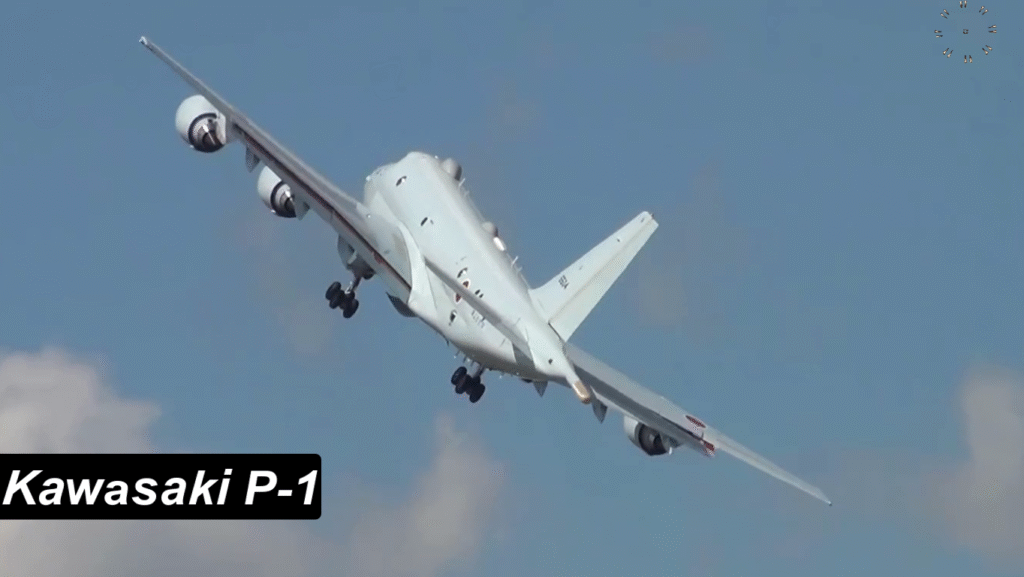
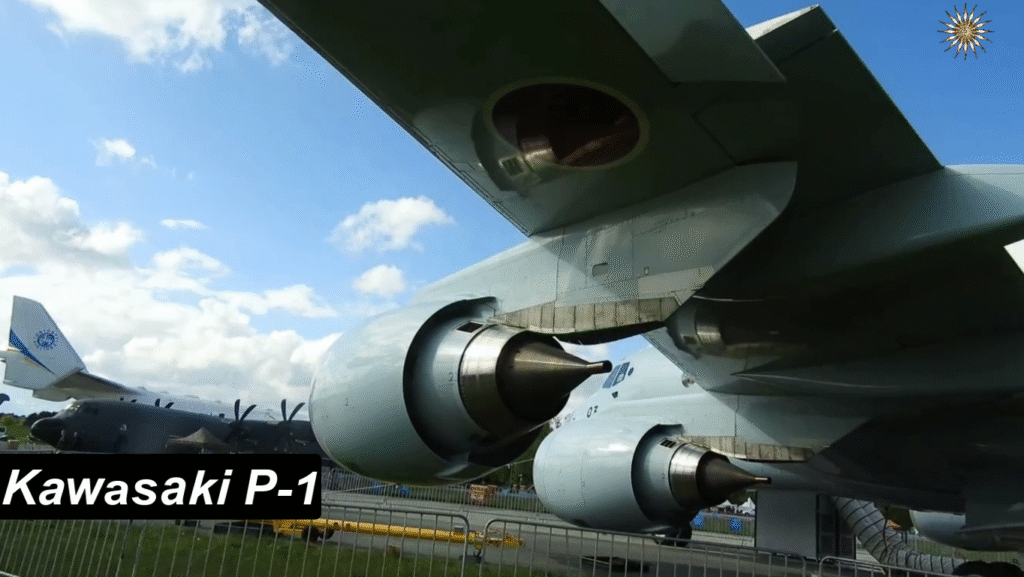
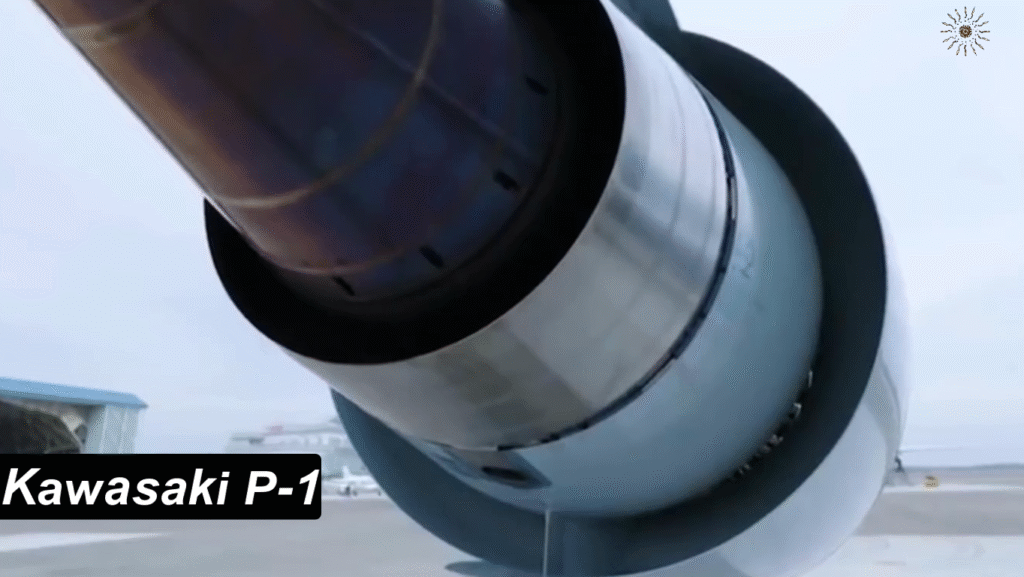
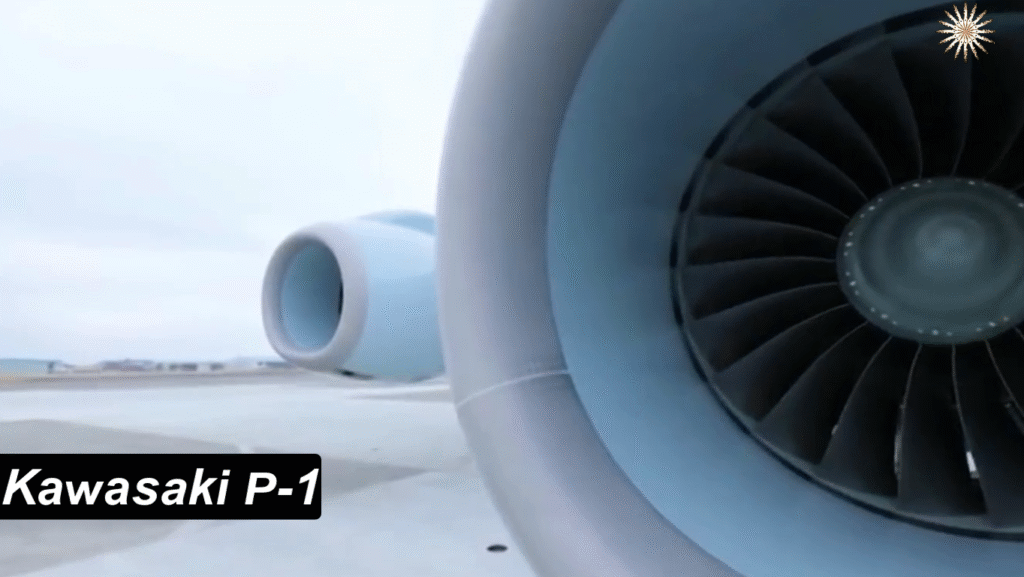
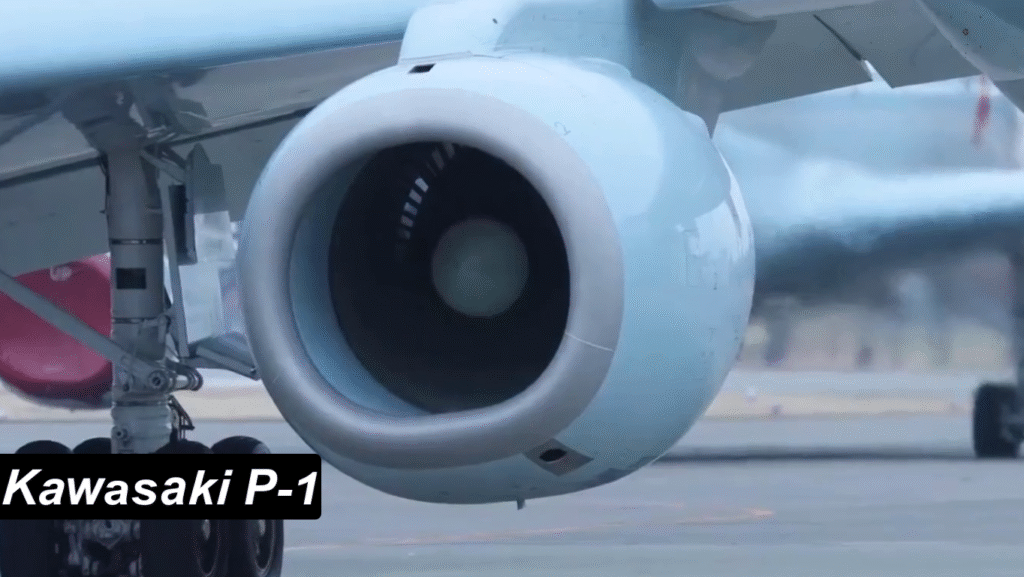
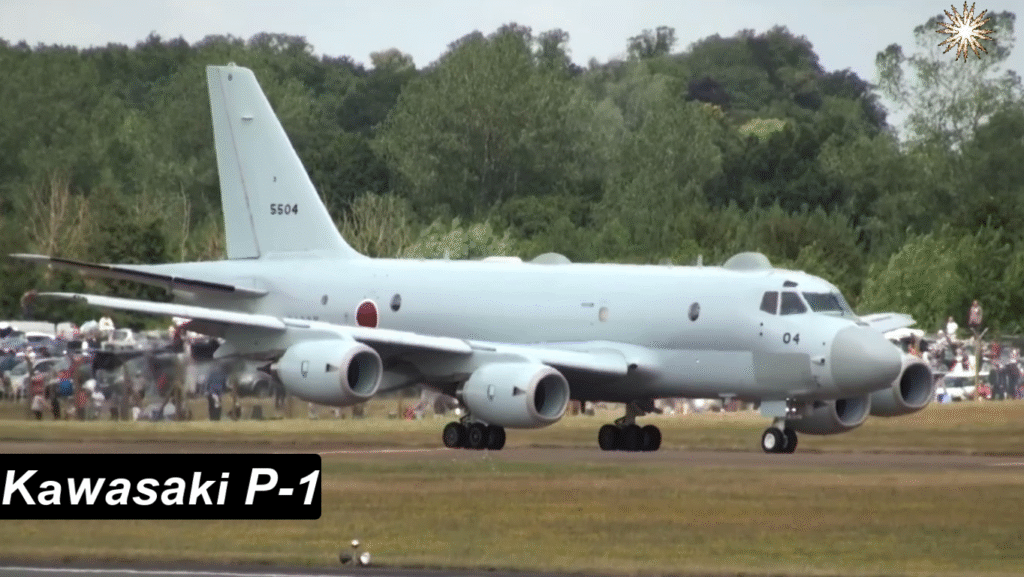
The P-1 is powered by four IHI F7-10 high-bypass turbofan engines, each providing substantial thrust while maintaining fuel efficiency. These engines allow the aircraft to achieve a maximum speed of approximately 996 km/h and a cruise speed near 833 km/h.
Its service ceiling reaches around 13,520 meters, and with a range of about 8,000 kilometers in non-armed configuration, the P-1 can patrol vast oceanic zones without refueling.
Sensors, Armament, and Mission Roles
Advanced Detection and Tracking Systems
The P-1 is equipped with some of the most advanced sensor technologies in the world. At its core lies the Toshiba HPS-106 Active Electronically Scanned Array (AESA) radar, capable of detecting both aerial and maritime targets across great distances.
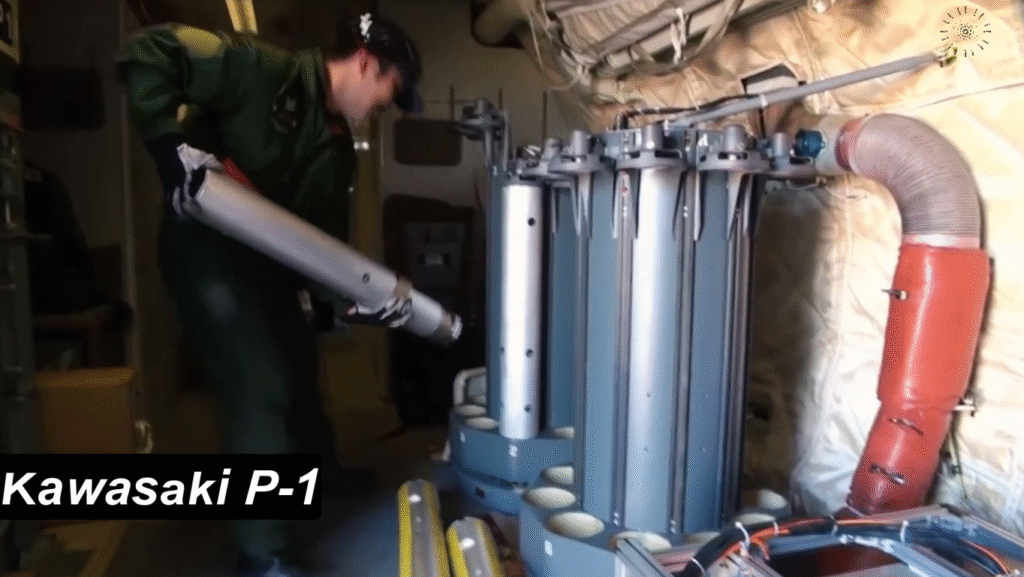
Additional systems include an electro-optical/infrared (EO/IR) turret for day/night surveillance, a magnetic anomaly detector (MAD) located in the tail for submarine detection, and deployable sonobuoys for underwater tracking.


Armament and Payload Flexibility
The aircraft carries a variety of weapons both internally and on external hardpoints under its wings. The P-1 can deploy torpedoes, depth charges, naval mines, and air-to-surface missiles like the AGM-84 Harpoon.
This versatility makes it capable of executing diverse missions ranging from anti-submarine warfare (ASW) to anti-surface warfare (ASuW) and maritime surveillance.

Crew and Operational Structure
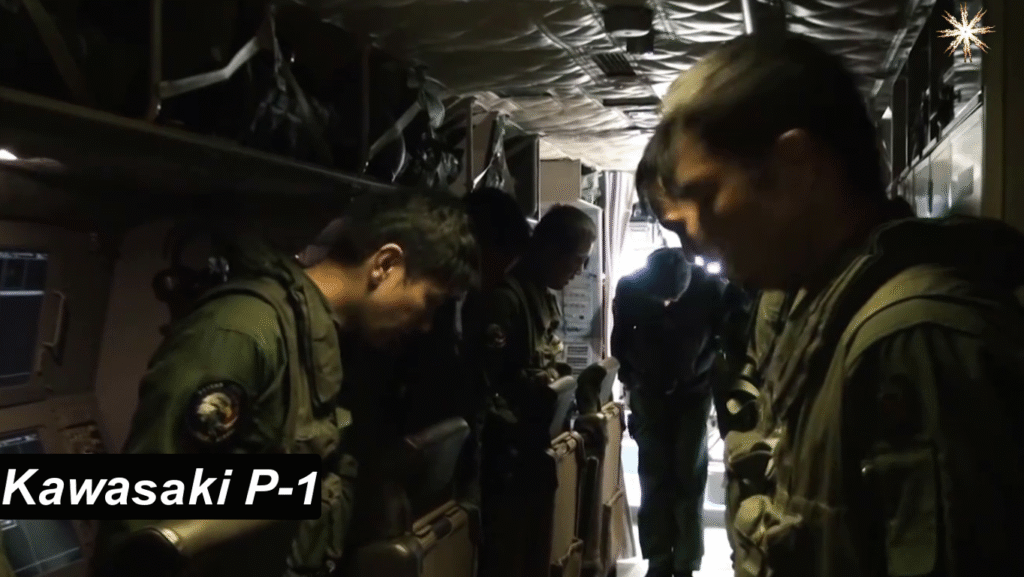
A standard P-1 crew includes two pilots and about eleven mission operators. Each crew member specializes in different systems — radar operation, sonar analysis, communications, and weapon management — ensuring efficient multi-role performance during long-duration missions.
Variants and Future Developments
XP-1 Prototype
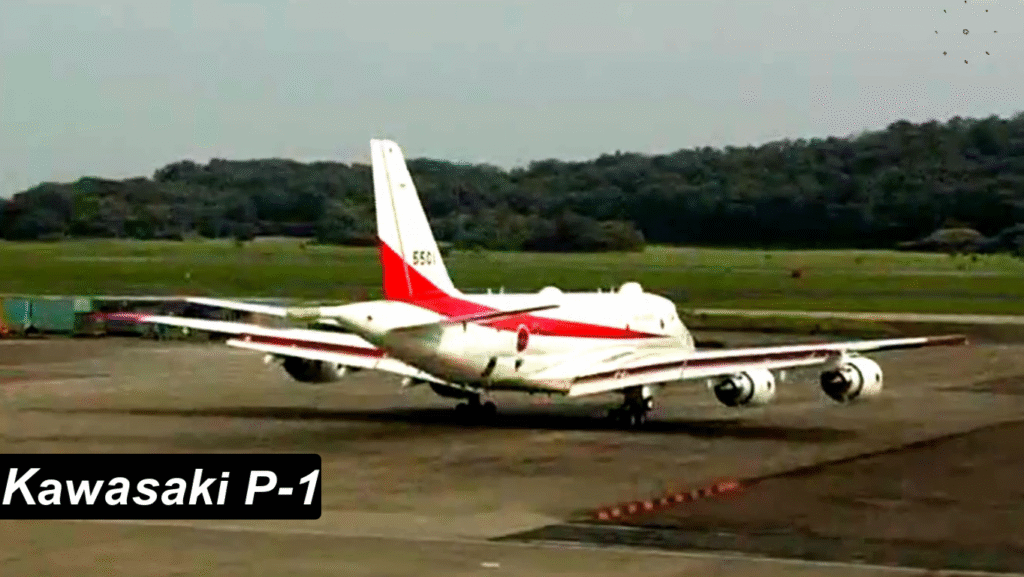
The XP-1 served as the initial prototype for flight testing and systems validation. Its success paved the way for serial production and full-scale deployment within the JMSDF.
YPX Civil Variant and Future Concepts
Kawasaki once proposed a civil airliner variant, the YPX, derived from the P-1’s airframe, but this project was eventually discontinued. However, Japan continues to explore electronic warfare (EW) and intelligence-gathering versions of the P-1 for future defense needs.


International Interest and Potential Buyers
Following the relaxation of Japan’s arms export laws, the P-1 has attracted global attention. Countries such as Italy, Bangladesh, Thailand, and Vietnam have been mentioned as potential buyers exploring the P-1’s capabilities for anti-submarine and maritime patrol missions.
Strategic Role and Long-Term Outlook
The P-1 represents Japan’s growing commitment to regional maritime security. With its advanced sensors, long range, and digital control systems, it ensures Japan remains a major player in anti-submarine and maritime surveillance operations in the Indo-Pacific.
Frequently Asked Questions (FAQs)
1. What is the Kawasaki P-1?
The Kawasaki P-1 is a Japanese maritime patrol aircraft developed by Kawasaki Heavy Industries for the Japan Maritime Self-Defense Force.
2. When did the P-1 first fly?
Its maiden flight took place on September 28, 2007, and it entered operational service in 2013.
3. What makes the P-1 unique compared to other patrol aircraft?
It is the first operational aircraft to use a fly-by-optics system, reducing electromagnetic interference and enhancing reliability.
4. How fast can the P-1 fly?
The P-1 has a maximum speed of about 996 km/h and a cruise speed near 833 km/h.
5. What type of weapons can it carry?
The aircraft can deploy torpedoes, depth charges, mines, and anti-ship missiles, including the AGM-84 Harpoon.
6. Is the P-1 available for export?
Yes. Japan has allowed potential exports, and countries like Italy and Thailand have shown interest.

Conclusion: The Future of the Kawasaki P-1
The Kawasaki P-1 is more than just an aircraft—it’s a technological milestone that defines Japan’s ambition in aerospace defense. Combining range, speed, and cutting-edge sensors, it stands as one of the most advanced maritime patrol platforms in the world.
As Japan continues to enhance its maritime security and expand defense cooperation globally, the P-1’s influence is poised to grow far beyond its home shores.