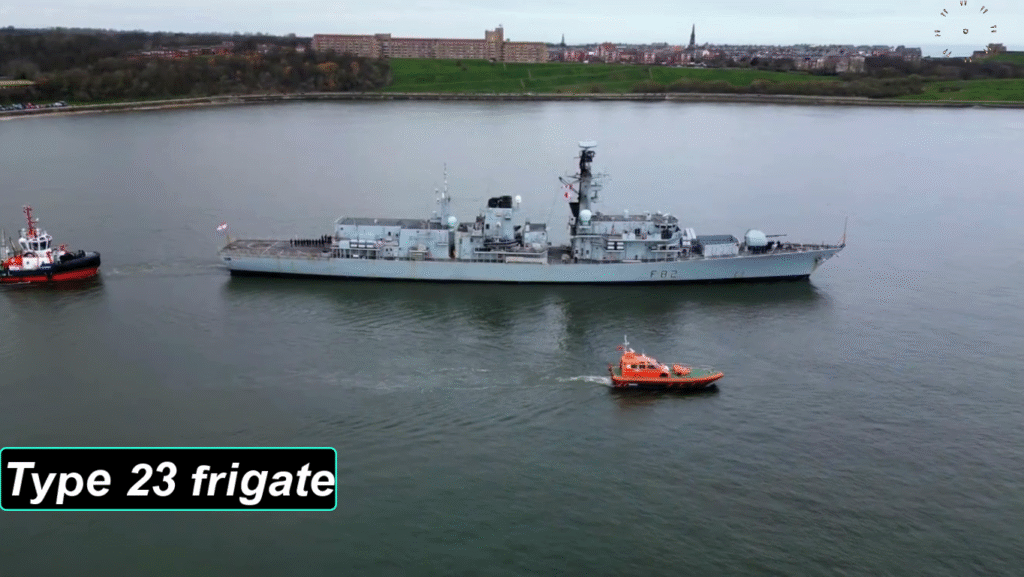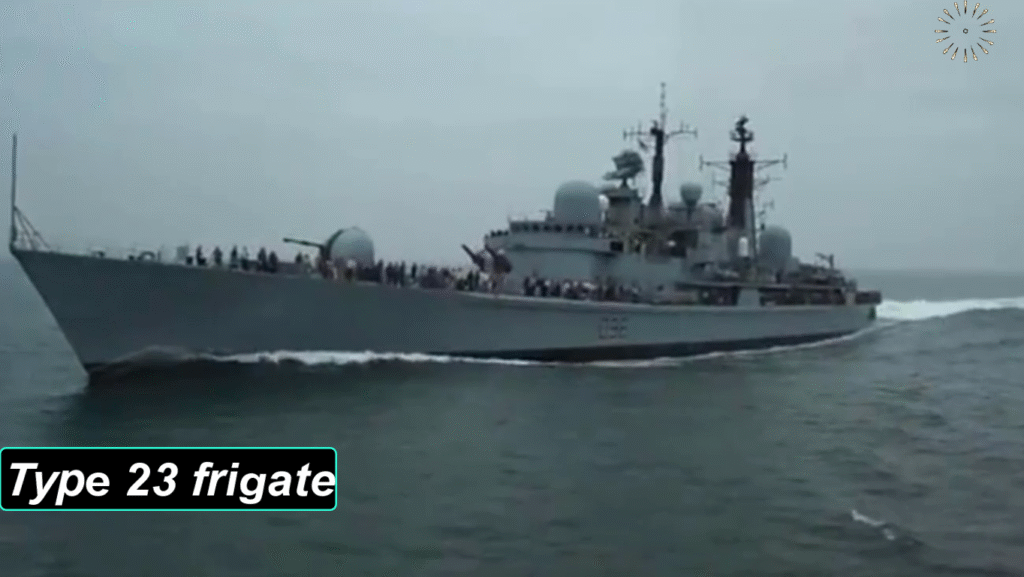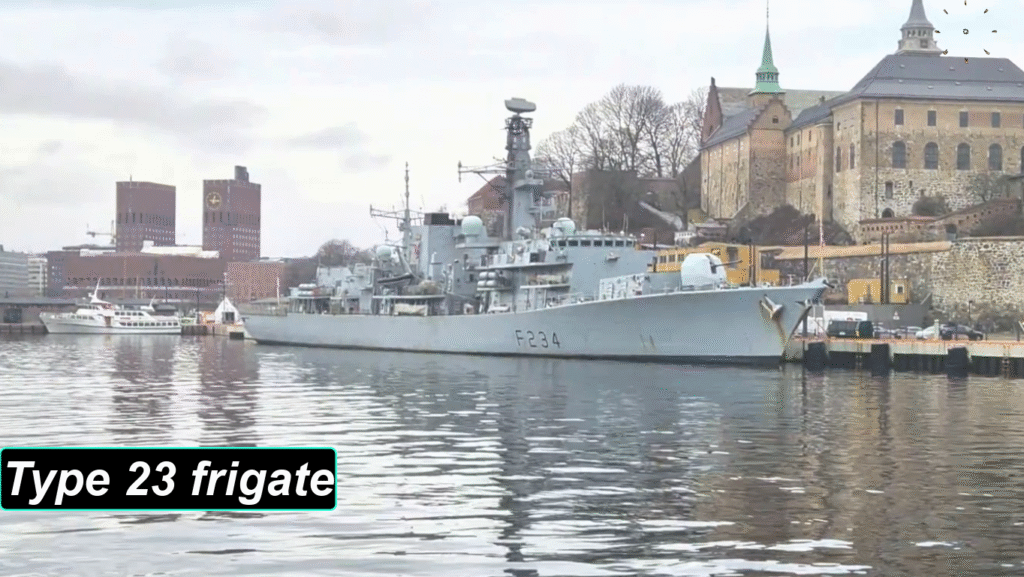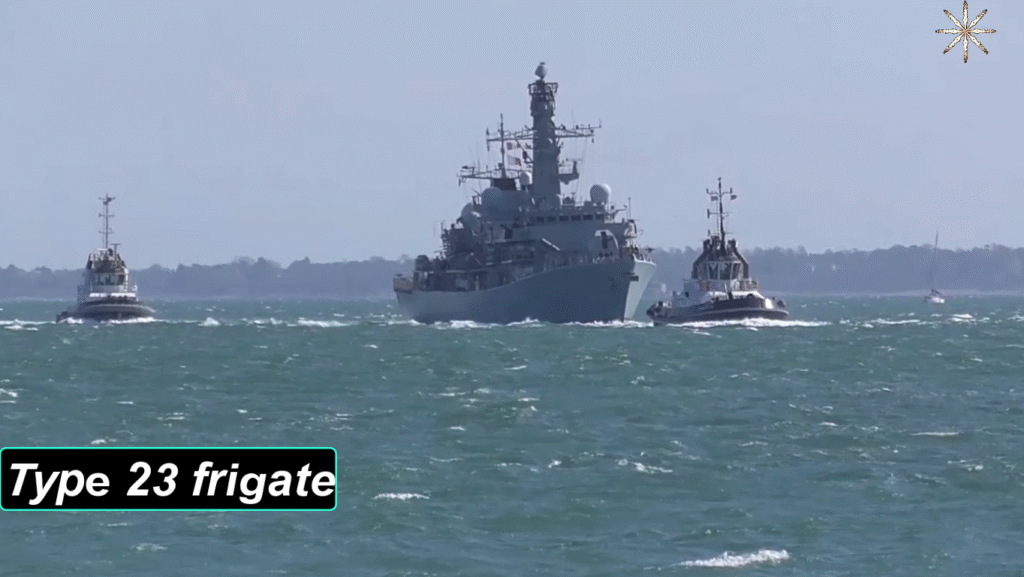
Quick Summary of the Type 23 Frigate
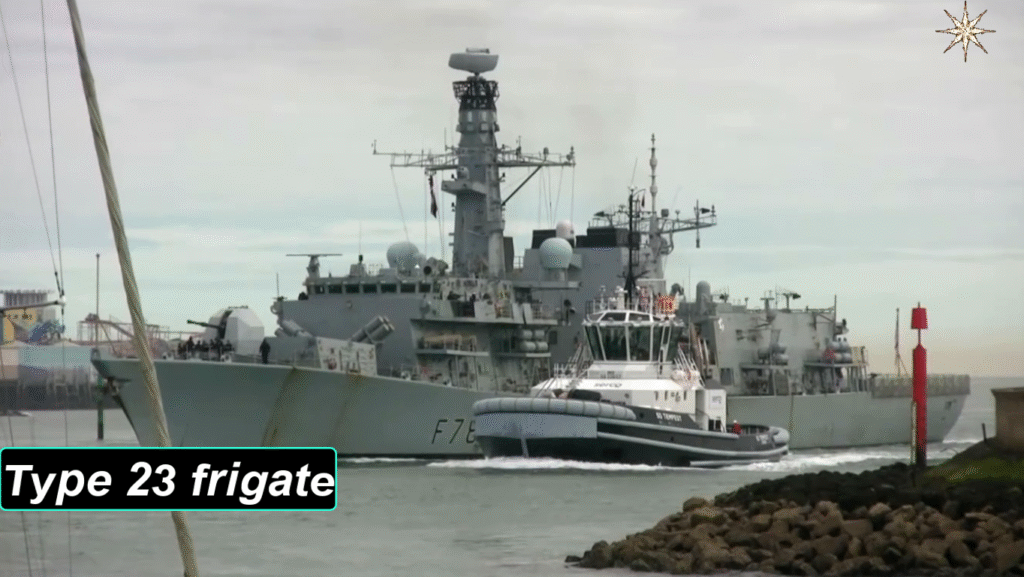
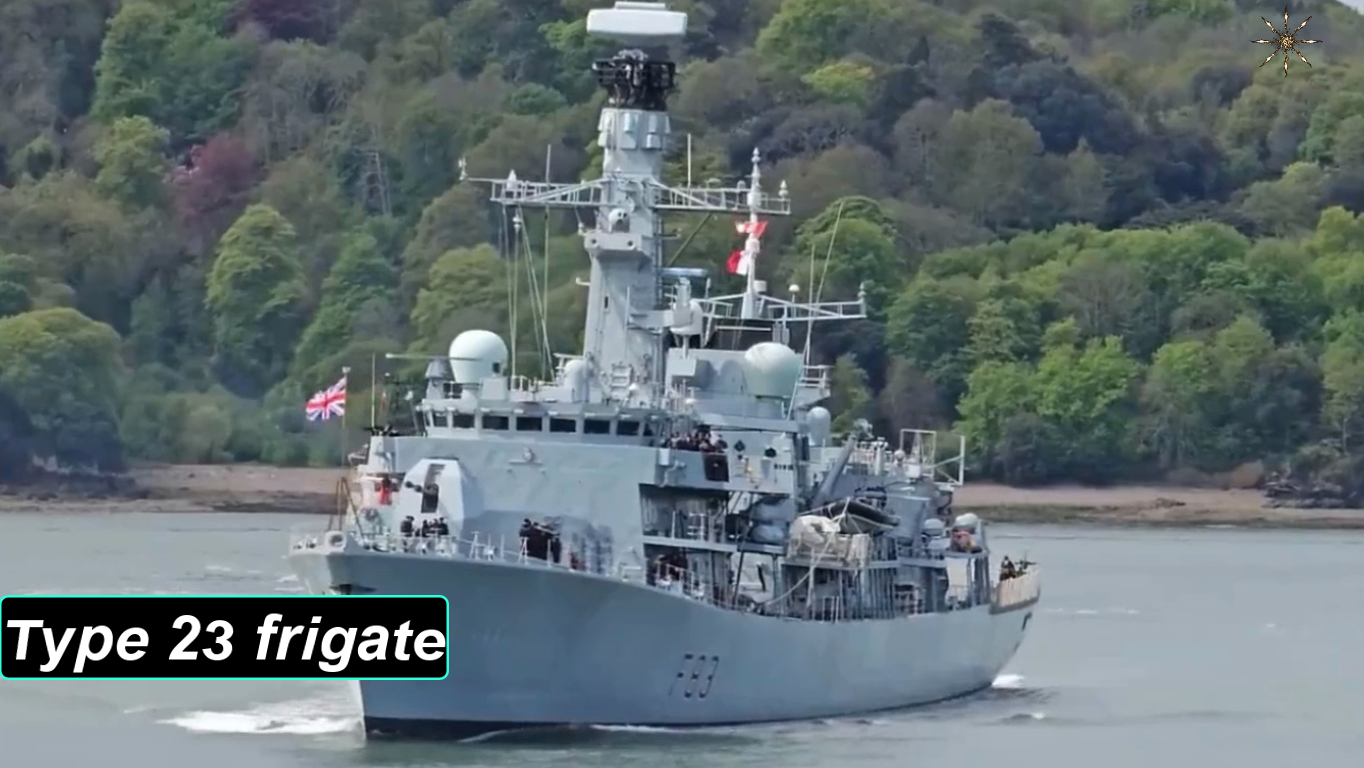
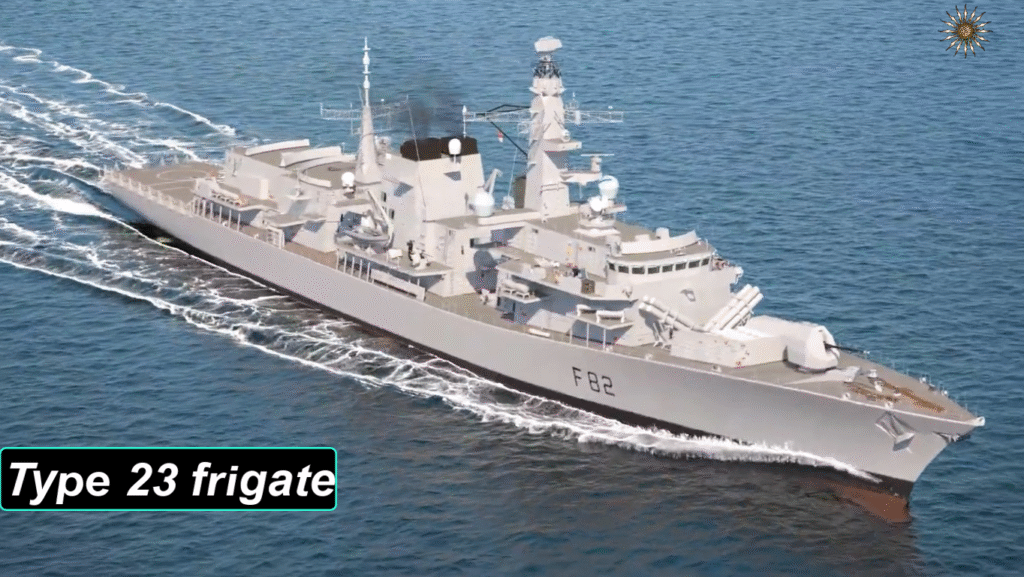
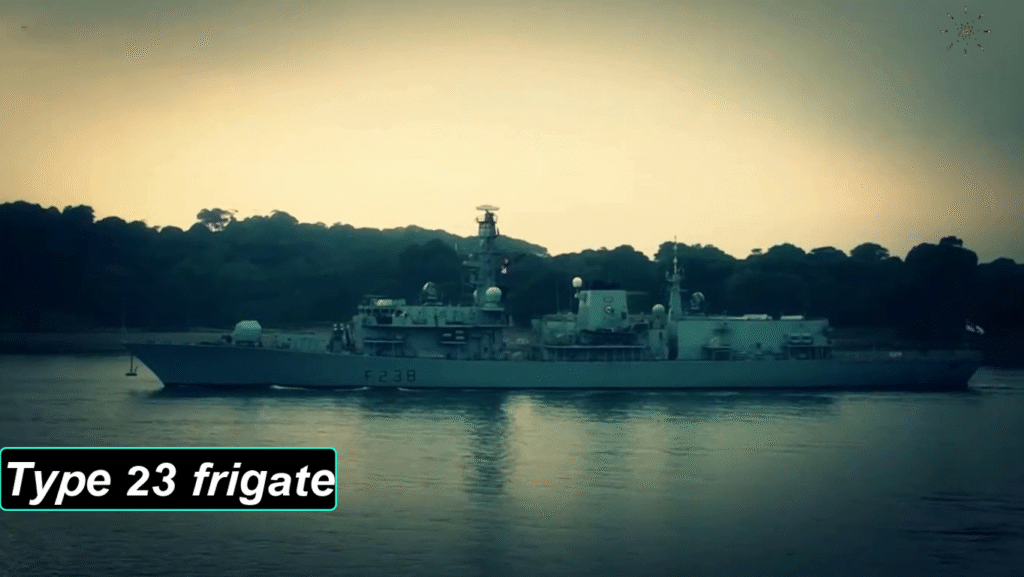
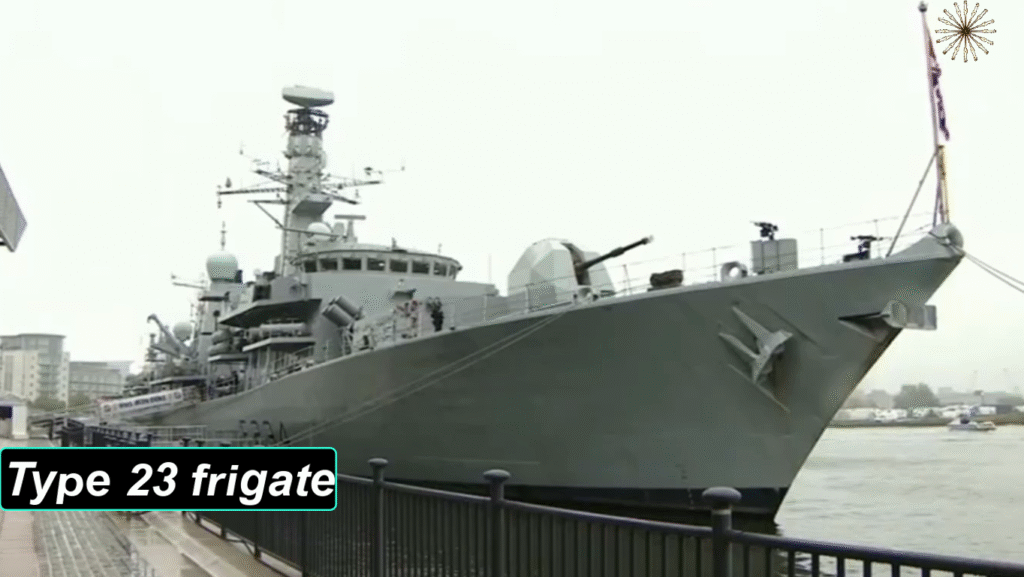
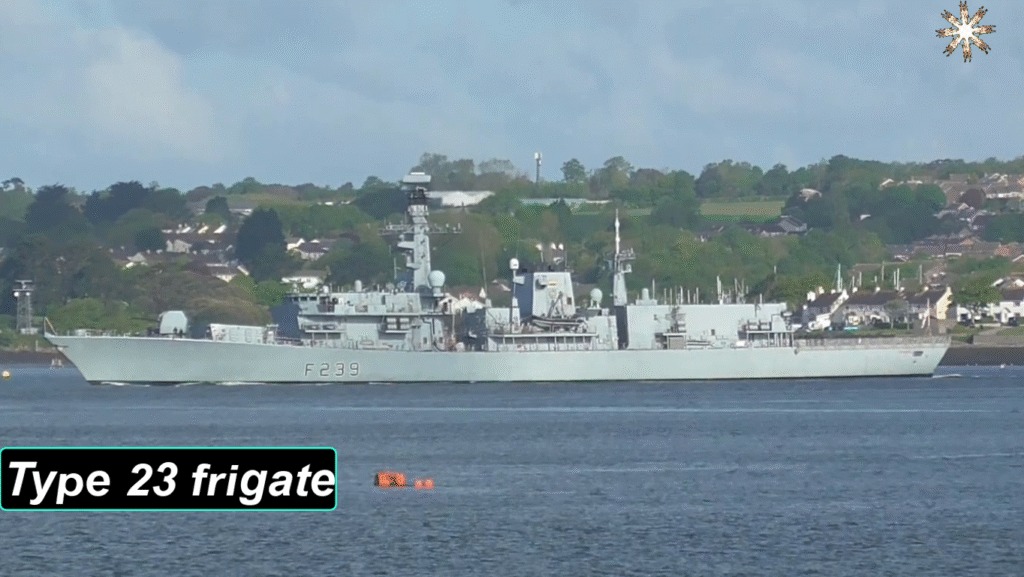
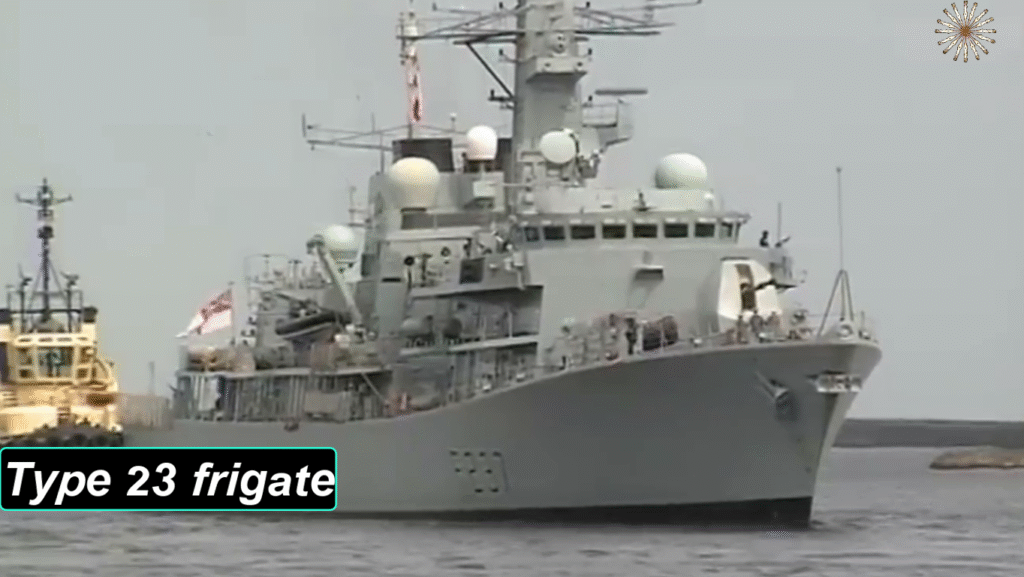
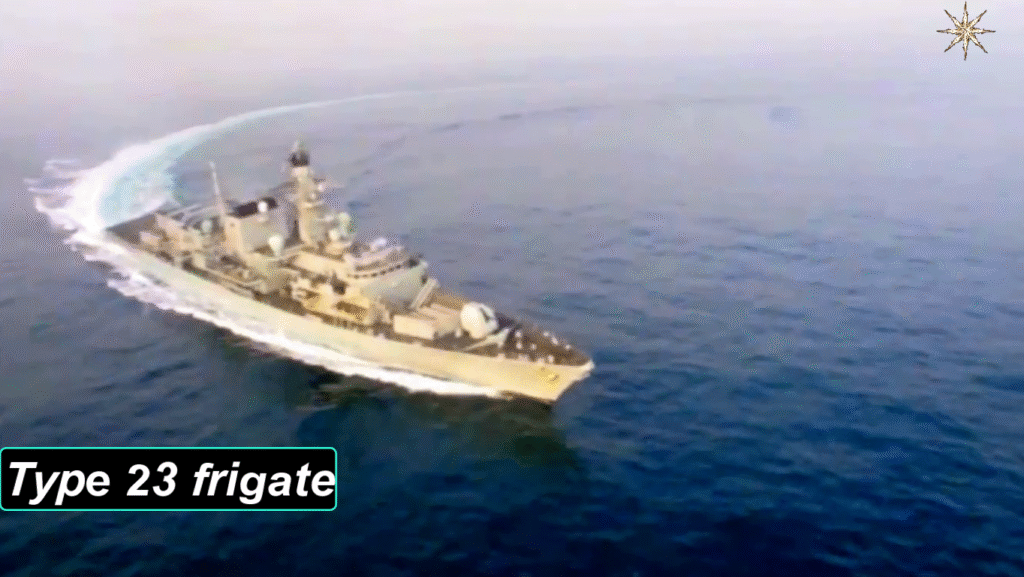
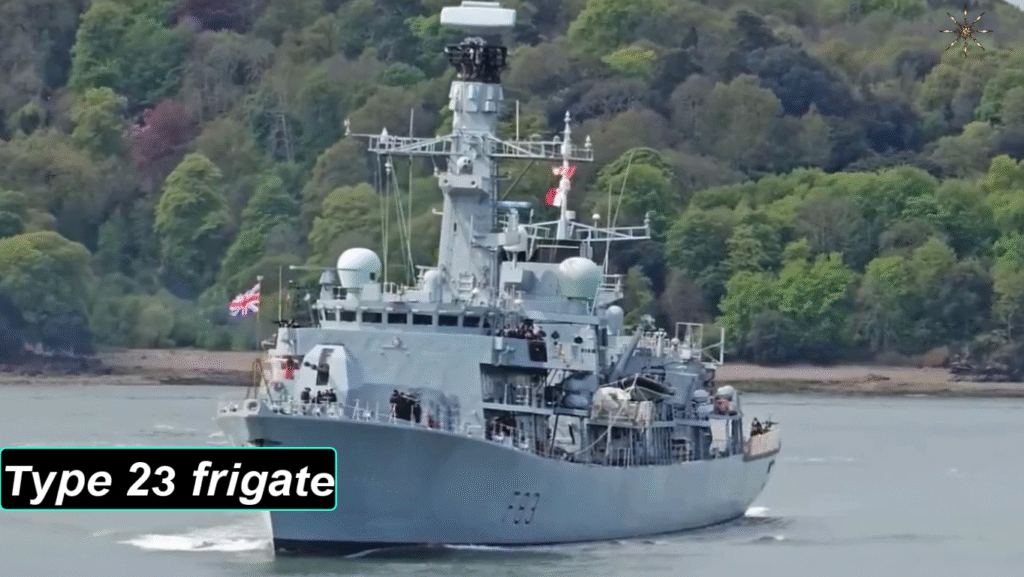
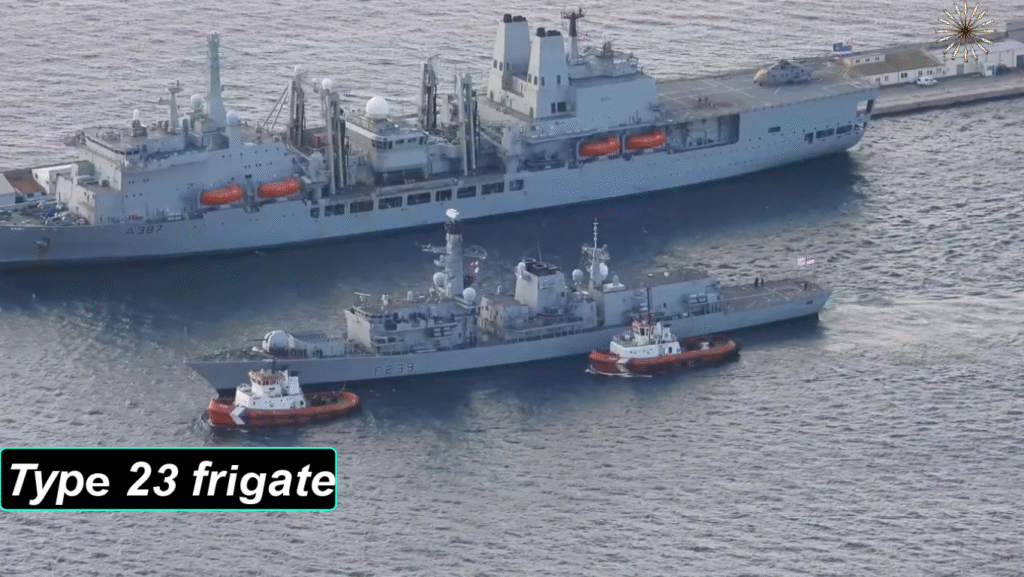
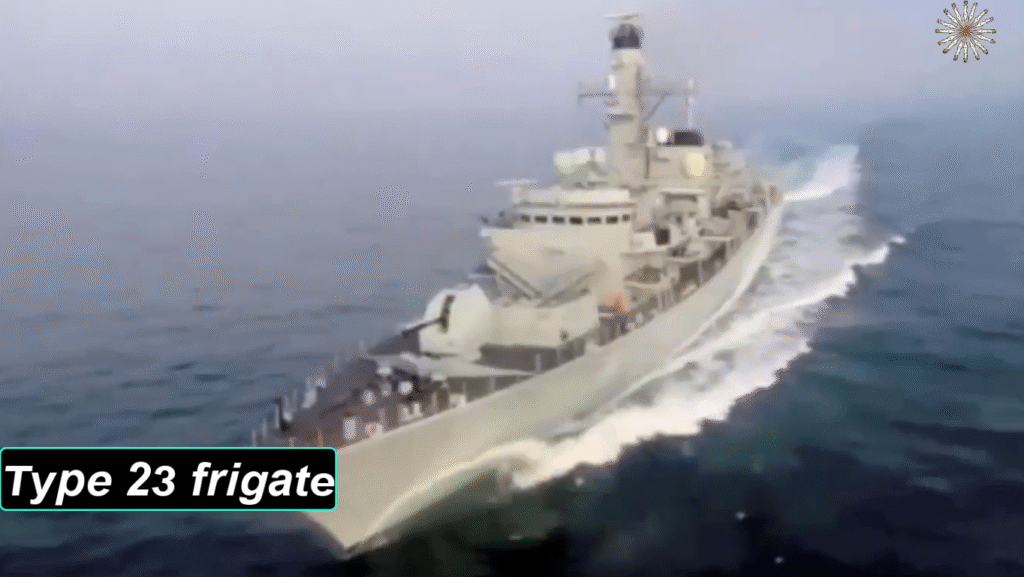
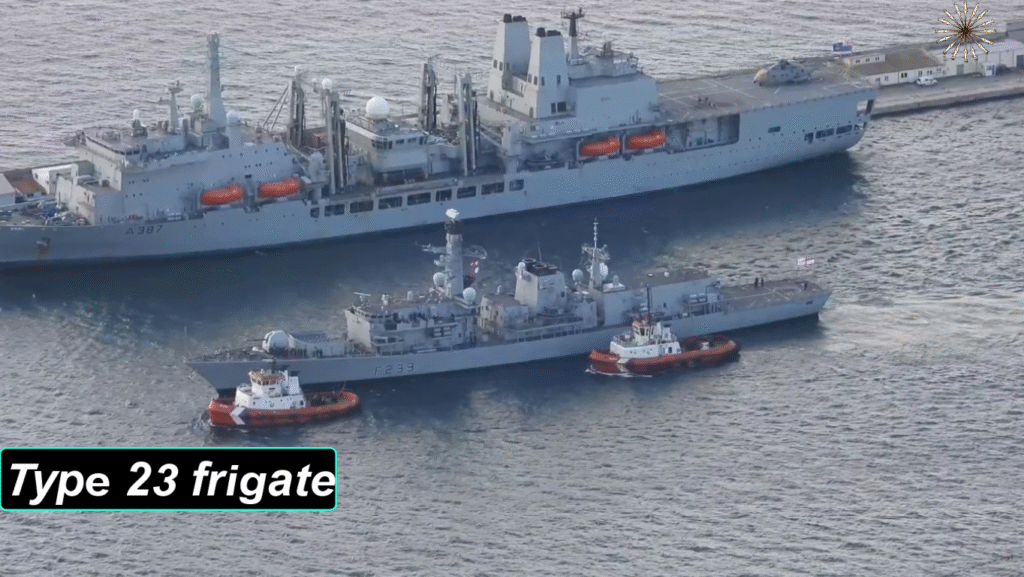
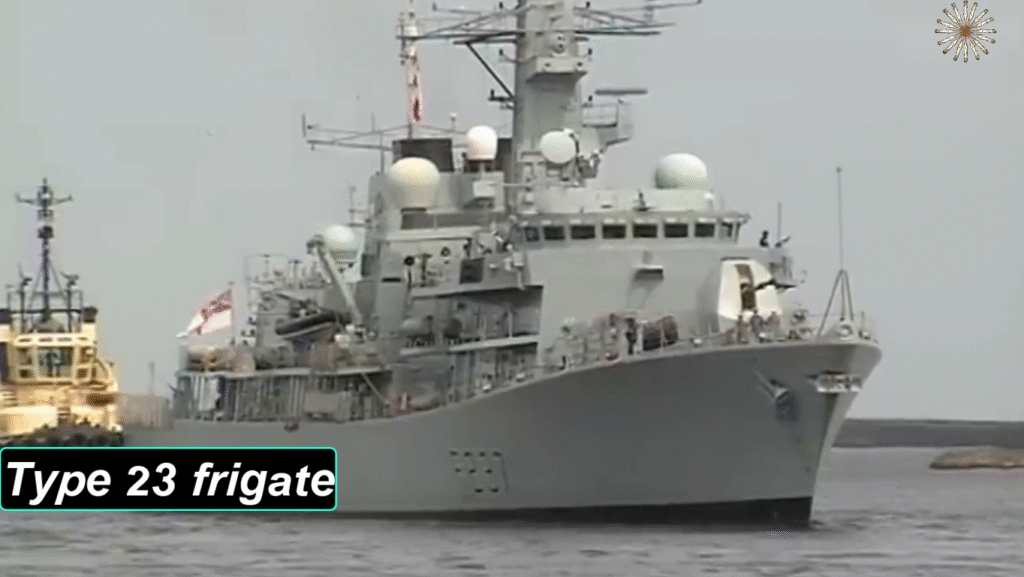
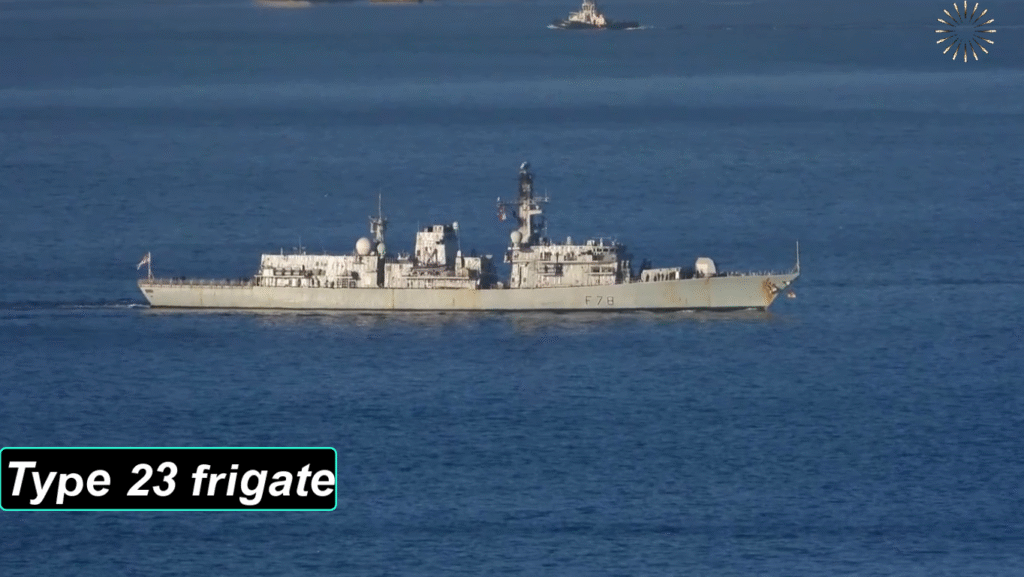
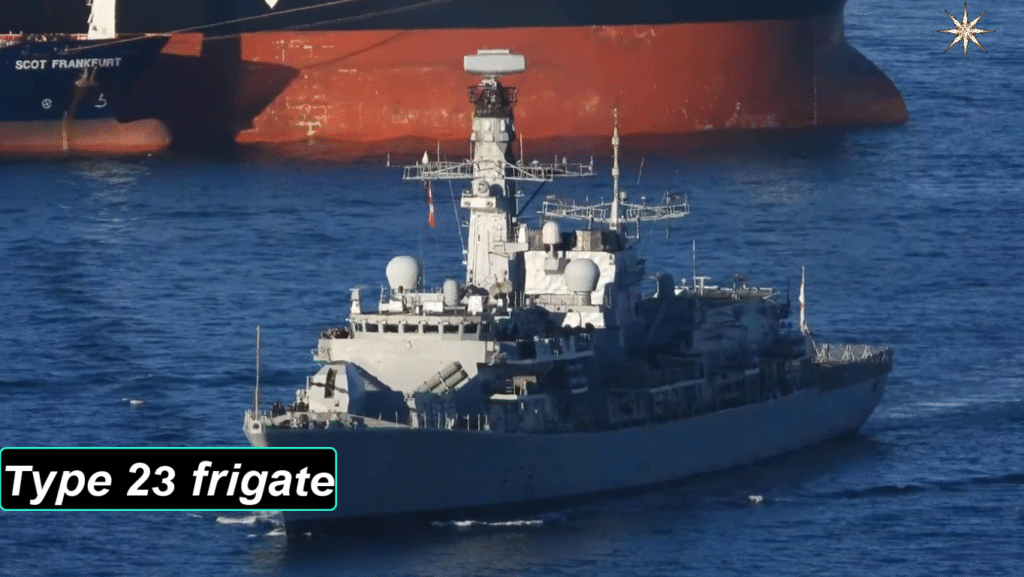
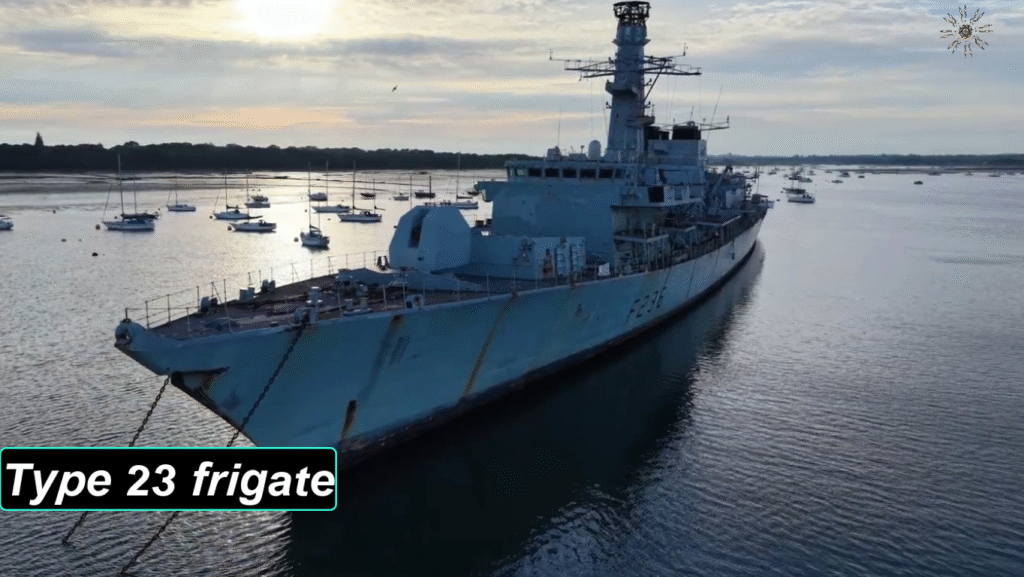
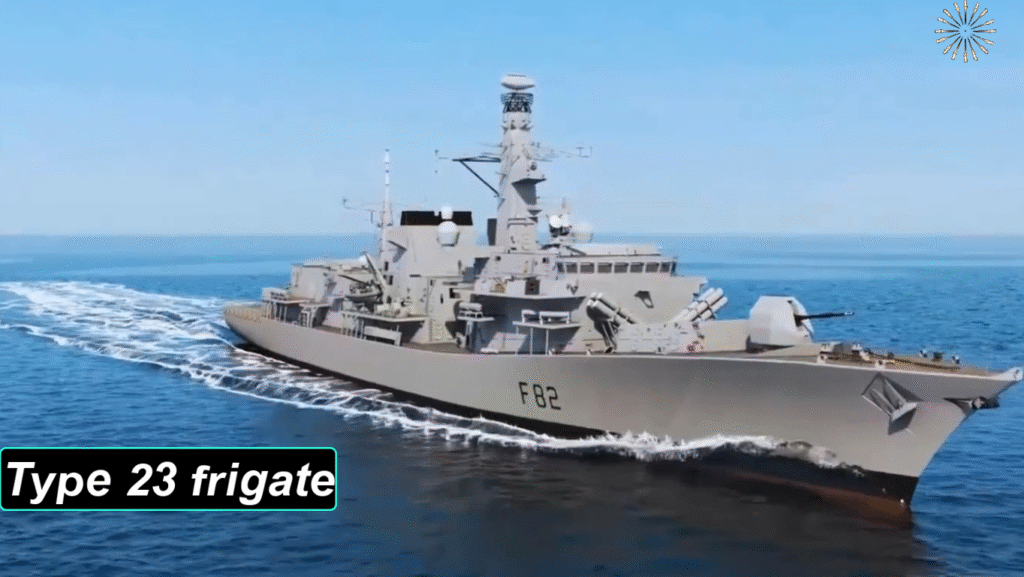
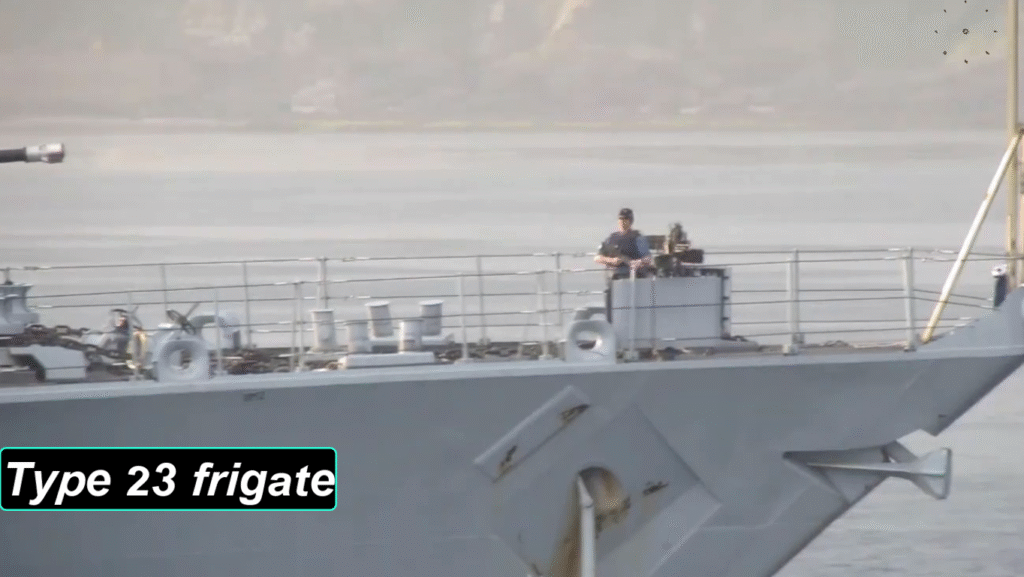
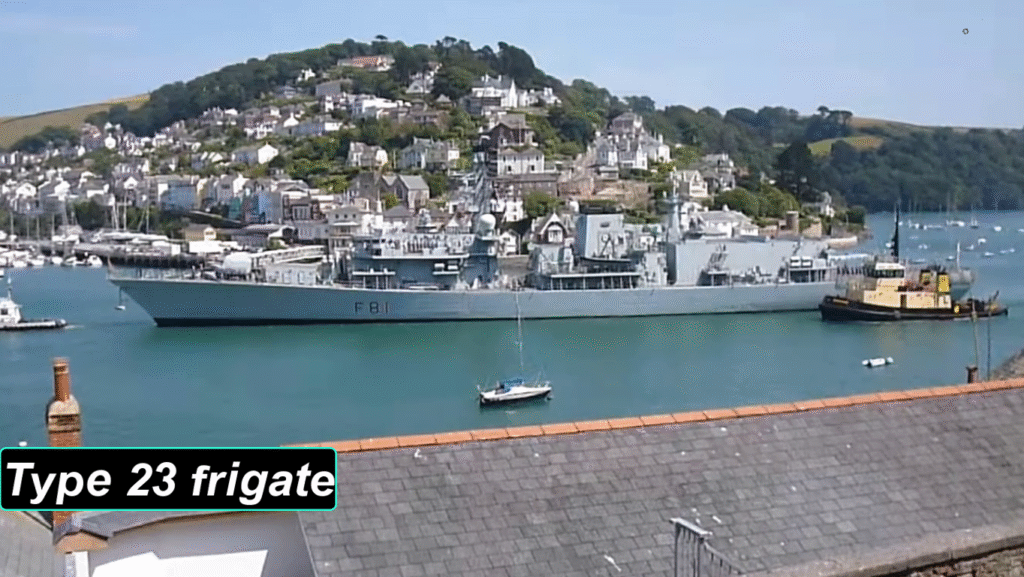
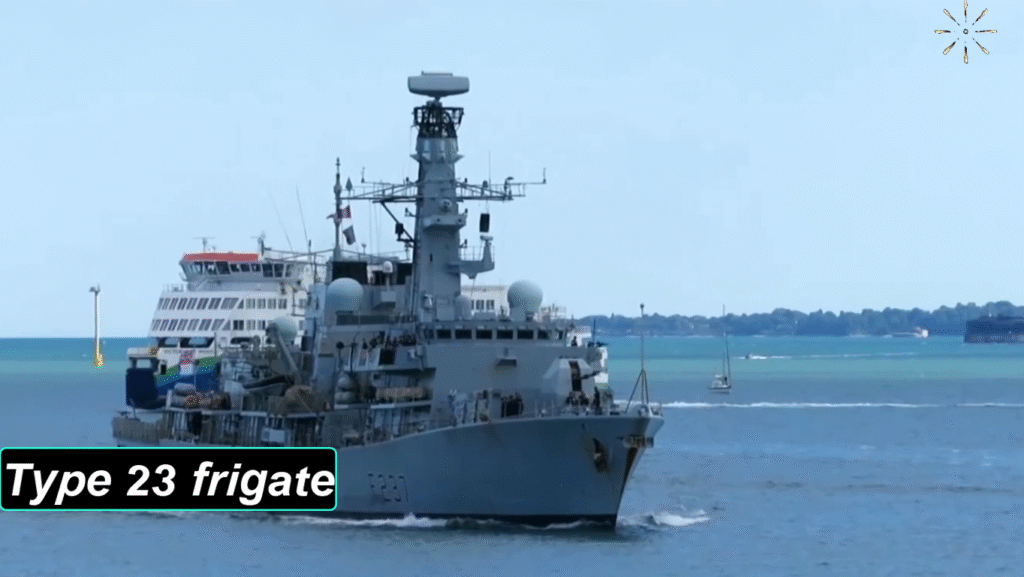
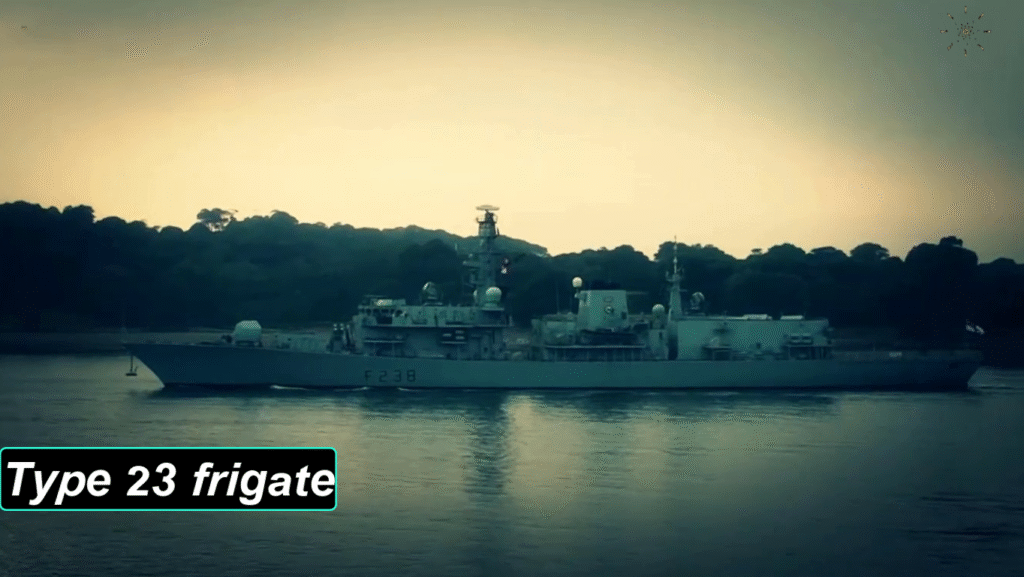
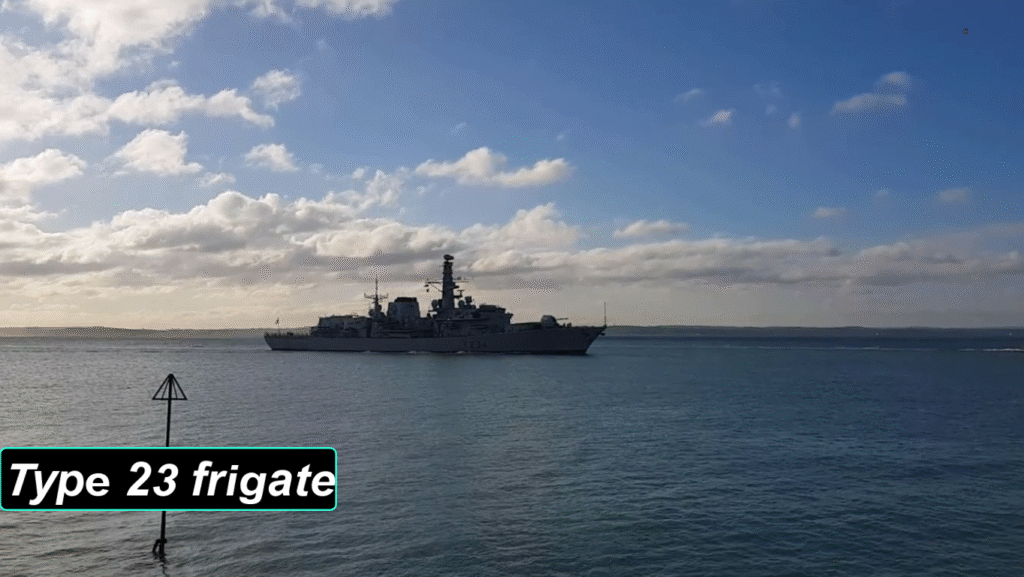
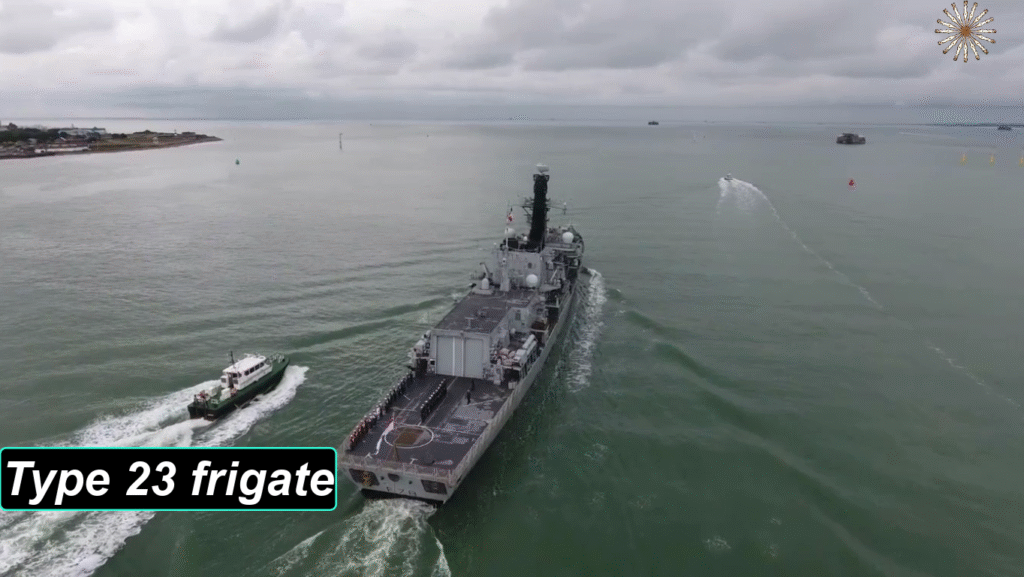
The Type 23 Frigate, commonly known as the Duke Class, represents one of the most enduring and versatile surface combatant designs in the Royal Navy’s post–Cold War history. Conceived in the late 1980s as a specialized anti-submarine warfare (ASW) vessel, the Type 23 rapidly evolved into a multi-role platform capable of handling a wide range of missions — from high-intensity naval warfare to peacekeeping, escort, and counter-piracy operations.
Between 1989 and the early 2000s, a total of 16 ships were commissioned. These frigates became the backbone of British maritime operations for more than three decades, participating in missions across the Gulf, Atlantic, Caribbean, and Indian Ocean. Today, the class is being gradually phased out and succeeded by the Type 26 Global Combat Ship and Type 31 City Class Frigate programs.
Origins and Development
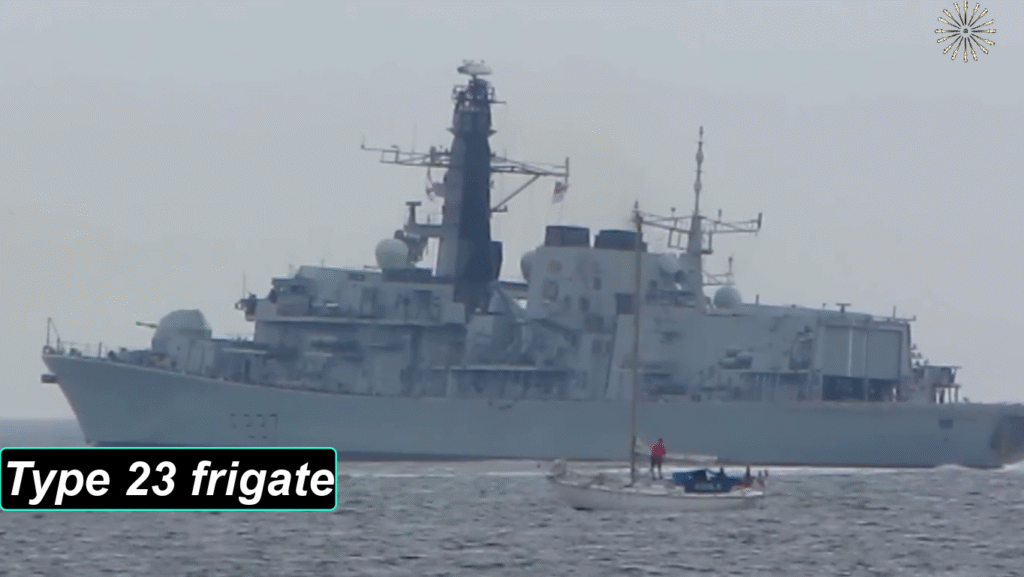
The Type 23 program began during the late stages of the Cold War, when the Soviet submarine threat dominated naval planning. The Royal Navy sought a modern, quiet, and efficient ASW escort that could protect carrier groups and convoys against new generations of diesel-electric and nuclear submarines.
The design was optimized for low acoustic signature, featuring advanced sound-damping technology and a Combined Diesel-Electric And Gas (CODLAG) propulsion system for silent running during ASW patrols. Each vessel was named after a British dukedom, earning the nickname “Duke Class.”
Design Intent: From Sub-Hunter to Multi-Role Frigate
Initially conceived as a cost-effective submarine hunter, the Type 23’s flexibility soon became its hallmark. Throughout its service life, the frigate underwent continuous modernization, integrating new weapons, sensors, and communication systems. The result was a true multi-mission ship, equally capable in anti-air, anti-surface, and anti-submarine operations.
Construction and Fleet Overview
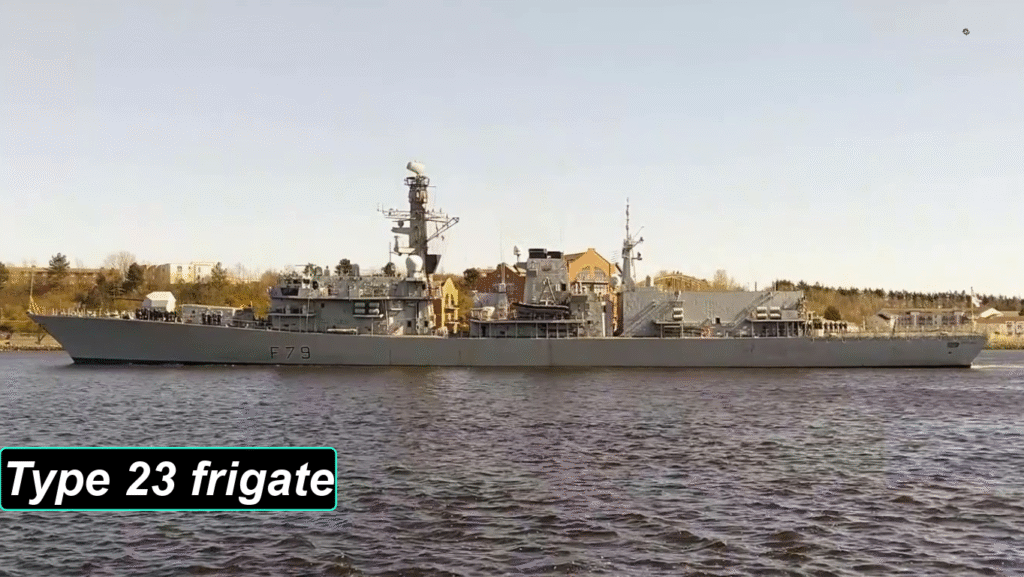
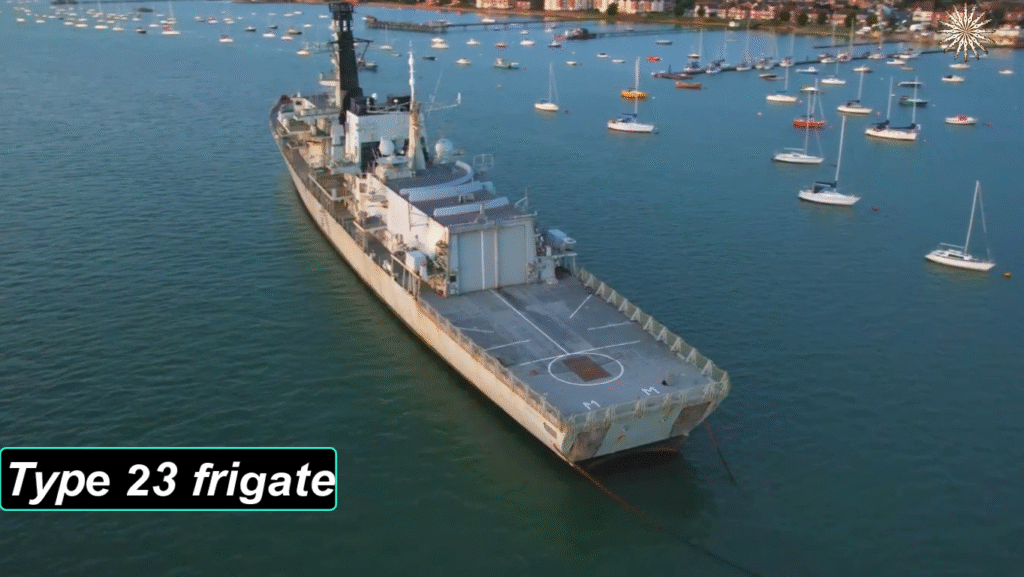
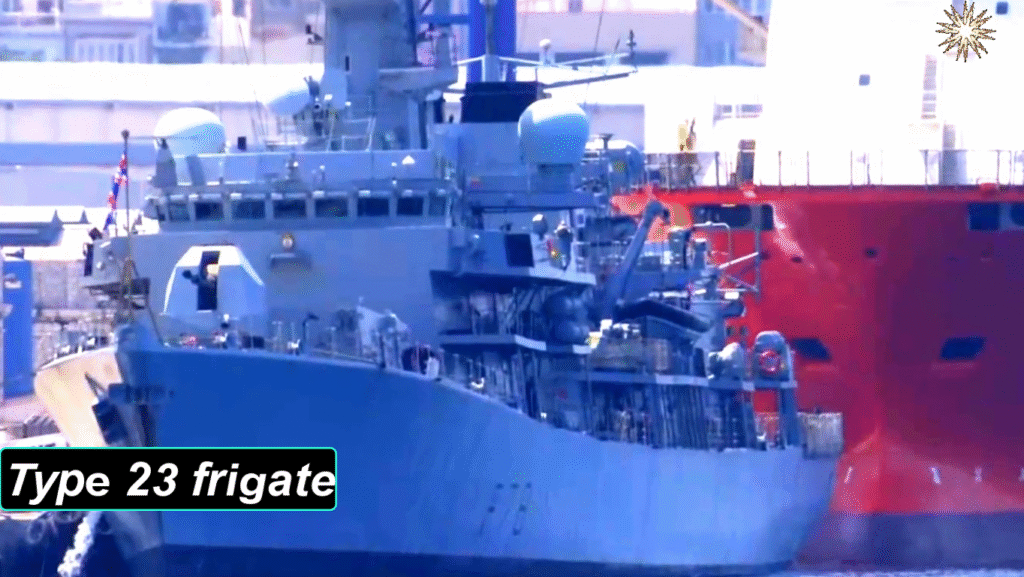
Sixteen Type 23 frigates were built between 1985 and 2002 by shipbuilders such as Yarrow Shipbuilders (now BAE Systems) and Swan Hunter.
Each vessel represented incremental improvements over its predecessors — from improved sensors and radar to upgraded propulsion and combat management systems.
General Characteristics and Performance
| Feature | Specification (Typical) |
|---|---|
| Length | 133 meters |
| Beam | 16.1 meters |
| Draft | 7.3 meters |
| Displacement | ~4,900 tonnes (full load) |
| Maximum Speed | 28+ knots |
| Range | ~7,500 nautical miles (economical speed) |
| Crew | ~185 personnel |
Crew and Living Arrangements
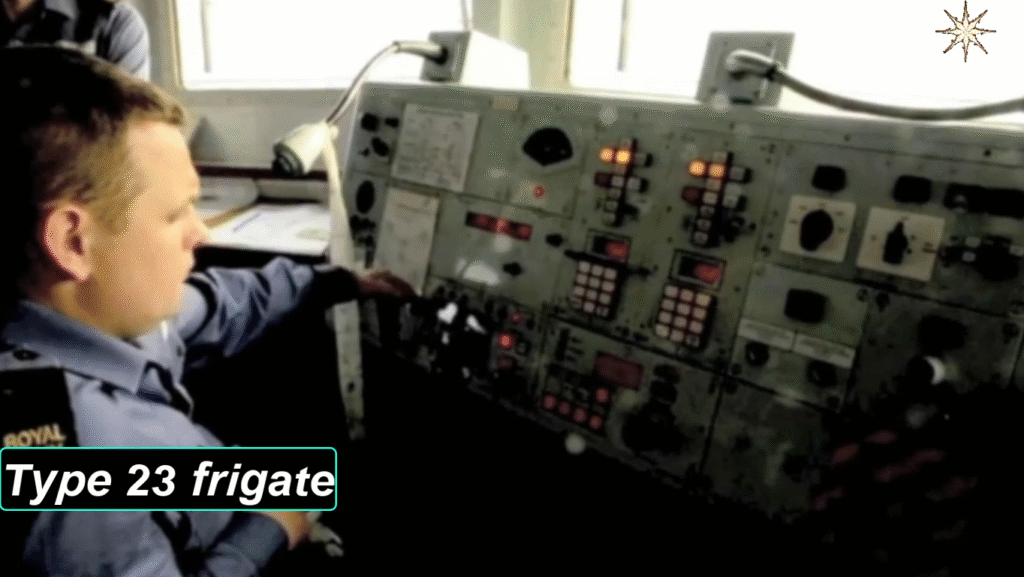
With a standard complement of around 185 sailors, the Type 23 offers improved living conditions compared to older classes. Habitability was a major design consideration, incorporating air conditioning, modern mess decks, and flexible accommodations to support mixed crews and embarked forces.
Propulsion and Power Systems
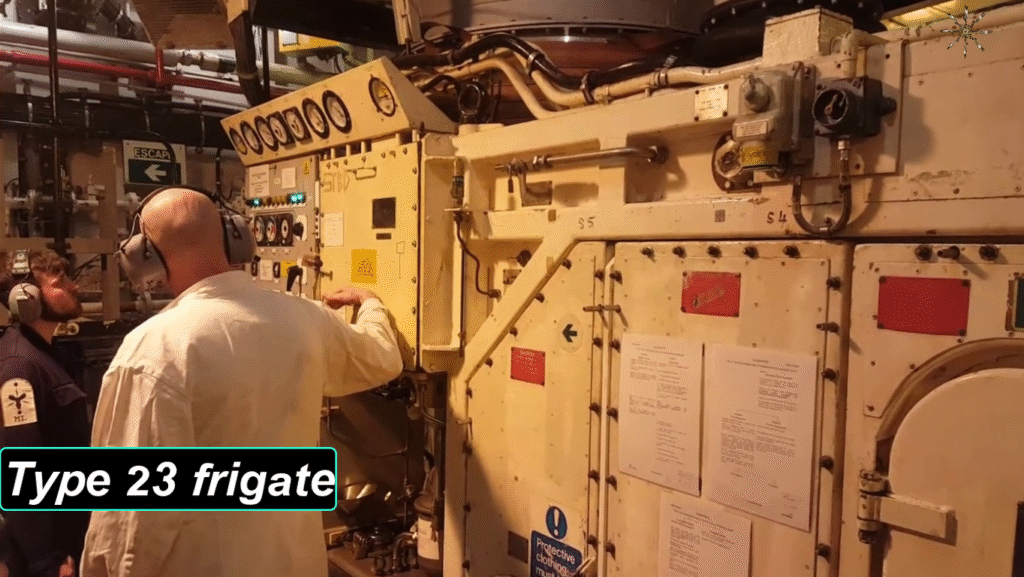
At the heart of the Type 23 lies its CODLAG propulsion system, a combination of diesel-electric cruising power and gas turbine boost.
- Diesel Generators: Provide efficient and quiet electrical power for propulsion motors during normal operations.
- Rolls-Royce Spey Gas Turbine: Engaged for high-speed transit or combat maneuvering.
Benefits of CODLAG Propulsion
The CODLAG configuration offers both fuel economy and exceptionally quiet running, which is vital for anti-submarine warfare. By decoupling mechanical noise and using electric drive at lower speeds, the frigate becomes far less detectable by hostile submarines — a decisive edge in ASW operations.
Sensors and Anti-Submarine Warfare (ASW) Systems
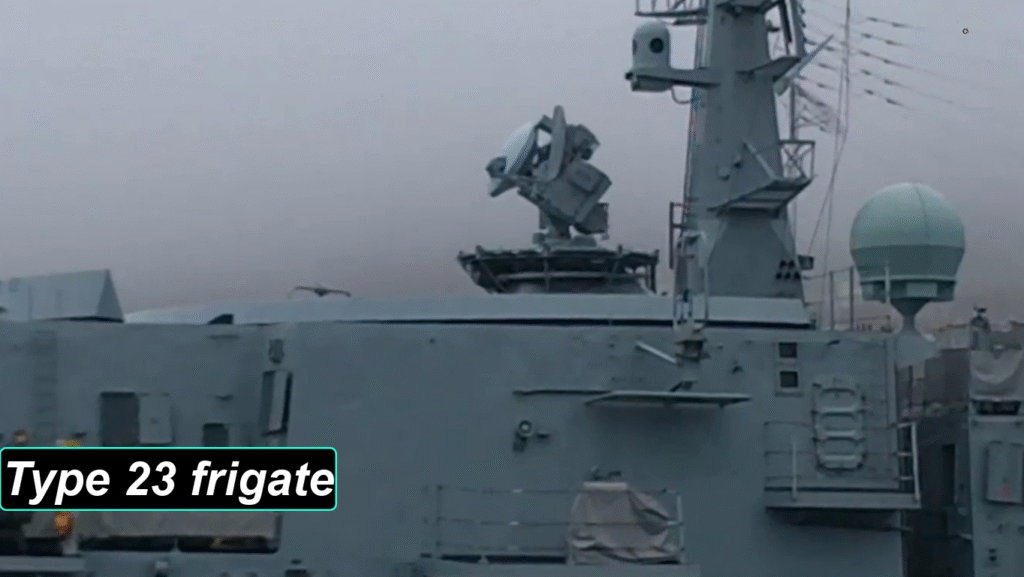
Equipped with both hull-mounted and towed array sonars, the Type 23 is designed for formidable undersea detection capabilities.
The Type 2087 Sonar Advantage
The Thales Type 2087 towed sonar is the jewel in the frigate’s ASW crown. Installed during mid-life upgrades, it provides long-range submarine detection and classification, even in deep or noisy environments. The integration of sonar data into the ship’s combat management system allows for rapid, coordinated targeting.
Airborne ASW Capabilities
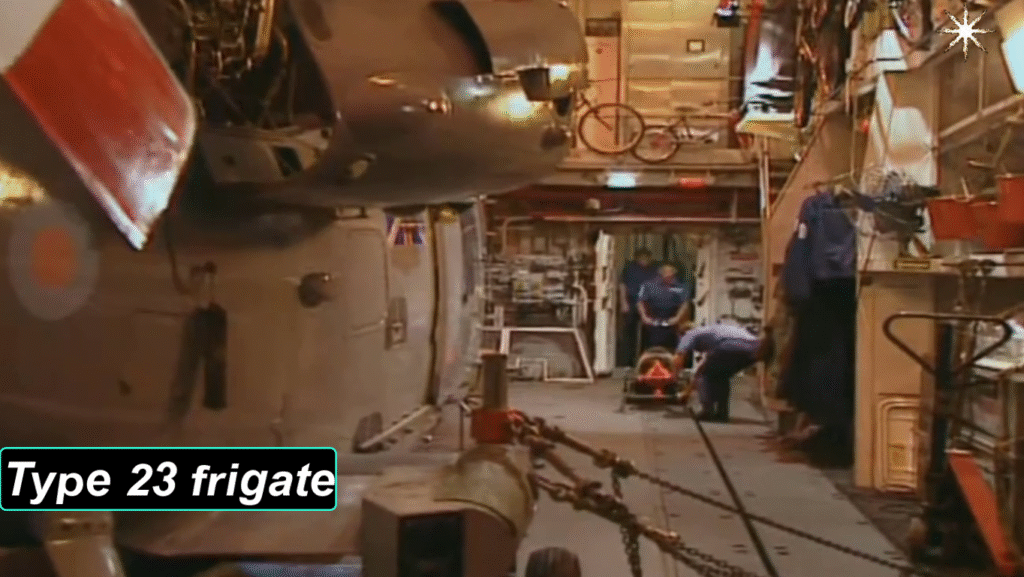
Complementing its onboard sensors, each Type 23 carries a Merlin or Wildcat helicopter — both equipped with dipping sonar and Sting Ray torpedoes. This airborne element extends the ship’s detection and engagement radius dramatically, making it a true force multiplier.

Weapons and Combat Systems
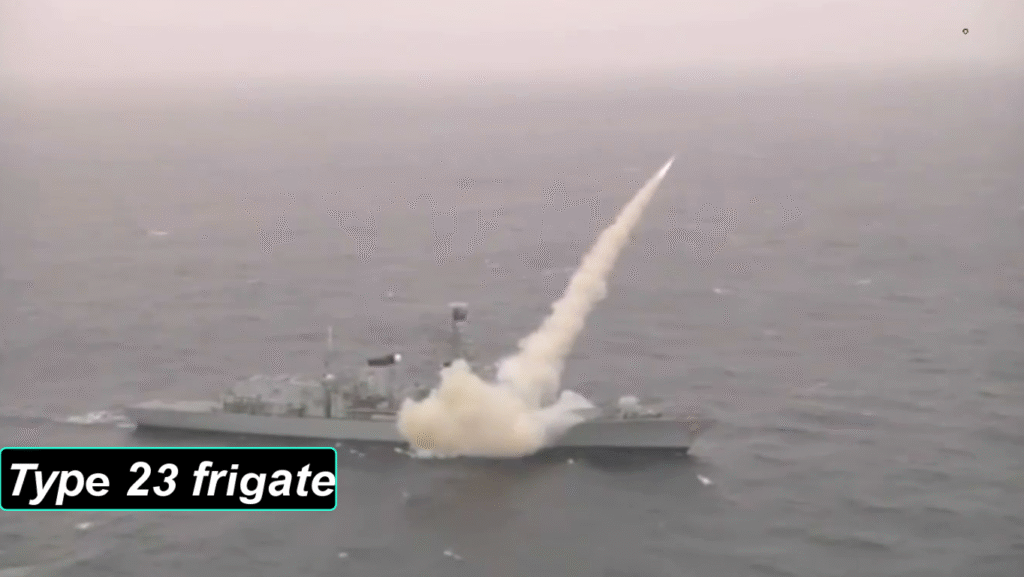
Each Type 23 frigate is heavily armed for both defensive and offensive missions.
Air Defence Evolution: Sea Wolf to Sea Ceptor (CAMM)
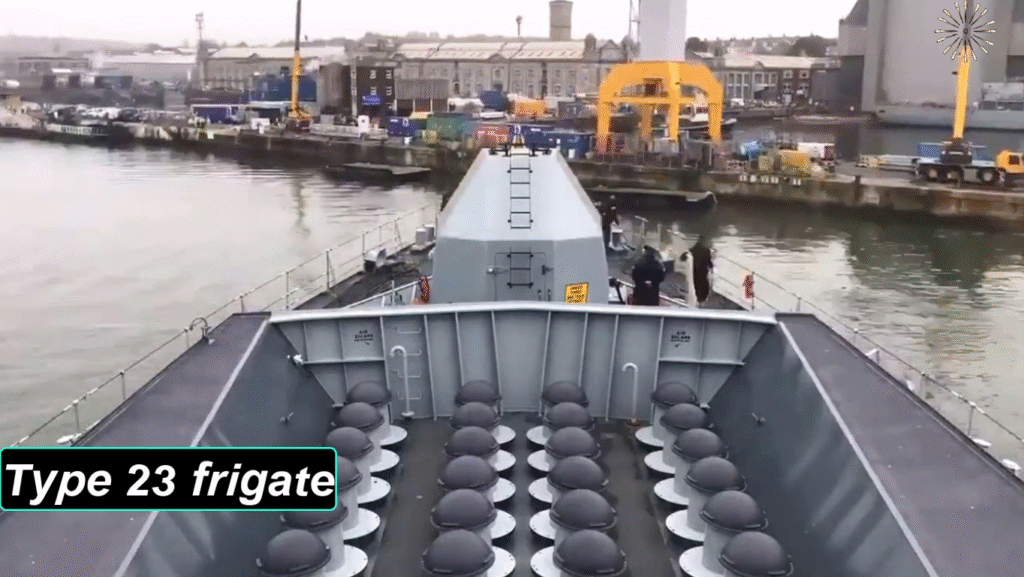
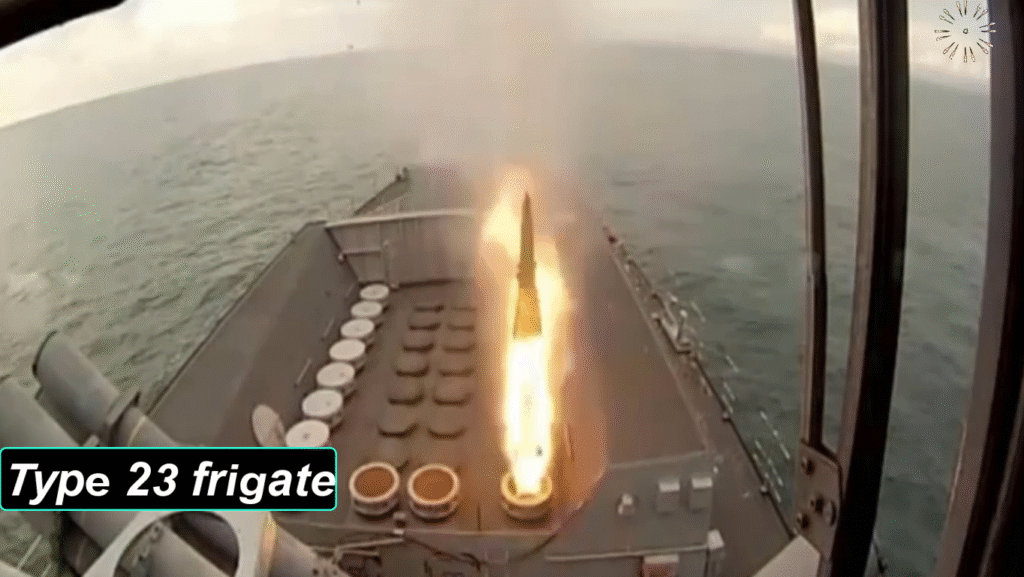
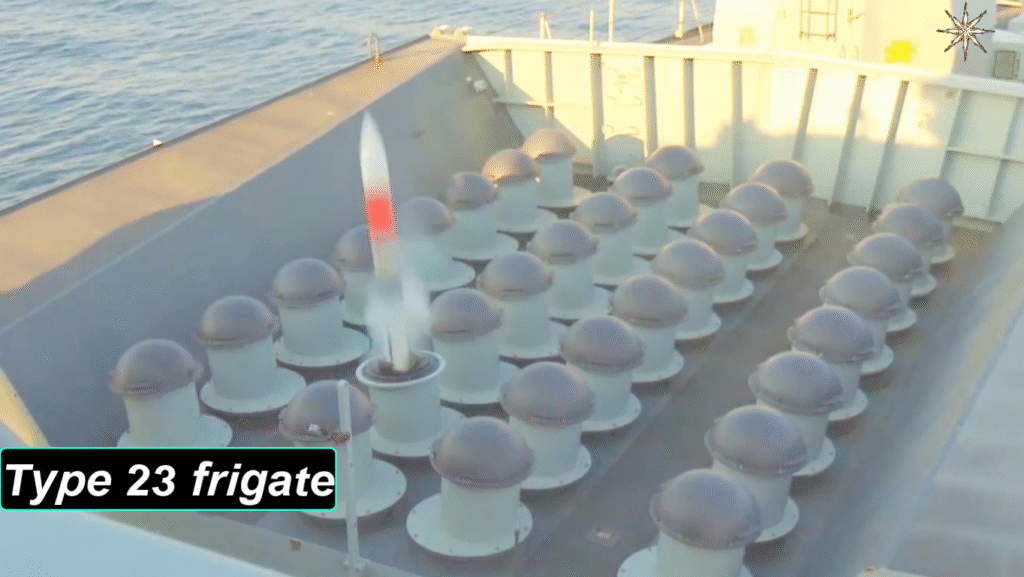
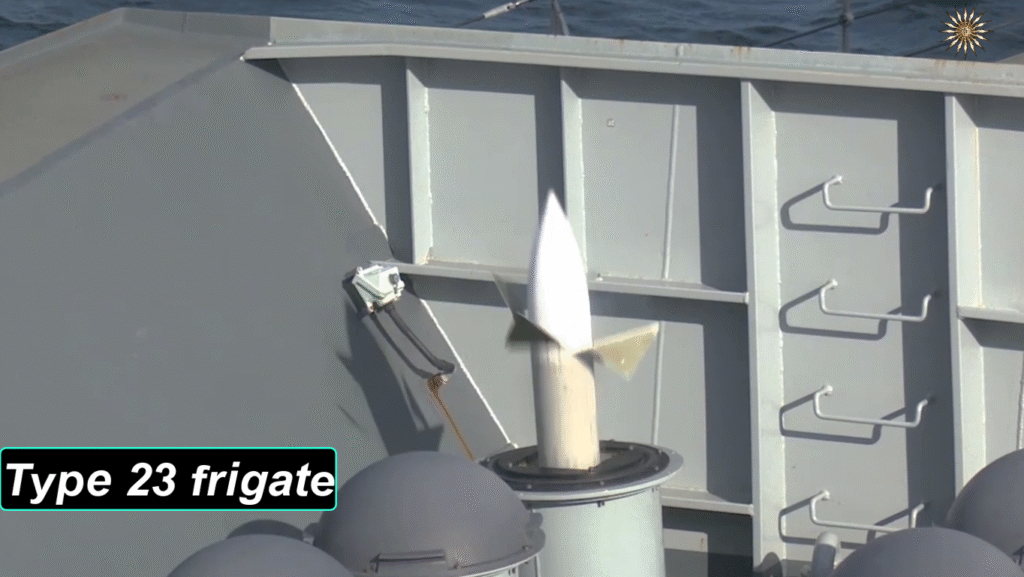
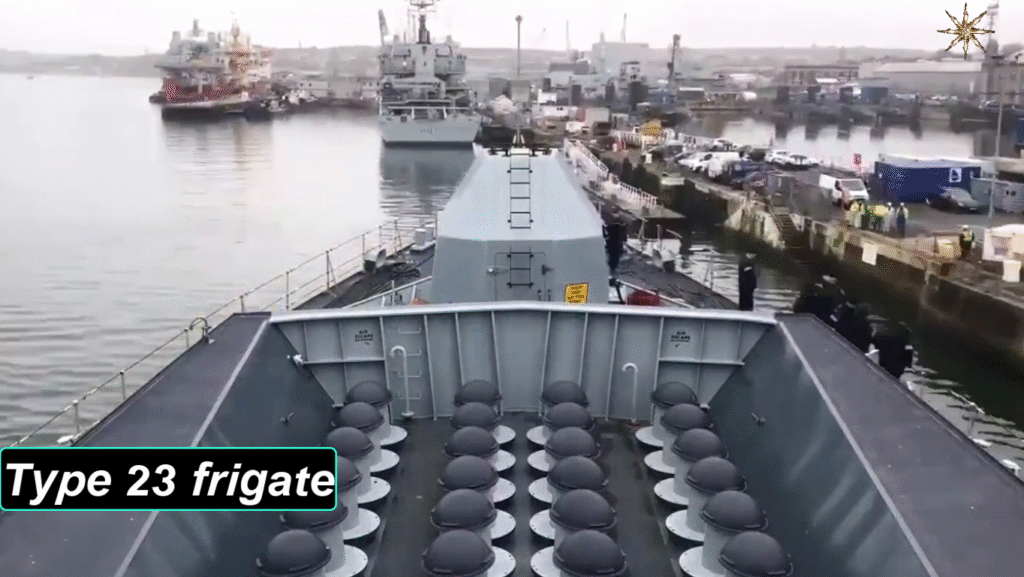
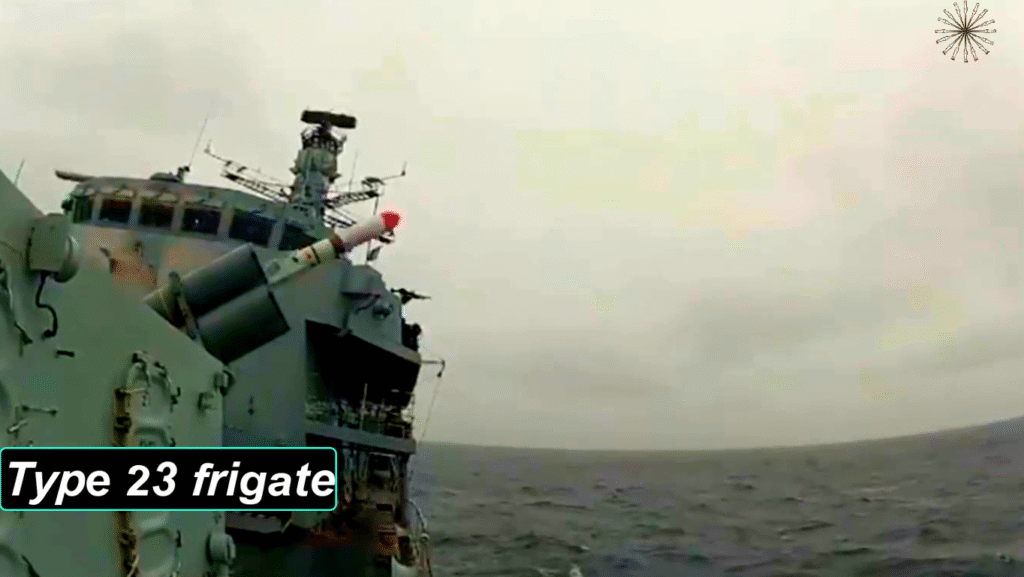
Early ships carried the Sea Wolf missile system, providing short-range point defence. From the mid-2010s, the Royal Navy began retrofitting the more capable Sea Ceptor (CAMM) vertical launch missile system — offering greater range, flexibility, and 360° coverage.
Strike and Defence Systems
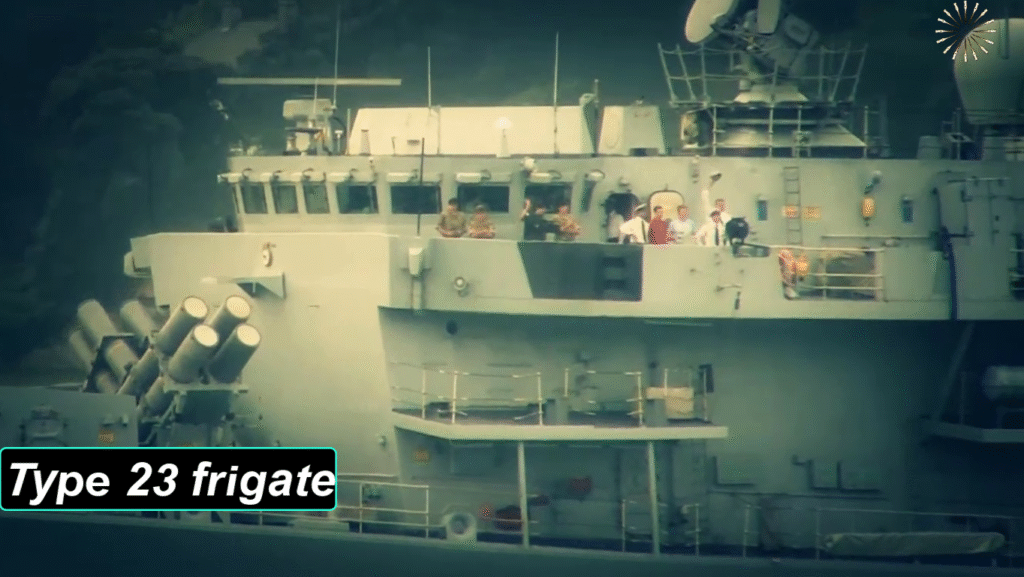
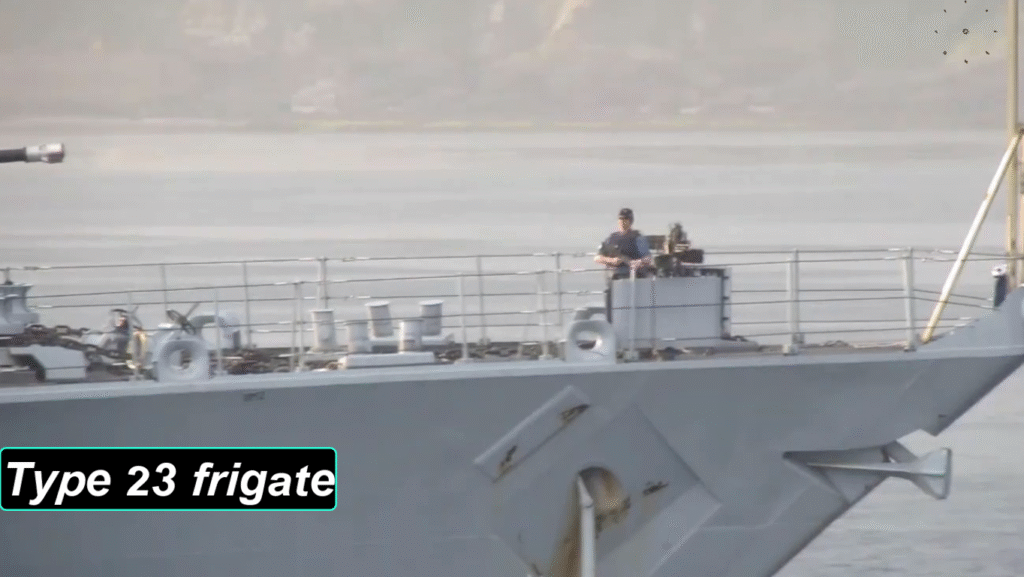
- Main Gun: 1 × 4.5 inch (114 mm) Mark 8 naval gun
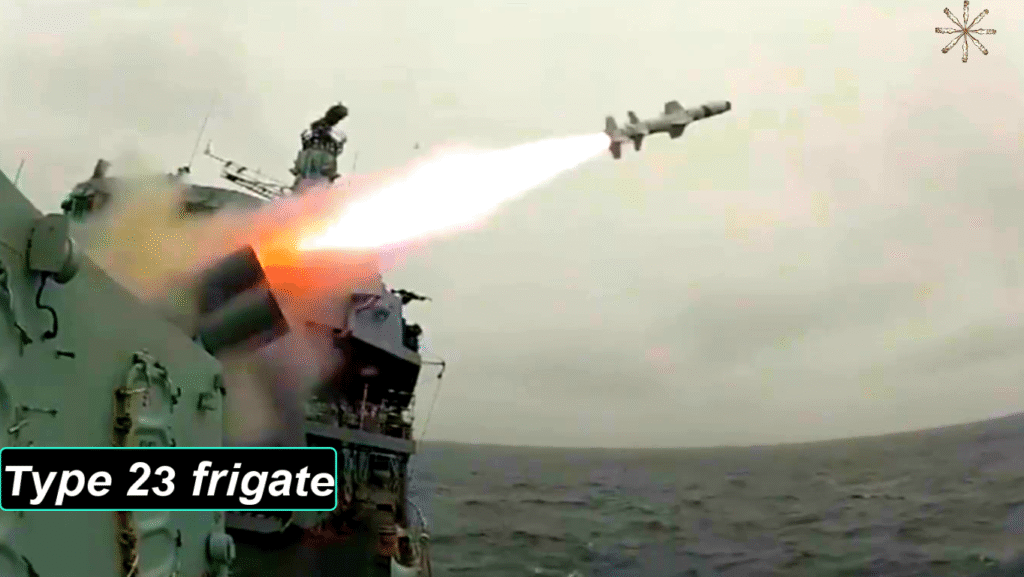
- Anti-Ship Missiles: Harpoon (now largely phased out)
- CIWS: Phalanx systems on several ships
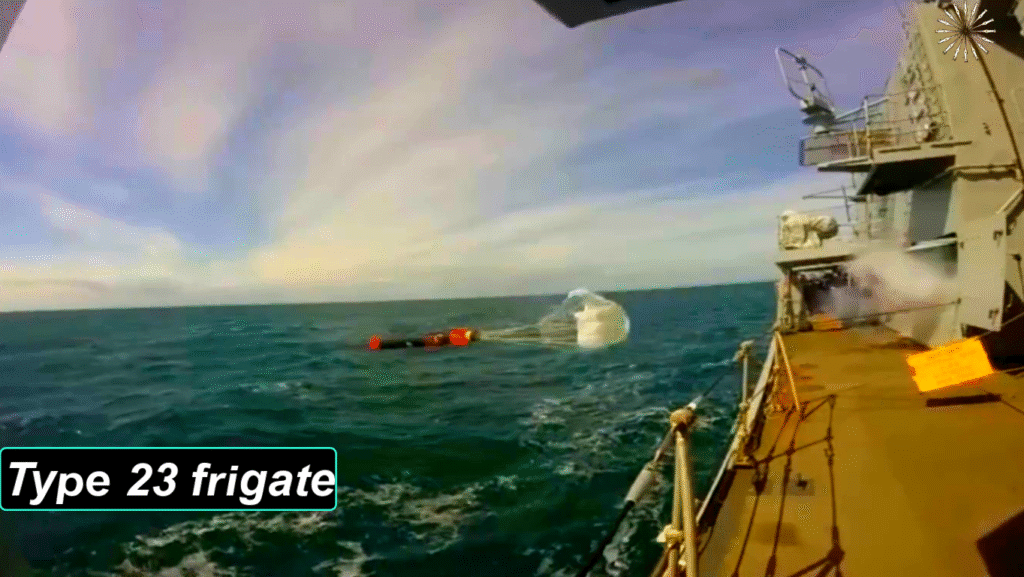
- Torpedoes: Lightweight Sting Ray ASW torpedoes
- Helicopter Armament: Torpedoes and depth charges
Combat Management and Electronics Upgrades
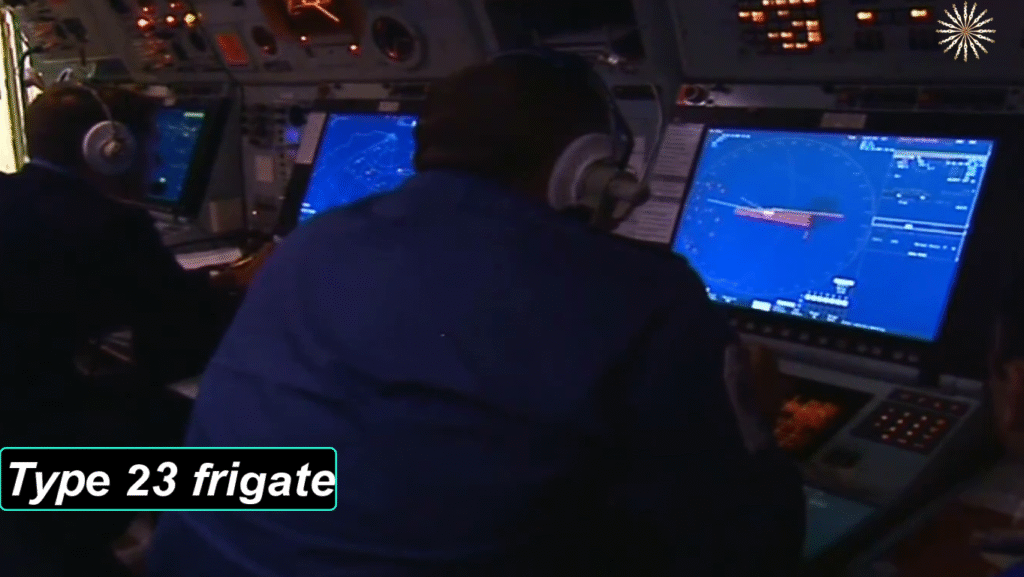
The technological heart of the Type 23 is its Combat Management System (CMS) — an integrated suite that processes data from sensors, radars, and weapons to deliver real-time tactical awareness. Over the years, the class has undergone multiple CMS upgrades.
Modernized frigates now feature BAE Systems’ CMS-330 or equivalent systems, dramatically improving data fusion, automation, and decision support. These upgrades allow the Duke-class ships to remain relevant in complex, multi-threat environments and interoperate seamlessly with NATO allies.
Other enhancements include improved electronic warfare suites, communications, and navigation systems, ensuring the class continues to meet 21st-century warfare standards even as it approaches retirement.
Upgrades and Mid-Life Improvements
Throughout their service lives, Type 23 frigates have received significant refits aimed at maintaining combat readiness and operational relevance. The Royal Navy’s LIFEX (Life Extension) program modernized many vessels with upgrades including:
- Replacement of the Sea Wolf missile system with Sea Ceptor (CAMM)
- Installation of Type 2087 towed array sonar on ASW-optimized ships
- New radar and communication systems
- Upgraded propulsion and power management systems
- Refitted accommodation and improved command facilities
These upgrades extended the ships’ service lives well into the 2020s, bridging the gap until the Type 26 Global Combat Ship and Type 31 City Class are fully operational. Each upgrade represented a cost-effective way to sustain capability without the immediate need for full replacement.
Operational History and Global Deployments
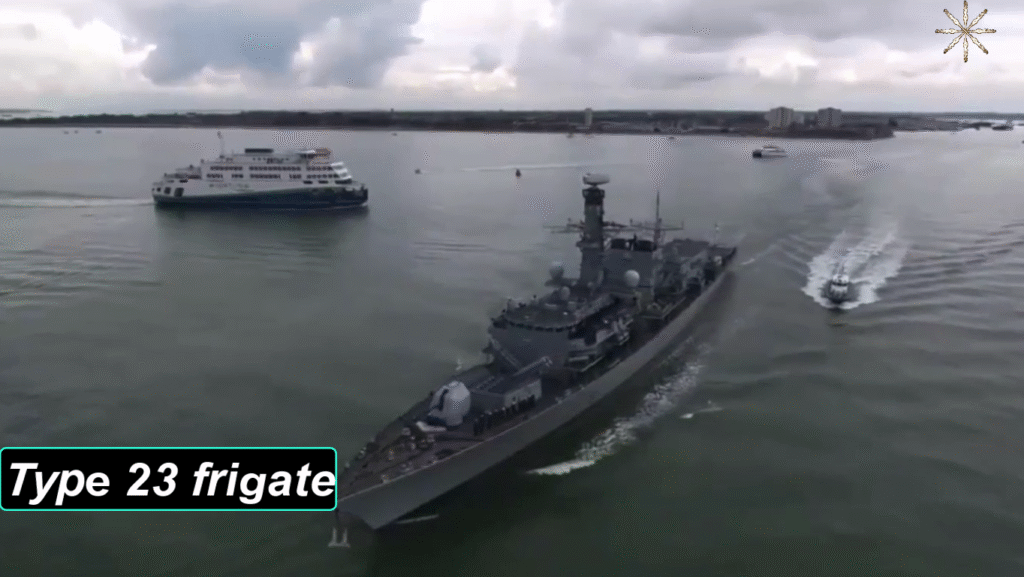
Since their introduction, Type 23 frigates have been the backbone of the Royal Navy’s global presence. They have participated in a vast range of operations — from combat support to humanitarian missions.
Major Operations and Deployments
- Gulf and Middle East Operations:
Type 23s were deployed during operations in the Persian Gulf, enforcing embargoes, and protecting allied shipping. - Counter-Piracy Missions:
Several ships, including HMS Montrose and HMS Somerset, participated in anti-piracy patrols off the Horn of Africa, safeguarding vital sea lanes. - NATO and Coalition Exercises:
The class has frequently represented the UK in NATO Standing Maritime Groups, contributing to joint exercises and maritime security patrols. - Humanitarian and Evacuation Missions:
Type 23 frigates have supported disaster relief, evacuations, and maritime interdiction — reflecting their adaptability beyond traditional combat roles. - Presence and Diplomacy:
The Duke-class has acted as a symbol of British maritime diplomacy, visiting ports around the world to foster alliances and demonstrate the Royal Navy’s reach.
Sales, Transfers, and Disposals
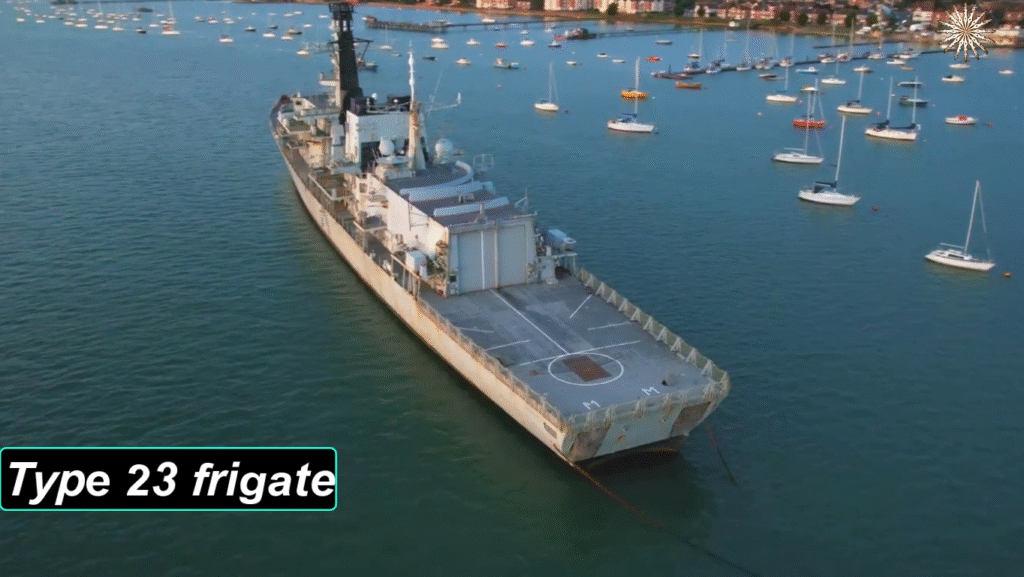
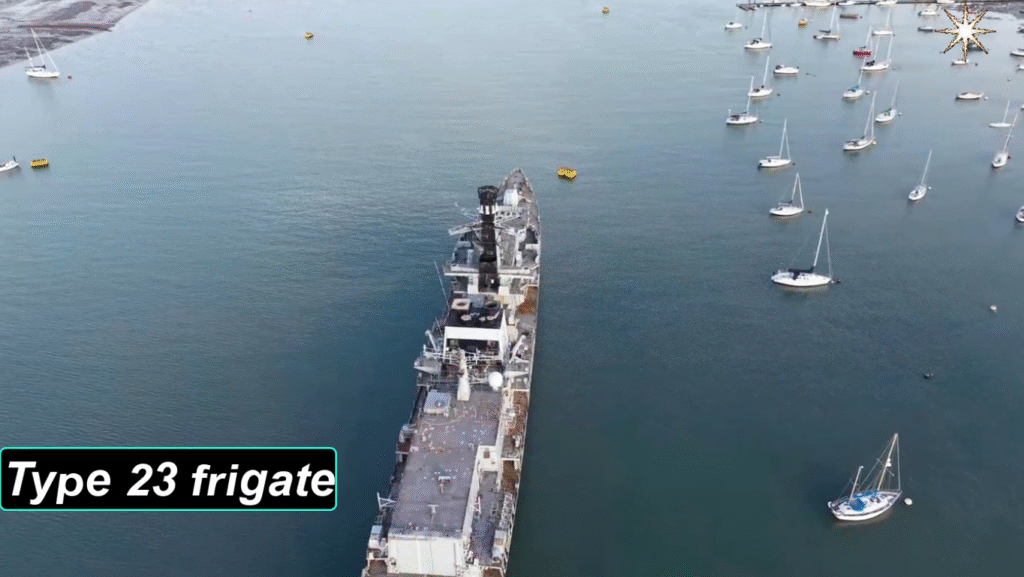
As newer frigate classes enter service, the Royal Navy has begun gradually decommissioning older Type 23s. Three ships — HMS Norfolk, HMS Marlborough, and HMS Grafton — were sold to the Chilean Navy in the mid-2000s, where they continue service as the:
- Almirante Cochrane
- Almirante Condell
- Almirante Lynch
Each underwent local upgrades to maintain combat effectiveness.
Other ships, such as HMS Monmouth and HMS Montrose, have been retired more recently as part of the fleet drawdown.
Despite these reductions, several remaining Type 23s — notably the ASW-optimized units — remain critical until their Type 26 replacements enter full service.
Replacement and Future Outlook
The Type 23 frigate fleet is now being progressively replaced under two major Royal Navy programs:
- Type 26 Global Combat Ship (City Class):
Designed as the next-generation ASW frigate, the Type 26 continues the Duke-class legacy with enhanced stealth, endurance, and global deployability. - Type 31 Frigate (Inspiration Class):
A more general-purpose frigate, the Type 31 provides flexibility for patrols, presence missions, and low-intensity operations.
The Royal Navy’s transition from Type 23 to the new generation has been politically sensitive, as escort fleet numbers are closely tied to Britain’s global commitments. Adjustments in retirement schedules have often sparked parliamentary debate over naval readiness and force projection.
Legacy and Impact of the Duke Class
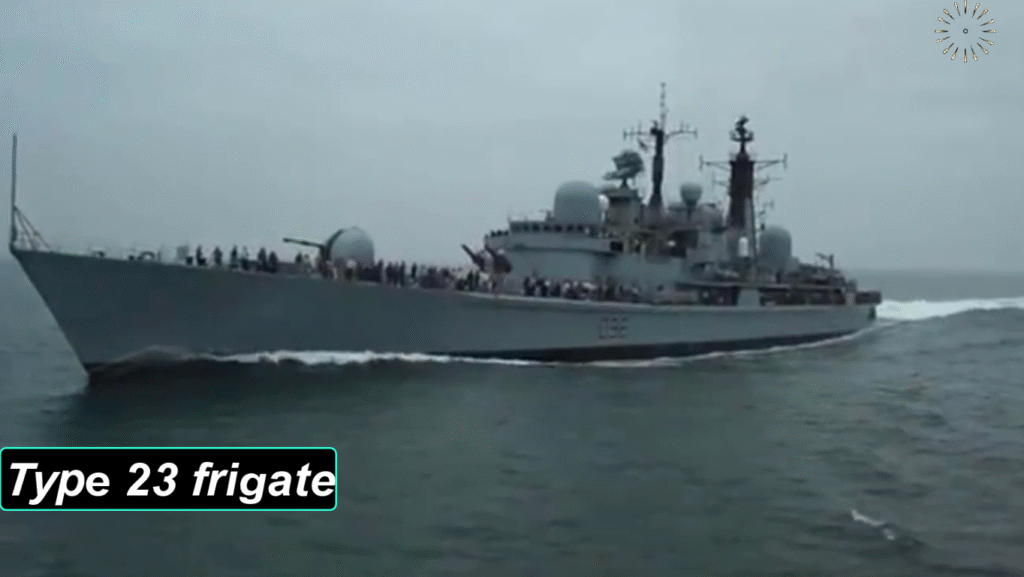
The Type 23 frigate stands as one of the most successful warship designs in Royal Navy history. It combined affordability, adaptability, and high performance, setting new standards for acoustic stealth and modularity.
Its design influenced future programs — particularly the Type 26, which builds upon its proven ASW credentials while integrating cutting-edge automation and survivability features. The Duke class also strengthened the UK’s reputation for exportable warship design, with nations like Chile benefiting from its enduring effectiveness.
Above all, the Type 23’s service record underscores the Royal Navy’s commitment to maintaining a balanced, versatile, and globally deployable fleet capable of meeting modern security challenges.
Frequently Asked Questions (FAQs)
1. What is the Type 23 frigate?
The Type 23, also known as the Duke Class, is a class of 16 multi-role frigates built for the Royal Navy between the late 1980s and early 2000s. Originally designed for anti-submarine warfare, the ships evolved into flexible platforms used for a range of missions.
2. How many Type 23 frigates are still in service?
As of 2025, around eight to ten Type 23 frigates remain active in the Royal Navy, depending on refit and retirement schedules. The remainder are being replaced by Type 26 and Type 31 ships.
3. What makes the Type 23’s propulsion system unique?
Its CODLAG (Combined Diesel-Electric And Gas) system provides exceptionally quiet operation, ideal for submarine-hunting missions, while maintaining fuel efficiency for long-range deployments.
4. What weapons does the Type 23 carry?
The frigate’s arsenal includes a 4.5-inch naval gun, Sea Ceptor air-defence missiles, Sting Ray torpedoes, and (formerly) Harpoon anti-ship missiles. Many ships also feature Phalanx CIWS for close-in defence.
5. Which ships were sold to the Chilean Navy?
Three early Duke-class frigates — HMS Norfolk, HMS Marlborough, and HMS Grafton — were transferred to Chile in the mid-2000s, renamed Almirante Cochrane, Almirante Condell, and Almirante Lynch respectively.
6. What will replace the Type 23 frigates?
They are being replaced by the Type 26 Global Combat Ship (optimized for ASW) and the Type 31 Inspiration Class (for general-purpose roles), ensuring continuity of capability and modernized fleet balance.
7. Why are Type 23 frigates called “Duke Class”?
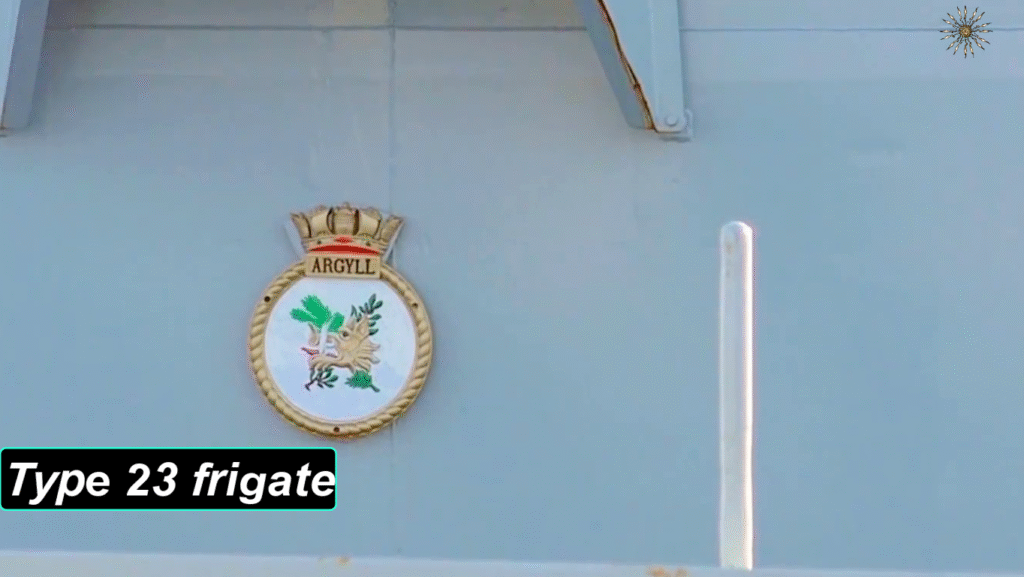
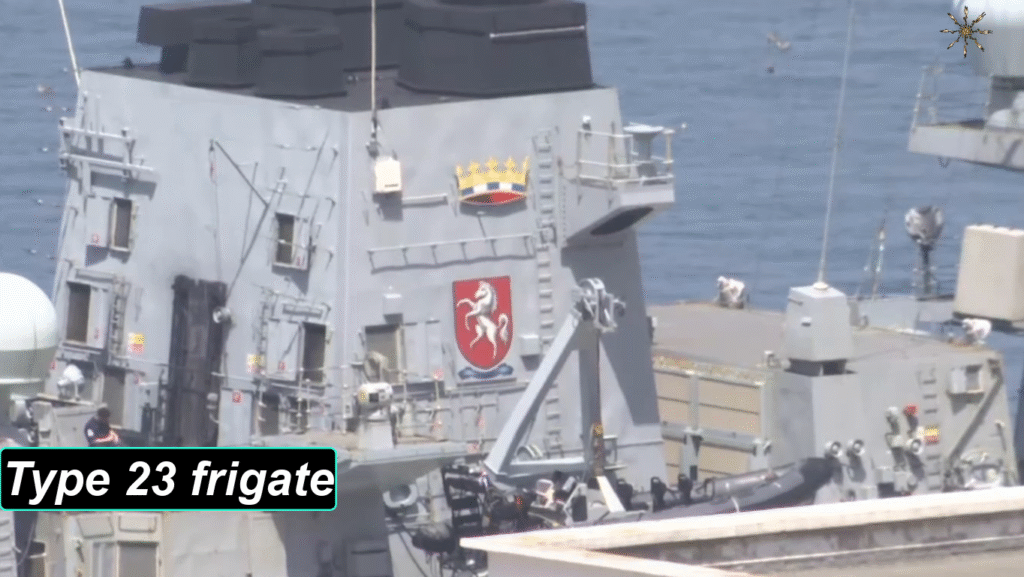
Each ship in the class is named after a British dukedom — for example, HMS Argyll, HMS Lancaster, and HMS Kent — hence the informal title “Duke Class.”
8. How long will the Type 23 remain in service?
The last ships are expected to remain operational until the early 2030s, depending on the commissioning pace of their successors.
Conclusion: End of an Era, Start of a New Generation
The Type 23 frigate has served the Royal Navy faithfully for over three decades, evolving from a Cold War submarine hunter into one of the most versatile surface combatants afloat. Its blend of stealth, endurance, and adaptability made it indispensable in countless operations around the globe.
As the torch passes to the Type 26 and Type 31, the Duke-class legacy endures — a testament to British naval engineering and operational excellence. The Type 23’s contribution to maritime security and global stability ensures its place as one of the finest frigate designs of the modern age.