
Introduction to the M1117 Guardian
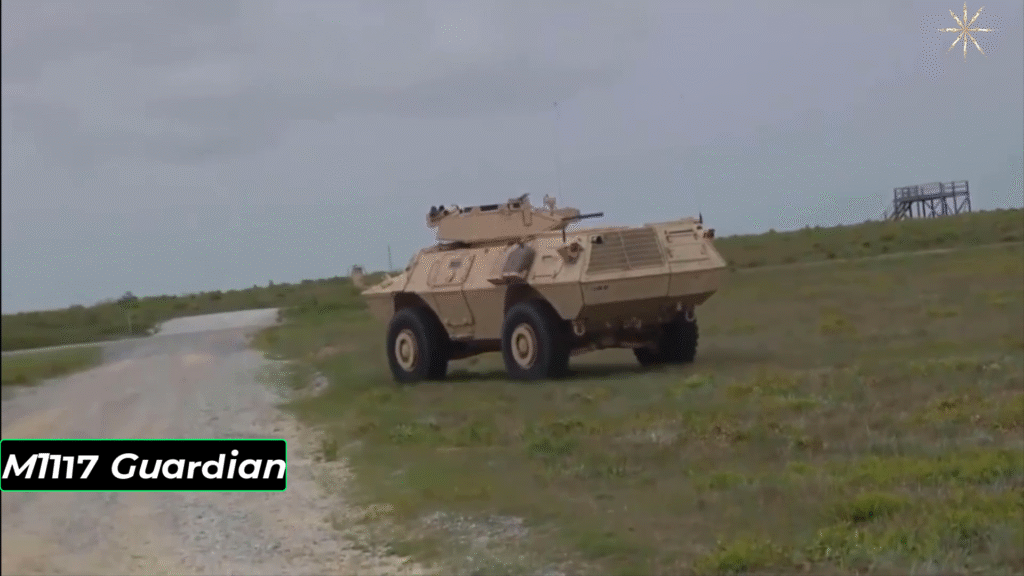
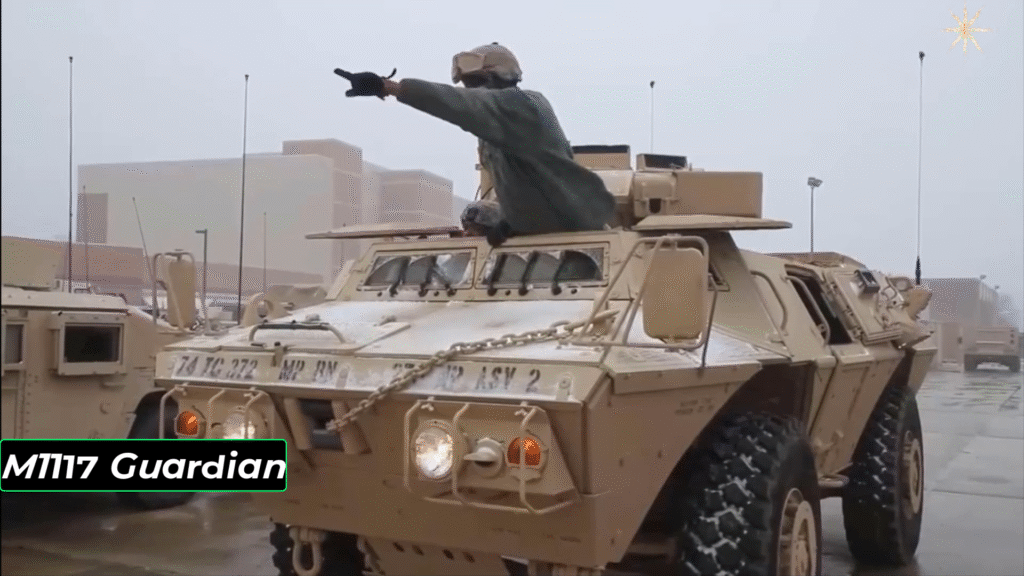
The M1117 Guardian is one of the U.S. military’s most versatile armored vehicles, designed for reconnaissance, convoy escort, base defense, and peacekeeping operations. Developed in the late 1990s by Textron Marine & Land Systems, the vehicle entered service with the U.S. Army in the early 2000s and quickly proved its value in Iraq and Afghanistan. With its V-shaped hull, strong armor protection, and powerful armament, the M1117 filled a critical gap between lightly armored Humvees and larger, heavier Mine-Resistant Ambush Protected (MRAP) vehicles.

Development and Origins of the M1117
Textron Marine & Land Systems: The Manufacturer
The M1117 Guardian was developed by Textron Marine & Land Systems, a U.S. defense contractor known for producing advanced armored vehicles. Their mission was to provide the Army with a light yet survivable vehicle for military police duties, especially in hostile environments.
Why the U.S. Army Needed the M1117
During the 1990s, the U.S. Army primarily used up-armored Humvees for patrols and convoy escort. However, these vehicles struggled against IEDs, mines, and heavy weapons fire. The need for a more resilient, maneuverable, and heavily armed vehicle led to the creation of the M1117 Guardian.

Design and Technical Specifications
Armor Protection and Survivability
The M1117’s armor package makes it highly survivable in combat zones.
Resistance to Small Arms and Heavy Fire
Its armor can withstand 7.62mm armor-piercing rounds, 14.5mm machine gun fire, and artillery shell fragments, providing better protection than traditional Humvees.
V-Shaped Hull Against Mines and IEDs
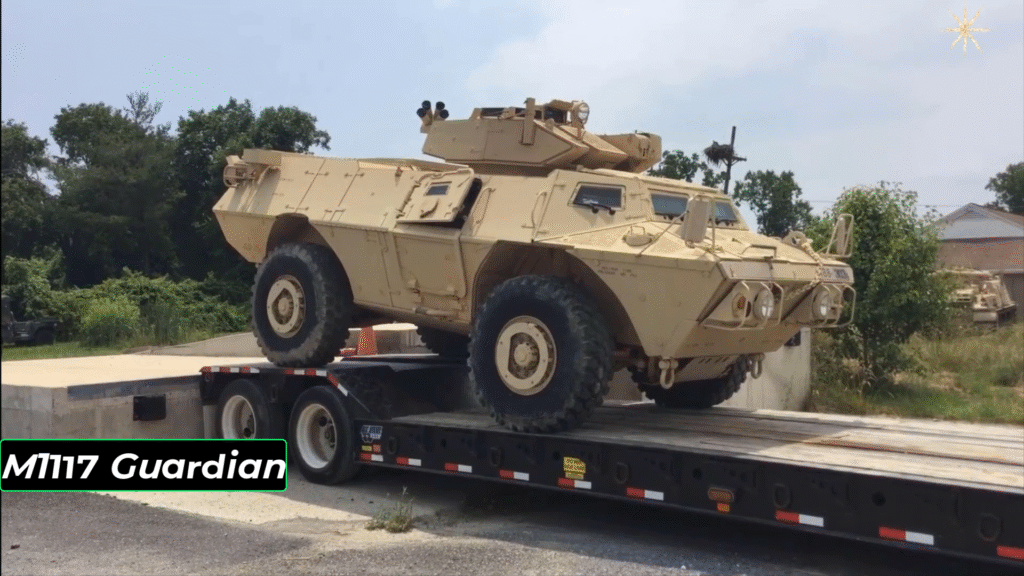
The V-shaped hull design deflects blasts from mines and improvised explosive devices (IEDs), significantly reducing crew casualties compared to flat-bottomed vehicles.
Armament and Firepower
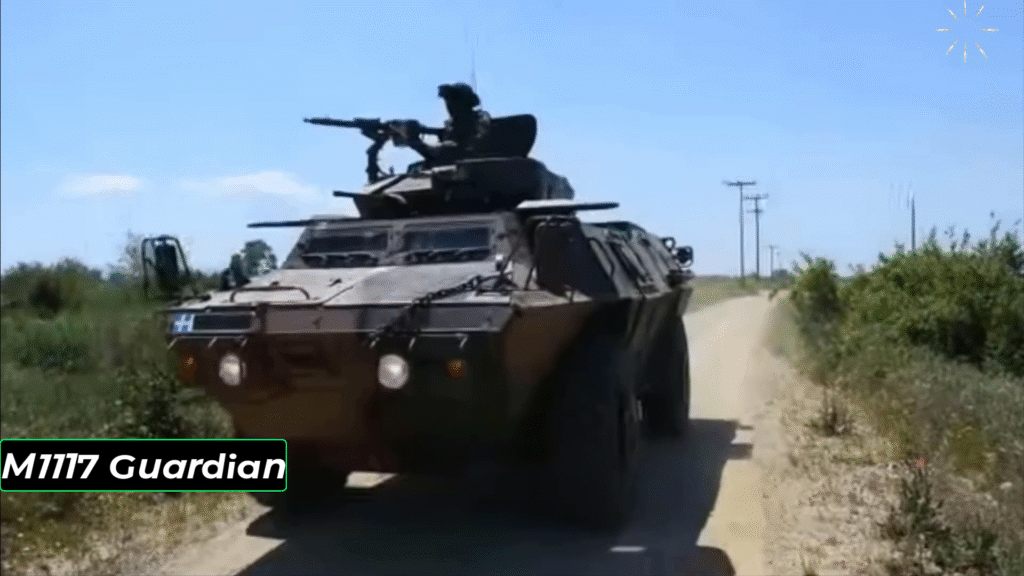
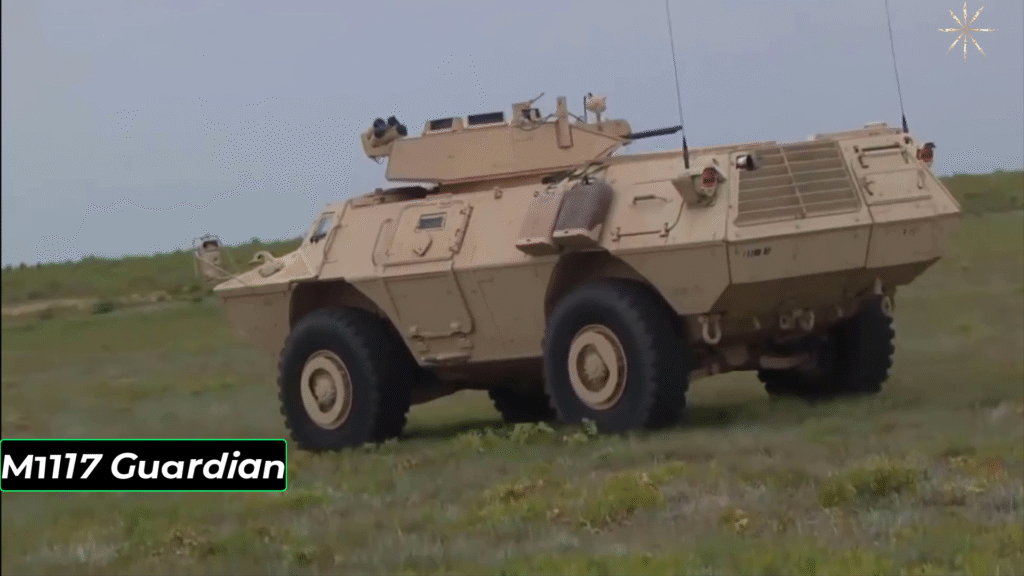
The Guardian is armed with a powerful turret-mounted weapons system for 360° protection.
M2 .50 Caliber Heavy Machine Gun
The M2 provides long-range suppression fire, capable of engaging enemy vehicles and fortifications.
Mk 19 Automatic Grenade Launcher
This 40mm grenade launcher delivers high-explosive firepower, making the M1117 effective in both urban and open battlefield environments.
Secondary M240 7.62mm Machine Gun
Mounted as an additional defensive weapon, the M240 covers close-range threats.
Crew Capacity and Internal Layout
The M1117 carries a crew of three (commander, gunner, driver) and up to four passengers, giving it flexibility for troop transport, reconnaissance teams, or military police operations.
Mobility and Engine Performance
4×4 Wheeled Design and Maneuverability
Unlike tracked armored vehicles, the M1117 uses a 4×4 wheeled chassis, which makes it faster and more mobile in both urban and rural terrains.
Caterpillar Diesel Engine Power
Powered by a Caterpillar diesel engine, the Guardian delivers both endurance and reliability under combat conditions.
Speed and Operational Range
The vehicle can reach speeds of 100 km/h (62 mph) and has an operational range of approximately 700 km (440 miles), making it ideal for long-distance convoy escort and patrol missions.
Role and Missions of the M1117 Guardian
Convoy Escort and Protection
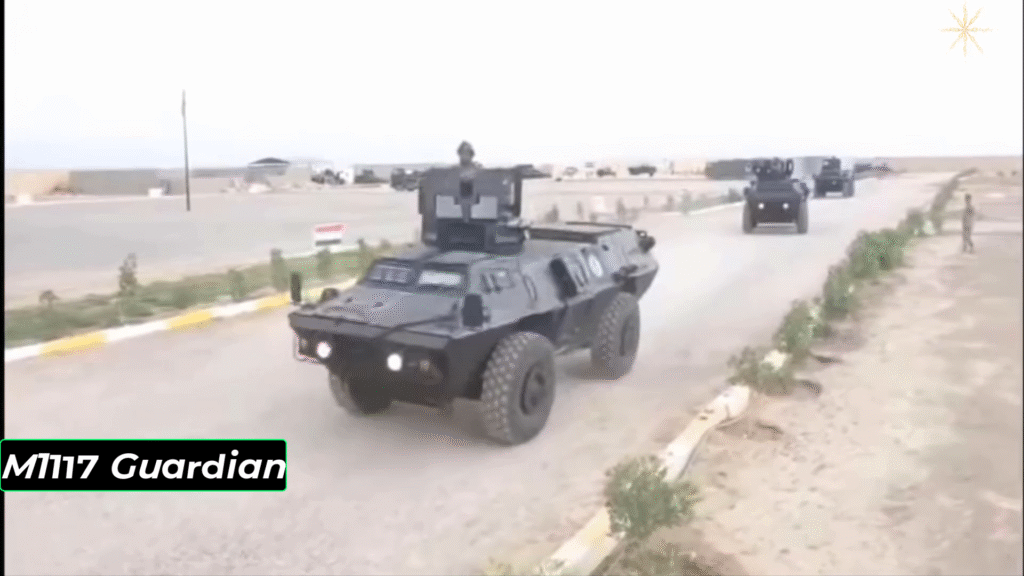
One of the primary roles of the Guardian is securing supply convoys in hostile areas where ambushes and roadside bombs are common.
Base Security and Peacekeeping
Military police and security units use the M1117 for base defense and peacekeeping operations, ensuring stability in conflict zones.
Reconnaissance and Patrol Operations
Thanks to its speed and protection, the Guardian is also employed in scouting and surveillance missions, where it can engage threats while keeping its crew safe.
Service History and Combat Experience
Deployment in Iraq and Afghanistan
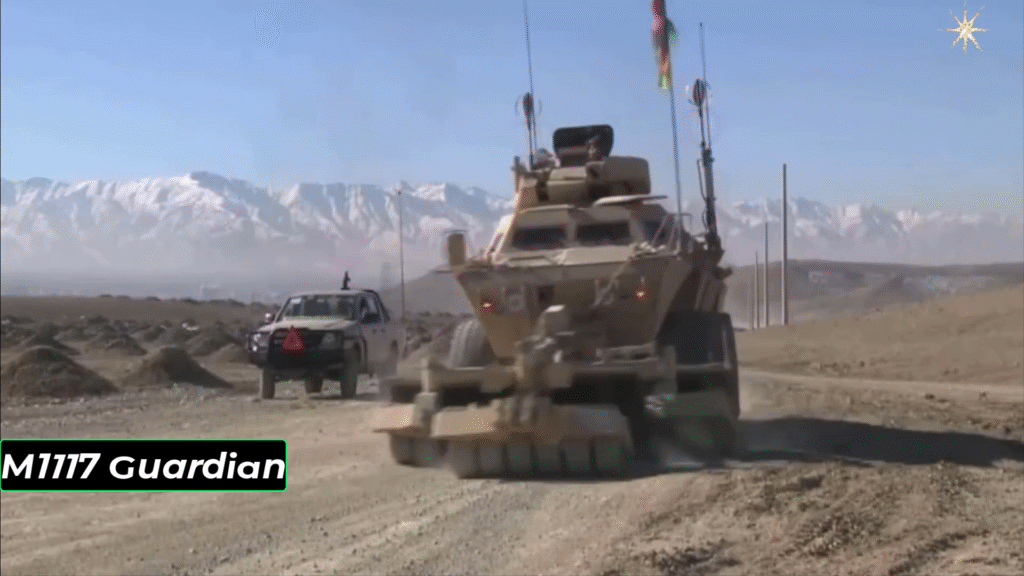
The M1117 Guardian rose to prominence during the U.S. campaigns in Iraq and Afghanistan, where roadside bombs, ambushes, and insurgent attacks posed serious risks to convoys. Initially designed for military police duties, the vehicle quickly proved itself as an indispensable tool for troop transport, supply escort, and reconnaissance.
Unlike Humvees, which were highly vulnerable to IEDs, the M1117’s V-shaped hull saved countless lives by deflecting blast waves away from the crew compartment. Troops operating in urban environments also appreciated its maneuverability, firepower, and ability to withstand heavy gunfire.
Lessons Learned from Battlefield Operations
Combat experience highlighted both the strengths and weaknesses of the M1117. Its armor and firepower were praised, but crews sometimes struggled with limited troop capacity compared to larger MRAPs. Maintenance in rugged environments was another challenge, though its Caterpillar engine generally performed well in long deployments.
Global Exports and Foreign Operators
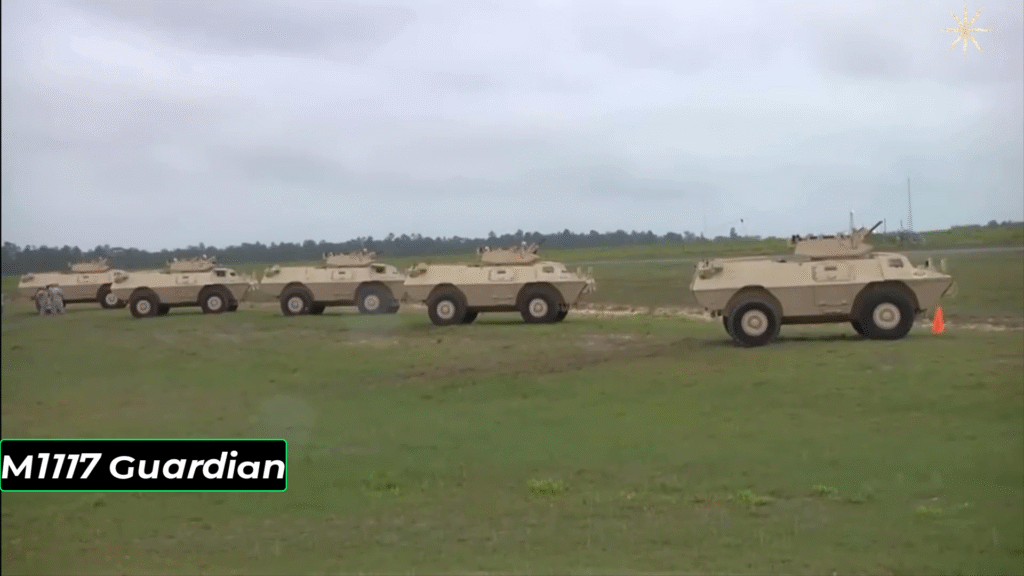
The M1117 Guardian is not just an American asset—it has been widely exported through Foreign Military Sales (FMS) and military aid programs.
M1117 in Ukraine and Eastern Europe
In recent years, the U.S. has supplied M1117s to Ukraine, where they’ve been used in frontline operations against Russian forces. Their mobility and protection make them well-suited for rapid troop movements and convoy escort missions in contested areas.
Adoption by Colombia, Greece, and Kosovo
- Colombia uses the M1117 for counter-insurgency and anti-narcotics operations in rugged terrain.
- Greece has adopted the vehicle for border patrols and NATO missions.
- Kosovo employs Guardians for peacekeeping operations and internal security.
This wide adoption underscores the Guardian’s flexibility in different combat and peacekeeping environments.
Comparison with Similar Armored Vehicles
M1117 vs. Humvee
- Armor: The M1117 offers far greater protection against heavy machine guns and explosives.
- Mobility: Both are wheeled vehicles, but the M1117 is heavier and slightly less agile.
- Role: Humvees are multipurpose, while the M1117 is specialized for security and escort.
M1117 vs. MRAPs
- Size & Weight: MRAPs are larger and provide even greater protection, but they’re less maneuverable.
- Survivability: MRAPs excel against large IEDs, while the M1117 balances protection with mobility.
- Flexibility: The Guardian is better suited for urban patrols where MRAPs struggle with narrow roads.
Advantages and Limitations of the M1117
Strengths in Protection and Mobility
- Resistant to armor-piercing rounds and shell fragments
- V-shaped hull protects against mines and IEDs
- High speed and range for long missions
- Versatile roles from convoy escort to peacekeeping
Challenges in Modern Battlefields
- Limited troop capacity compared to larger vehicles
- Heavier than Humvees, reducing agility in some environments
- Requires constant maintenance in prolonged deployments

Future of the M1117 and Successor Vehicles
Upgrades and Modernization Programs
Textron continues to develop improved armor packages, communication systems, and weapon stations for the M1117. Some operators have added remote-controlled weapon systems (RCWS) for enhanced protection and firepower.
Role in Future Conflicts
While newer vehicles such as the Joint Light Tactical Vehicle (JLTV) are being introduced, the Guardian remains valuable for nations that need a cost-effective, versatile armored vehicle. Its continued use in NATO and allied militaries shows its relevance in both conventional and hybrid warfare.
Frequently Asked Questions (FAQs)
1. What is the primary role of the M1117 Guardian?
The M1117 is designed for convoy escort, base defense, reconnaissance, and peacekeeping missions, with strong protection against small arms and explosives.
2. How many crew members can the M1117 carry?
It carries three crew members (commander, driver, gunner) plus up to four passengers.
3. What makes the M1117 different from a Humvee?
The Guardian has superior armor, firepower, and survivability, making it better suited for hostile environments than the Humvee.
4. What weapons does the M1117 carry?
It is equipped with an M2 .50 caliber machine gun, a Mk 19 grenade launcher, and a secondary M240 machine gun mounted in a turret.
5. Which countries currently use the M1117 Guardian?
The U.S., Ukraine, Colombia, Greece, and Kosovo are among its main operators.
6. Is the M1117 still in production?
Yes, production continues for foreign military sales and modernization programs, especially as demand grows from nations facing asymmetric warfare and border security challenges.
Conclusion
The M1117 Guardian stands as a testament to how modern armored vehicles must balance mobility, firepower, and survivability. Initially overlooked in the 1990s, it became a lifesaving asset in Iraq and Afghanistan and continues to serve U.S. allies worldwide. Its combination of protection, versatility, and cost-effectiveness ensures that the Guardian will remain relevant in 21st-century battlefields and peacekeeping missions.