Introduction to the M65 Atomic Cannon
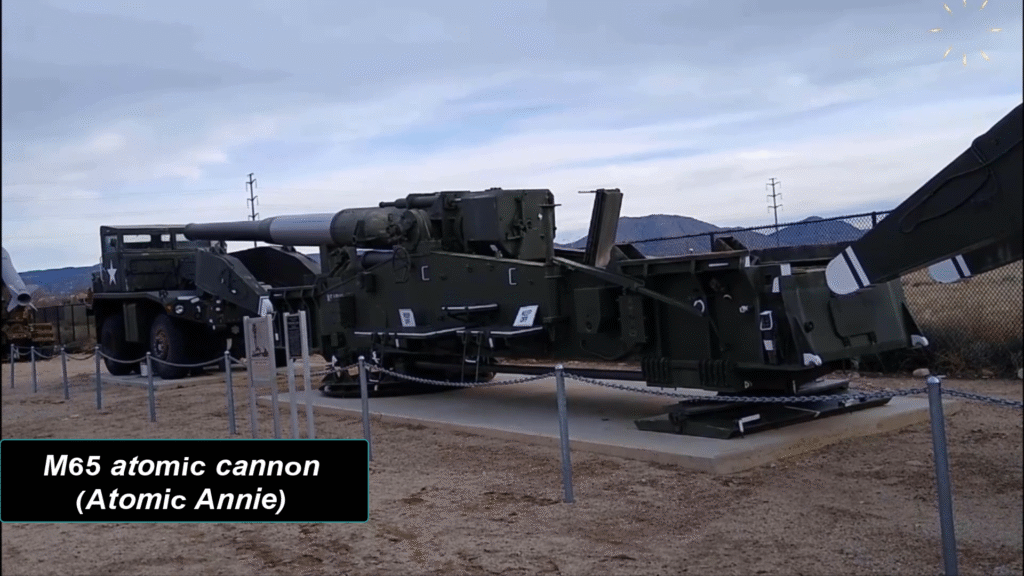
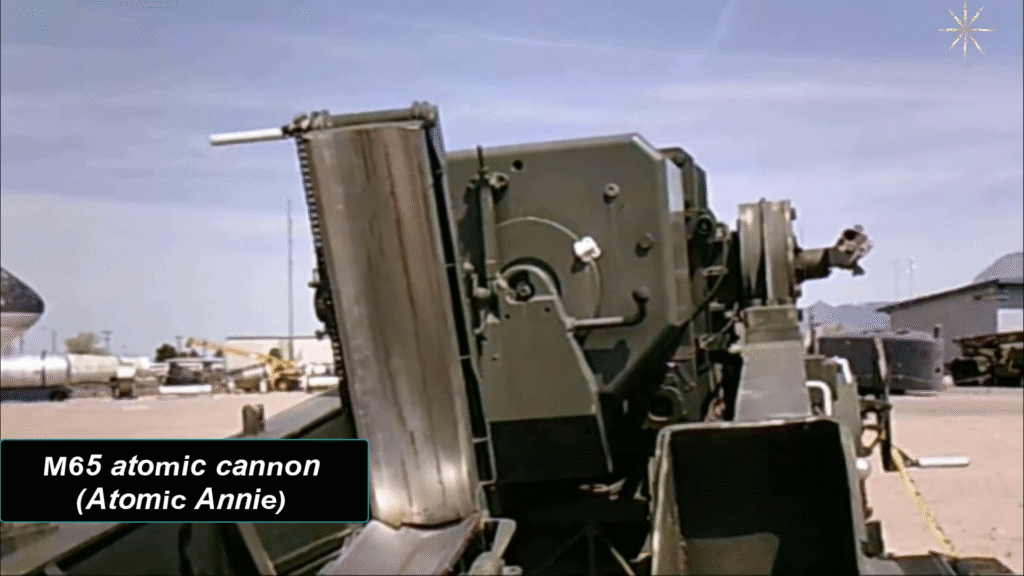
The M65 atomic cannon, nicknamed “Atomic Annie,” stands as one of the most dramatic symbols of early Cold War nuclear strategy. Built during the 1950s, it was designed to fire both conventional and nuclear shells, making it a centerpiece of America’s nuclear deterrent. Though its service life was relatively short, the M65 captured the imagination of military planners and the public alike.

Design and Development of “Atomic Annie”
Engineering Challenges in Building a Nuclear Cannon
Designing a cannon capable of firing a nuclear shell was no small feat. Engineers needed to create a system powerful enough to handle the immense stress of launching an 11-inch (280 mm) shell weighing hundreds of pounds, all while maintaining precision accuracy.
Specifications: Size, Weight, and Crew
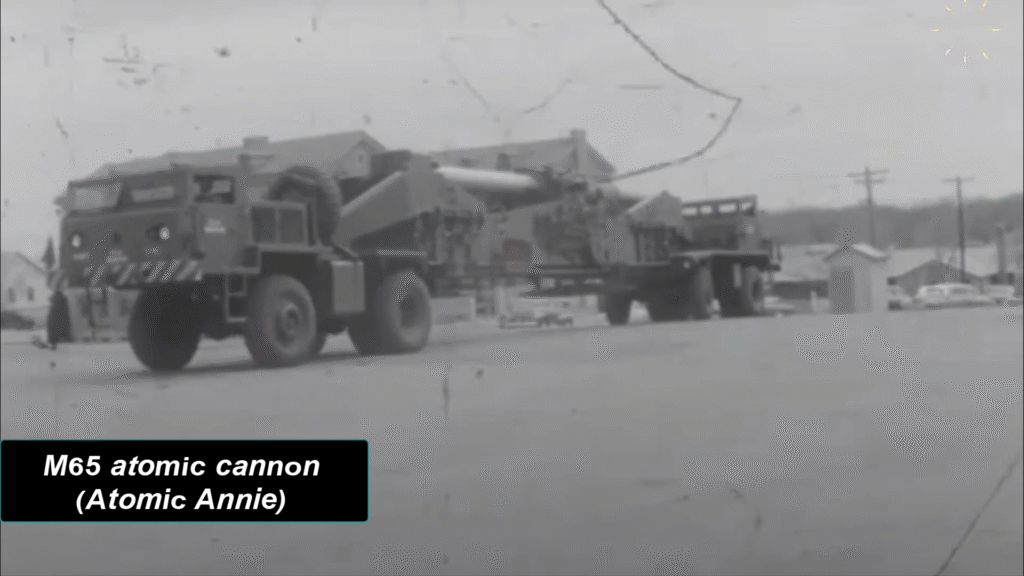
- Length: ~85 feet (26 m) assembled
- Weight: ~83 tons with transport vehicles
- Crew: About 5–7 operators, plus extensive logistical support
- Operation: Mounted on a carriage, capable of elevating for long-range fire
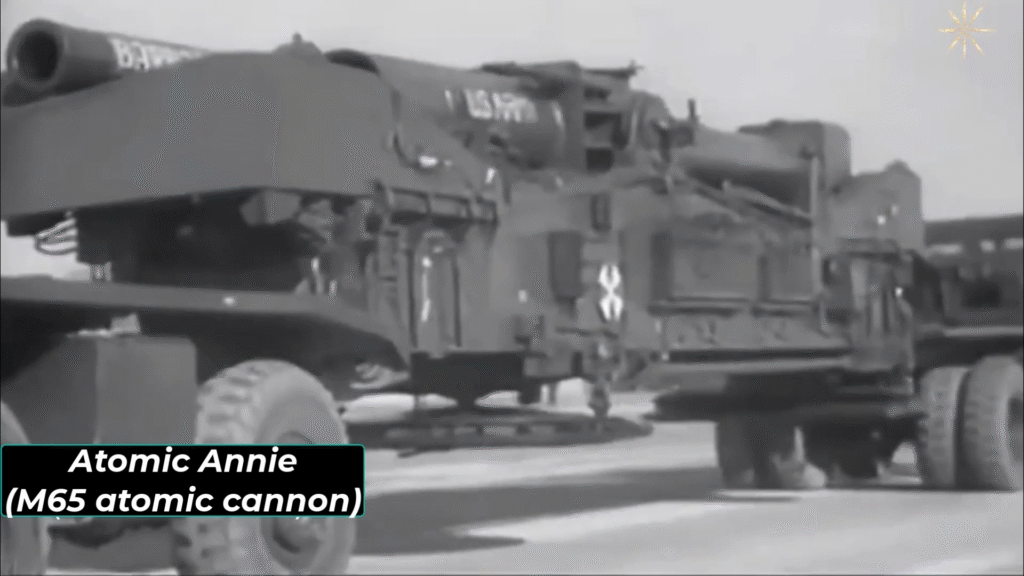
Its sheer size made it both impressive and difficult to maneuver, requiring a dedicated transportation system.
Mobility and Transportation System
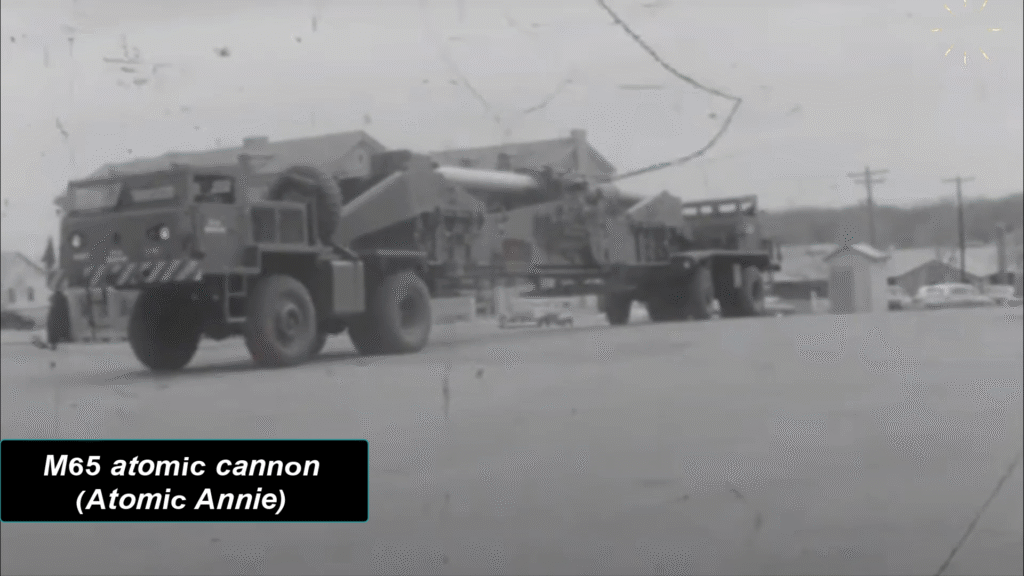
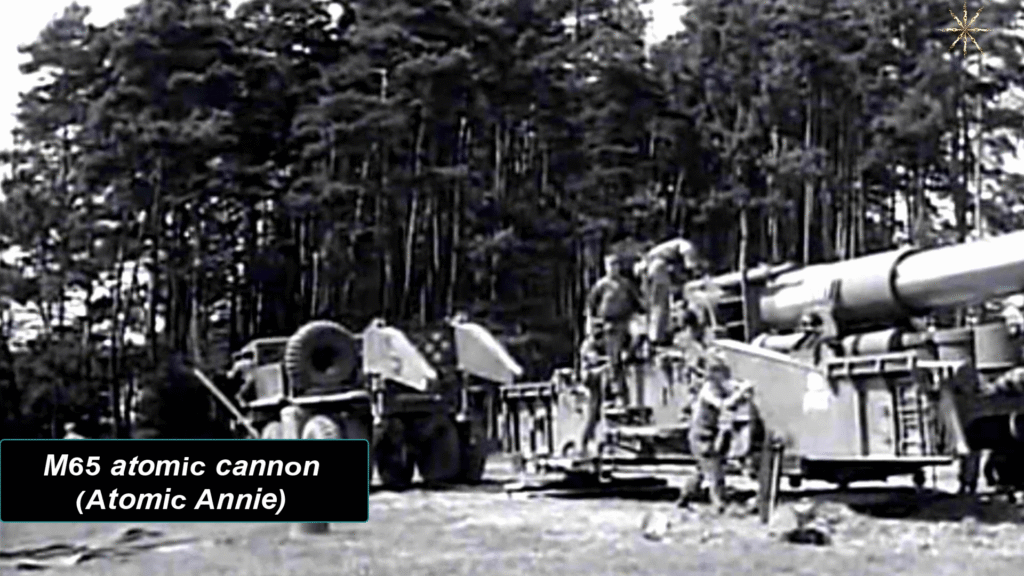
Dual-Tractor Design
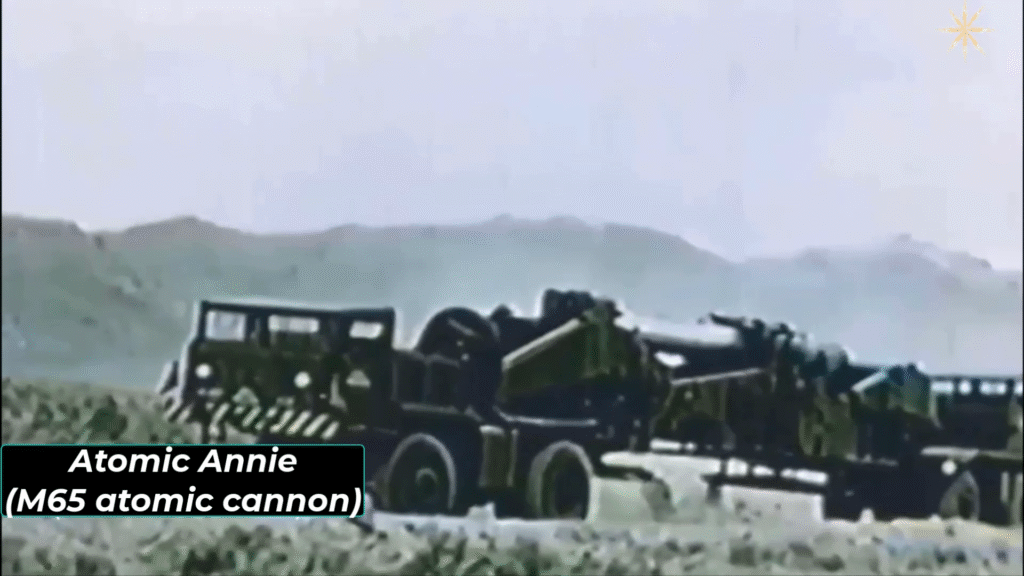
The M65 was transported by two massive tractors, one at the front and one at the rear. This unique system allowed the cannon to navigate highways and even pivot around corners, an engineering marvel for its time.
Deployment Logistics and Limitations
While mobile on paper, in practice the M65 was slow to set up and relocate, making it vulnerable to enemy reconnaissance and air strikes. Each deployment required careful planning, limiting its flexibility in fast-moving battlefield conditions.
Nuclear Firepower of the M65
The W9 Nuclear Shell: Yield and Impact
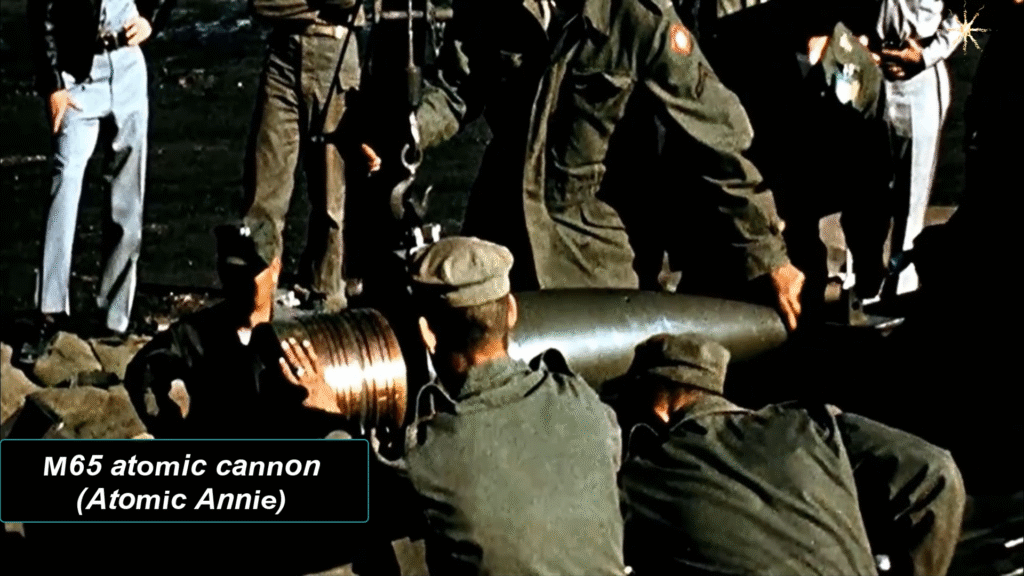
The M65’s true power came from the W9 nuclear shell, a 15-kiloton warhead—roughly equivalent to the bomb dropped on Hiroshima. With a range of 20 miles (32 km), it could devastate enemy formations, infrastructure, and morale.
Conventional Ammunition Capabilities
Beyond nuclear shells, the M65 could also fire heavy conventional artillery rounds. This dual capability meant it wasn’t just a nuclear weapon but a formidable artillery piece in its own right.

Operation Upshot-Knothole: The “Grable” Test
Historical Context of the Test
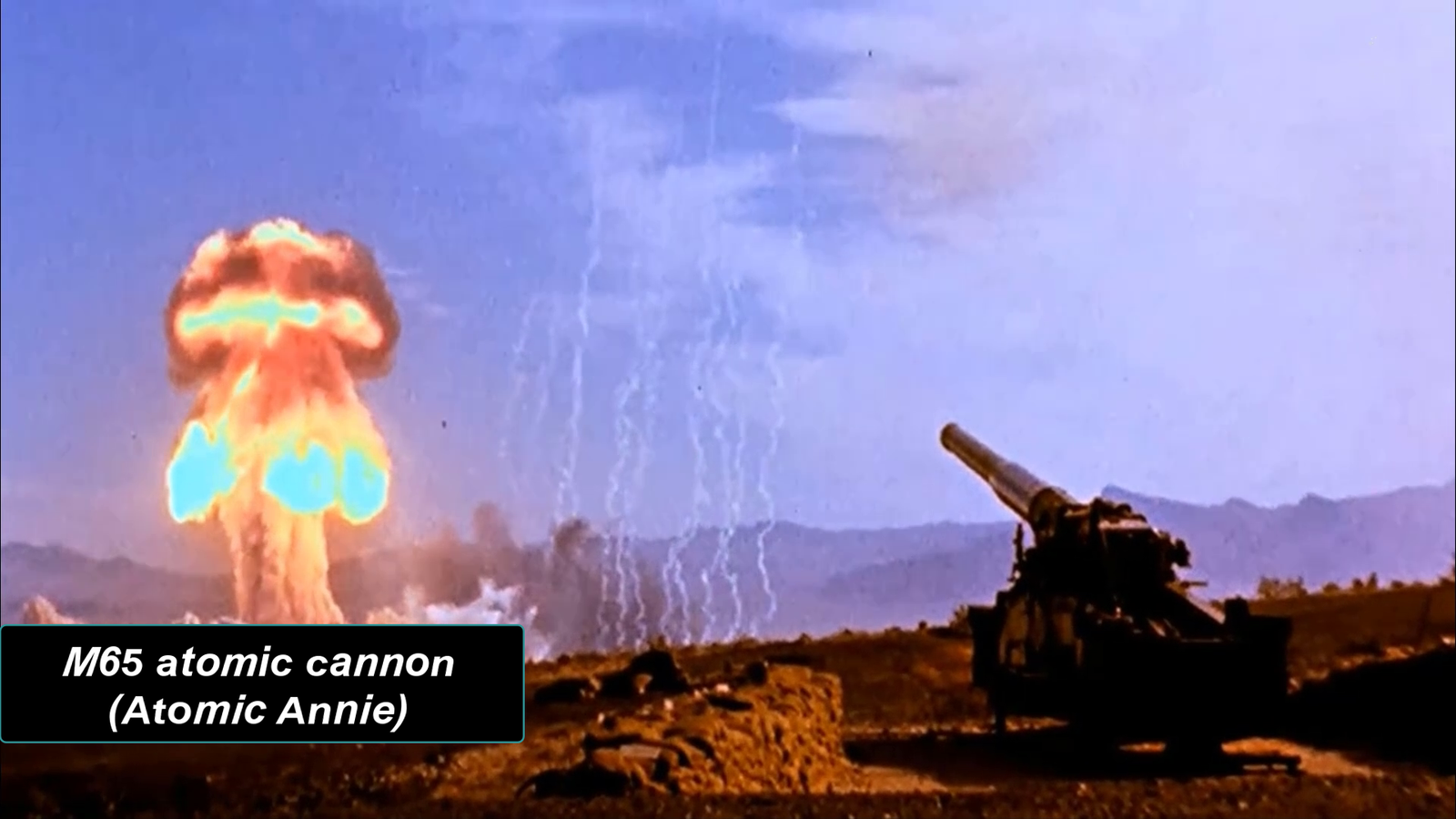
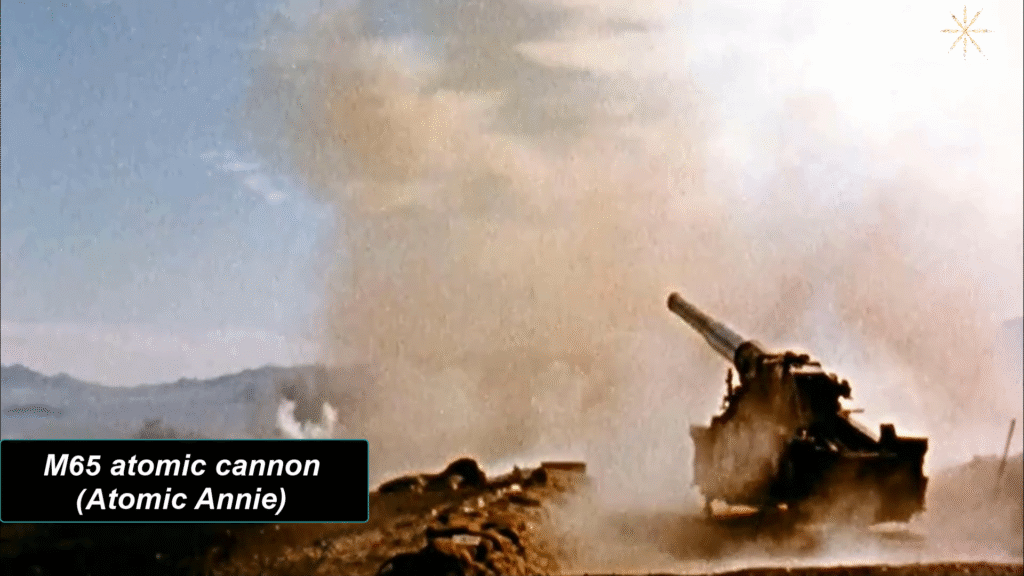
On May 25, 1953, the M65 atomic cannon was put to the ultimate test during Operation Upshot-Knothole at the Nevada Test Site. This was part of a series of experiments aimed at understanding nuclear battlefield weapons.

The First and Only Nuclear Artillery Shot
Codenamed “Grable,” the test involved firing a live W9 shell, which detonated 7 miles downrange in the air. With a yield of 15 kilotons, it remains the first and only time in history a nuclear shell was fired from a cannon.
Deployment During the Cold War
NATO Strategy in Europe
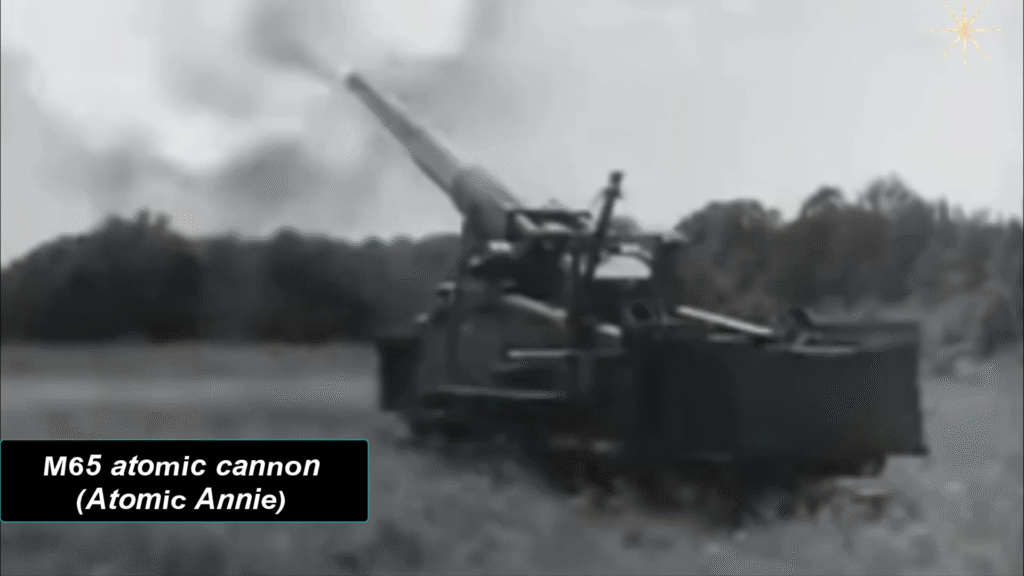
During the 1950s, around 20 M65 cannons were deployed to Europe. Positioned in West Germany, they served as a deterrent against Soviet forces, signaling NATO’s willingness to use tactical nuclear weapons if necessary.
Stationing in South Korea
Several units were also stationed in South Korea, bolstering U.S. and allied defenses against potential aggression from North Korea and China.

Reasons for Retirement
Rise of Smaller Nuclear Artillery
By the early 1960s, advances in 8-inch and 155 mm nuclear-capable artillery made the M65 obsolete. These smaller systems were more mobile, quicker to deploy, and just as deadly.
Vulnerability and Obsolescence
The M65’s massive size made it an easy target for aircraft and reconnaissance. Its logistical demands also made it impractical compared to newer, more flexible nuclear delivery systems, including missiles.

Surviving Examples of the M65 Today
Fort Sill, Oklahoma
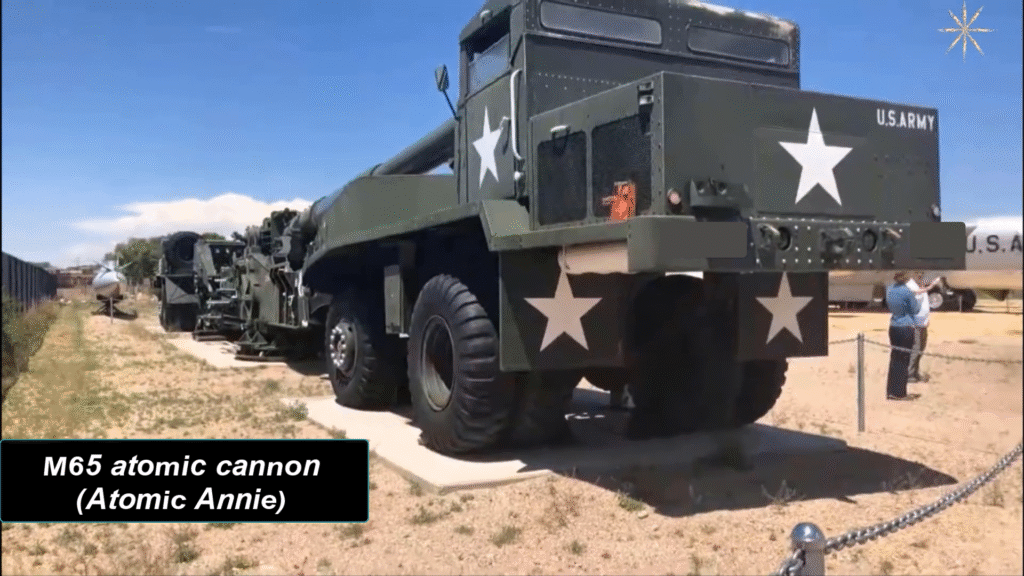
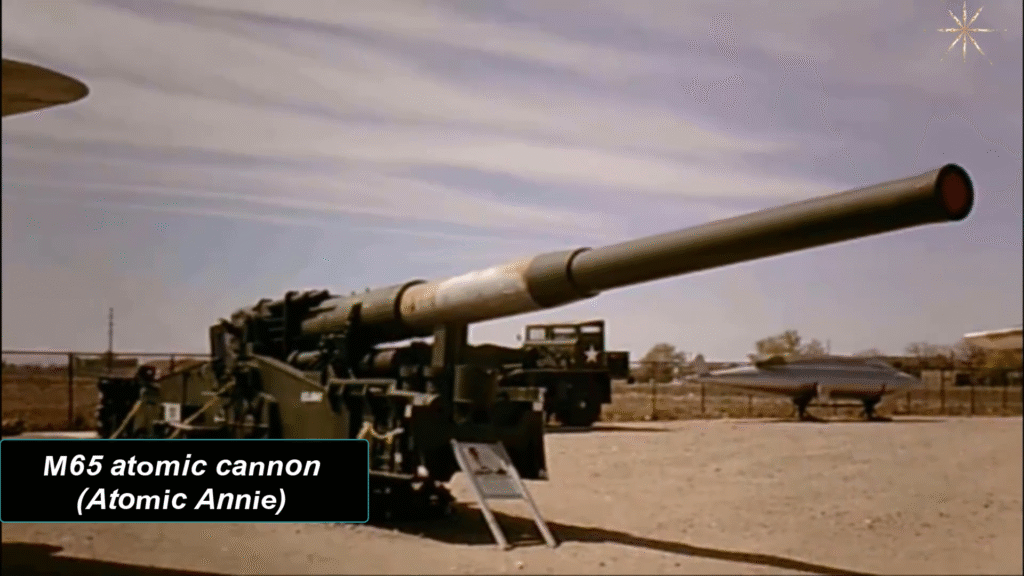
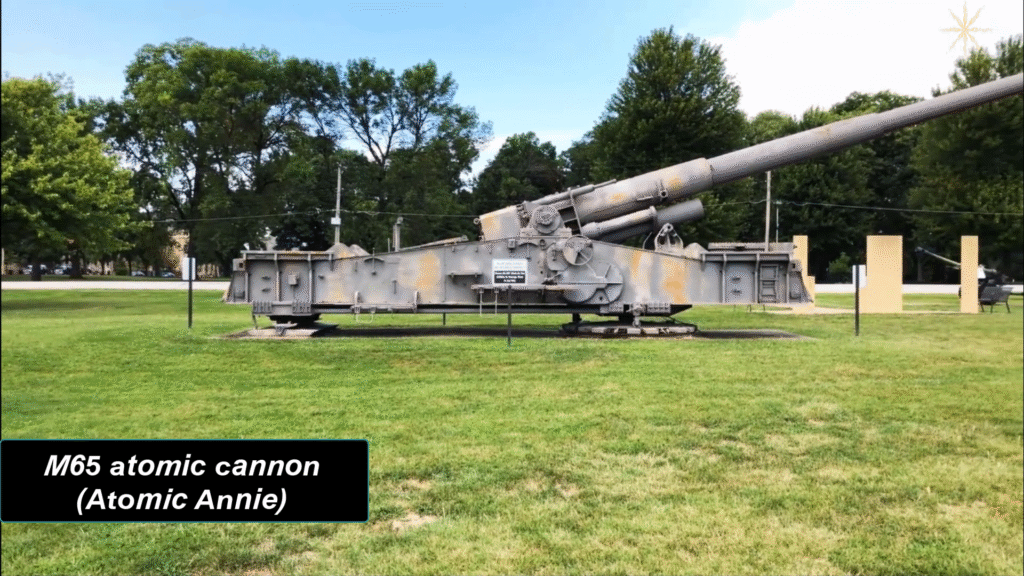
The most famous preserved example resides at the U.S. Army Field Artillery Museum in Fort Sill, Oklahoma, where visitors can see “Atomic Annie” up close.
Smithsonian National Museum of American History
Another M65 is displayed at the Smithsonian Institution in Washington, D.C., reflecting its cultural and historical significance.
Other Preserved Units
Additional units survive in military museums and bases across the United States, including those once housed at Aberdeen Proving Ground, Maryland.

Legacy of “Atomic Annie” in Military History
Although it never saw combat, the M65 atomic cannon remains a powerful symbol of the nuclear age. It represented both the fear and fascination of nuclear warfare, embodying the belief that even artillery could wield atomic firepower. Today, it stands as a reminder of Cold War tensions and the lengths nations went to maintain deterrence.
FAQs About the M65 Atomic Cannon
1. How powerful was the M65 atomic cannon?
It could fire a 15-kiloton nuclear shell, similar to the bomb dropped on Hiroshima.
2. How many M65 atomic cannons were built?
About 20 units were produced and deployed.
3. Did the M65 ever fire a nuclear shell in combat?
No, the only nuclear test was the 1953 “Grable” test at the Nevada Test Site.
4. Why was the M65 retired so quickly?
Smaller, more mobile nuclear-capable artillery and missile systems replaced it by the early 1960s.
5. Where can I see an M65 atomic cannon today?
You can visit preserved units at Fort Sill, Oklahoma and the Smithsonian National Museum of American History.
6. Was the M65 ever used outside of testing?
It was deployed in Europe and South Korea, but never used in active warfare.
Conclusion
The M65 atomic cannon “Atomic Annie” was a short-lived but unforgettable chapter in Cold War history. A marvel of engineering and a symbol of nuclear brinkmanship, it demonstrated both the ingenuity and the dangers of blending conventional artillery with atomic power. Today, the surviving units serve as monuments to a tense era when nuclear war seemed just one decision away.